


Midostaurin does not prolong cardiac repolarization defined in a thorough electrocardiogram trial in healthy volunteers
- PMID: 22294470
- PMCID: PMC3337405
- DOI: 10.1007/s00280-012-1825-y
Midostaurin does not prolong cardiac repolarization defined in a thorough electrocardiogram trial in healthy volunteers
Abstract
Purpose: Midostaurin (PKC412) is a multitargeted tyrosine kinase inhibitor of FMS-like tyrosine kinase 3 receptor (FLT3), c-KIT, and other receptors. Midostaurin is active in patients with acute myeloid leukemia and systemic mastocytosis. Although no substantive risk for cardiac abnormalities has been observed with midostaurin in clinical studies thus far, some TKIs have been shown to affect cardiac repolarization. Here we evaluated midostaurin's effect on cardiac repolarization.
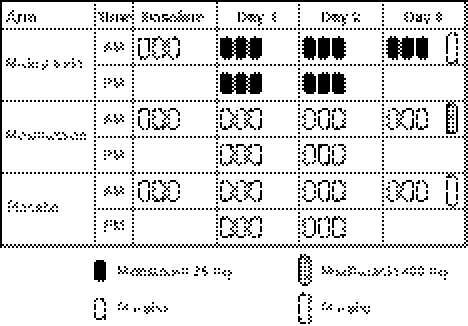
Methods: This phase I study evaluated the effect of midostaurin (75 mg twice daily for 2 days; 75 mg once on day 3) on the heart rate-corrected QT (QTc) interval in a parallel design with active (moxifloxacin) and placebo control arms in healthy volunteers.
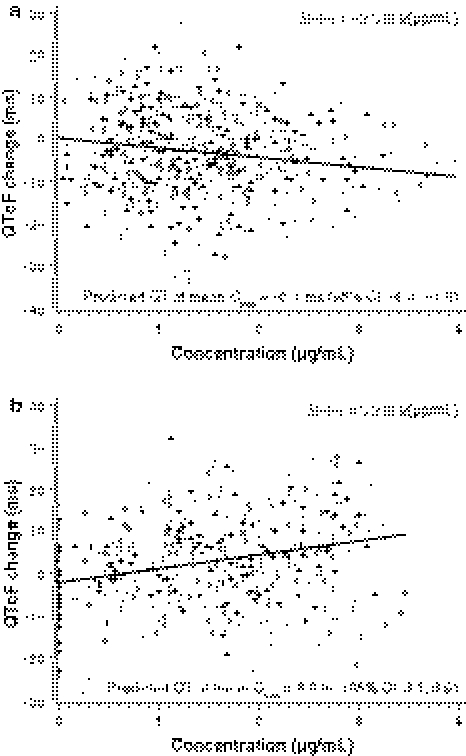
Results: The maximum mean QTc change from baseline corrected using Fridericia's correction (QTcF) for midostaurin compared with placebo was 0.7 ms at 24 h post dose on day 3. The highest upper bound of the 1-sided 95% CI was 4.7 ms, which excluded 10 ms, demonstrating a lack of QTcF prolongation effect. Assay sensitivity was demonstrated by modeling the moxifloxacin plasma concentration versus QTcF change from baseline, which showed a clear positive increase in QTcF with increasing moxifloxacin plasma concentrations, as expected based on previous studies. In the 4-day evaluation period, a minority of participants (34.6%) experienced an adverse event; 97.0% were grade 1. No grade 3 or 4 adverse events were reported.
Conclusion: Midostaurin demonstrated a good safety profile in healthy volunteers, with no prolonged cardiac repolarization or other changes on the electrocardiogram.
Figures


References
-
- Manley PW, Boulton C, Caravatti G, Gilliland DG, Griffin J, Kung A, Kelly L, Maira M, Mestan J, Meyer T, Ruetz S, Weisberg E, Fabbro D (2003) Preclinical profile of PKC412 (Midostaurin) as an FLT3 inhibitor for the therapy of AML. AACR: Poster 1004
-
- Breitenbuecher F, Schnittger S, Grundler R, Markova B, Carius B, Brecht A, Duyster J, Haferlach T, Huber C, Fischer T. Identification of a novel type of ITD mutations located in nonjuxtamembrane domains of the FLT3 tyrosine kinase receptor. Blood. 2009;113:4074–4077. doi: 10.1182/blood-2007-11-125476. - DOI - PubMed
-
- Kayser S, Schlenk RF, Londono MC, Breitenbuecher F, Wittke K, Du J, Groner S, Spath D, Krauter J, Ganser A, Dohner H, Fischer T, Dohner K, German-Austrian AML Study Group (AMLSG) Insertion of FLT3 internal tandem duplication in the tyrosine kinase domain-1 is associated with resistance to chemotherapy and inferior outcome. Blood. 2009;114:2386–2392. doi: 10.1182/blood-2009-03-209999. - DOI - PubMed
Publication types
MeSH terms
Substances
LinkOut - more resources
Full Text Sources
Miscellaneous
