


Increased intratumoral neutrophil in colorectal carcinomas correlates closely with malignant phenotype and predicts patients' adverse prognosis
- PMID: 22295111
- PMCID: PMC3266280
- DOI: 10.1371/journal.pone.0030806
Increased intratumoral neutrophil in colorectal carcinomas correlates closely with malignant phenotype and predicts patients' adverse prognosis
Abstract
Background: Substantial evidence suggests that the presence of inflammatory cells plays a critical role in the development and/or progression of human tumors. Neutrophils are the common inflammatory cells in tumors; however, the infiltration of intratumoral neutrophils in colorectal carcinoma (CRC) and its effect on CRC patients' prognosis are poorly understood.
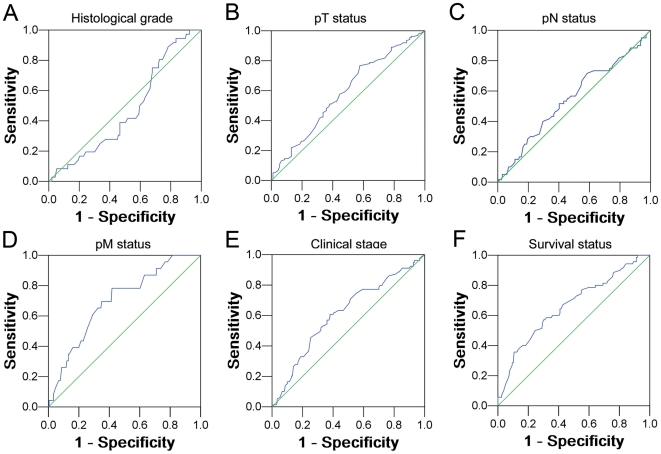
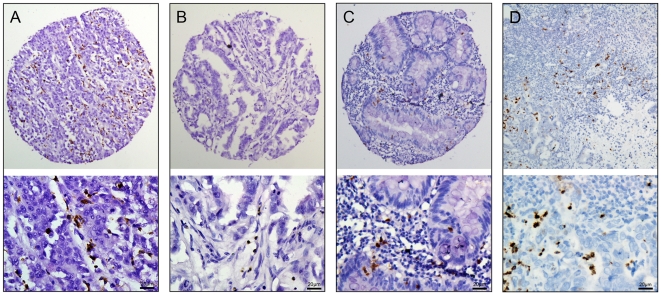
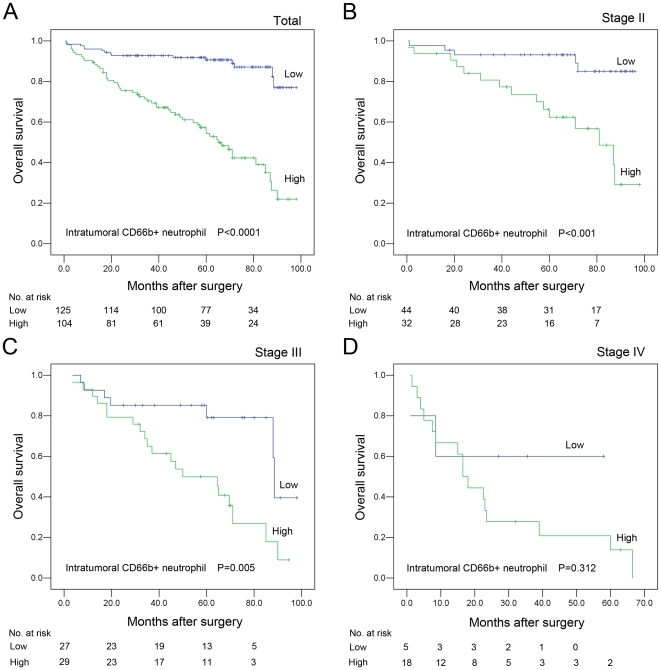
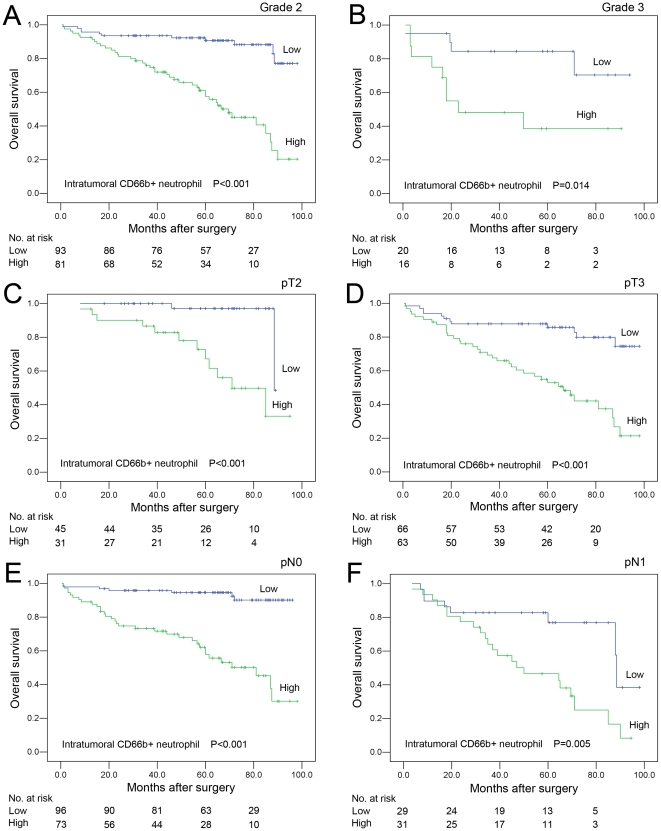
Methodology/principal findings: In this study, the methods of tissue microarray and immunohistochemistry (IHC) were used to investigate the prognostic significance of intratumoral CD66b+ neutrophil in CRC. According to receiver operating characteristic curve analysis, the cutoff score for high intratumoral CD66b+ neutrophil in CRC was defined when the mean counts were more than 60 per TMA spot. In our study, high intratumoral CD66b+ neutrophil was observed in 104/229 (45.4%) of CRCs and in 29/229 (12.7%) of adjacent mucosal tissues. Further correlation analysis showed that high intratumoral neutrophil was positively correlated with pT status, pM status and clinical stage (P<0.05). In univariate survival analysis, a significant association between high intratumoral neutrophil and shortened patients' survival was found (P<0.0001). In different subsets of CRC patients, intratumoral neutrophil was also a prognostic indicator in patients with stage II, stage III, grade 2, grade 3, pT1, pT2, pN0 and pN1 (P<0.05). Importantly, high intratumoral neutrophil was evaluated as an independent prognostic factor in multivariate analysis (P<0.05).
Conclusions/significance: Our results provide evidence that increased intratumoral neutrophil in CRC may be important in the acquisition of a malignant phenotype, indicating that the presence of intratumoral neutrophil is an independent factor for poor prognosis of patients with CRC.
Conflict of interest statement
Figures
References
-
- O'Connell JB, Maggard MA, Ko CY. Colon cancer survival rates with the new American Joint Committee on Cancer sixth edition staging. J Natl Cancer Inst. 2004;96:1420–1425. - PubMed
-
- You WC, Jin F, Devesa S, Gridley G, Schatzkin A, et al. Rapid increase in colorectal cancer rates in urban Shanghai, 1972–97, in relation to dietary changes. J Cancer Epidemiol Prev. 2002;7:143–146. - PubMed
-
- Obrand DI, Gordon PH. Incidence and patterns of recurrence following curative resection for colorectal carcinoma. Dis Colon Rectum. 1997;40:15–24. - PubMed
-
- Zafirellis K, Agrogiannis G, Zachaki A, Gravani K, Karameris A, et al. Prognostic significance of VEGF expression evaluated by quantitative immunohistochemical analysis in colorectal cancer. J Surg Res. 2008;147:99–107. - PubMed
-
- Mantovani A. Cancer: Inflaming metastasis. Nature. 2009;457:36–37. - PubMed
Publication types
MeSH terms
Substances
LinkOut - more resources
Full Text Sources
Medical
Research Materials
Miscellaneous
