


Autophagy: friend or foe in breast cancer development, progression, and treatment
- PMID: 22295229
- PMCID: PMC3262577
- DOI: 10.4061/2011/595092
Autophagy: friend or foe in breast cancer development, progression, and treatment
Abstract
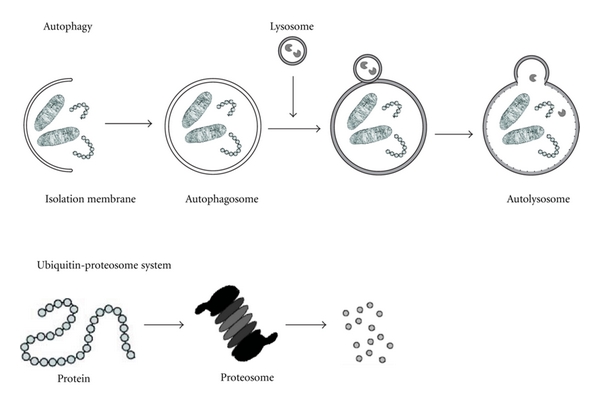
Autophagy is a catabolic process responsible for the degradation and recycling of long-lived proteins and organelles by lysosomes. This degradative pathway sustains cell survival during nutrient deprivation, but in some circumstances, autophagy leads to cell death. Thereby, autophagy can serve as tumor suppressor, as the reduction in autophagic capacity causes malignant transformation and spontaneous tumors. On the other hand, this process also functions as a protective cell-survival mechanism against environmental stress causing resistance to antineoplastic therapies. Although autophagy inhibition, combined with anticancer agents, could be therapeutically beneficial in some cases, autophagy induction by itself could lead to cell death in some apoptosis-resistant cancers, indicating that autophagy induction may also be used as a therapy. This paper summarizes the most important findings described in the literature about autophagy and also discusses the importance of this process in clinical settings.
Figures
References
-
- Fujishima Y, Nishiumi S, Masuda A, et al. Autophagy in the intestinal epithelium reduces endotoxin-induced inflammatory responses by inhibiting NF-κB activation. Archives of Biochemistry and Biophysics. 2011 - PubMed
-
- Levine B, Klionsky DJ. Development by self-digestion: molecular mechanisms and biological functions of autophagy. Developmental Cell. 2004;6(4):463–477. - PubMed
-
- Shimizu S, Kanaseki T, Mizushima N, et al. Role of Bcl-2 family proteins in a non-apoptopic programmed cell death dependent on autophagy genes. Nature Cell Biology. 2004;6(12):1221–1228. - PubMed
LinkOut - more resources
Full Text Sources
