


D-Lactate altered mitochondrial energy production in rat brain and heart but not liver
- PMID: 22296683
- PMCID: PMC3292964
- DOI: 10.1186/1743-7075-9-6
D-Lactate altered mitochondrial energy production in rat brain and heart but not liver
Abstract
Background: Substantially elevated blood D-lactate (DLA) concentrations are associated with neurocardiac toxicity in humans and animals. The neurological symptoms are similar to inherited or acquired abnormalities of pyruvate metabolism. We hypothesized that DLA interferes with mitochondrial utilization of L-lactate and pyruvate in brain and heart.
Methods: Respiration rates in rat brain, heart and liver mitochondria were measured using DLA, LLA and pyruvate independently and in combination.
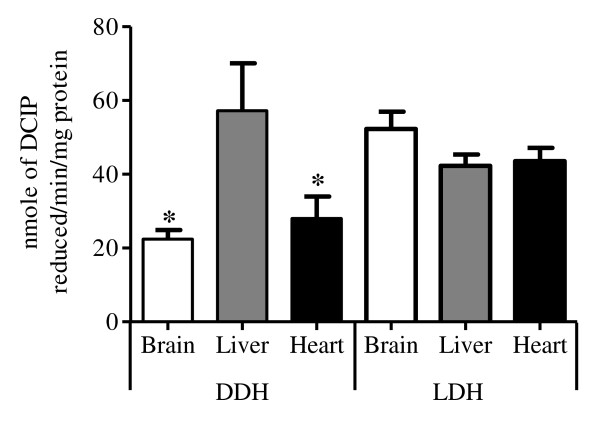
Results: In brain mitochondria, state 3 respiration was 53% and 75% lower with DLA as substrate when compared with LLA and pyruvate, respectively (p < 0.05). Similarly in heart mitochondria, state 3 respiration was 39% and 86% lower with DLA as substrate when compared with LLA or pyruvate, respectively (p < 0.05). However, state 3 respiration rates were similar between DLA, LLA and pyruvate in liver mitochondria. Combined incubation of DLA with LLA or pyruvate markedly impaired state 3 respiration rates in brain and heart mitochondria (p < 0.05) but not in liver mitochondria. DLA dehydrogenase activities were 61% and 51% lower in brain and heart mitochondria compared to liver, respectively, whereas LLA dehydrogenase activities were similar across all three tissues. An LDH inhibitor blocked state 3 respiration with LLA as substrate in all three tissues. A monocarboxylate transporter inhibitor blocked respiration with all three substrates.
Conclusions: DLA was a poor respiratory substrate in brain and heart mitochondria and inhibited LLA and pyruvate usage in these tissues. Further studies are warranted to evaluate whether these findings support, in part, the possible neurological and cardiac toxicity caused by high DLA levels.
Figures
References
-
- Kondoh Y, Kawase M, Kawakami Y, Ohmori S. Concentrations of D-lactate and its related metabolic intermediates in liver, blood, and muscle of diabetic and starved rats. Res Exp Med (Berl) 1992;192:407–414. - PubMed
-
- Dahhak S, Uhlen S, Mention K, Romond MB, Fontaine M, Gottrand F, Turck D, Michaud L. D-lactic acidosis in a child with short bowel syndrome. Arch Pediatr. 2008;15:145–148. - PubMed
-
- Lorenz I. D-Lactic acidosis in calves. Vet J. 2009;179:197–203. - PubMed
-
- Weizman Z, Houri S, Ben-Ezer Gradus D. Type of acidosis and clinical outcome in infantile gastroenteritis. J Pediatr Gastroenterol Nutr. 1992;14:187–191. - PubMed
-
- Ewaschuk JB, Naylor JM, Palmer R, Whiting SJ, Zello GA. D-lactate production and excretion in diarrheic calves. J Vet Intern Med. 2004;18:744–747. - PubMed
LinkOut - more resources
Full Text Sources
Other Literature Sources
