


Glutamatergic transmission in schizophrenia: from basic research to clinical practice
- PMID: 22297716
- PMCID: PMC5224527
- DOI: 10.1097/YCO.0b013e32835035b2
Glutamatergic transmission in schizophrenia: from basic research to clinical practice
Abstract
Purpose of review: The past 20 years have seen the glutamatergic hypothesis go from theory to phase III trials of novel mechanism antipsychotics.
Recent findings: We review the recent literature on glutamatergic theory, covering assessment and genetic studies, as well as drug development in animals and humans.
Summary: Although evidence continues to accumulate in support of glutamate hypotheses, further research continues to be required and interactions with other key systems need to be explored.
Conflict of interest statement
D.C.J. holds intellectual property rights for use of glycine, D-serine and glycine transport inhibitors in treatment of schizophrenia.
Figures
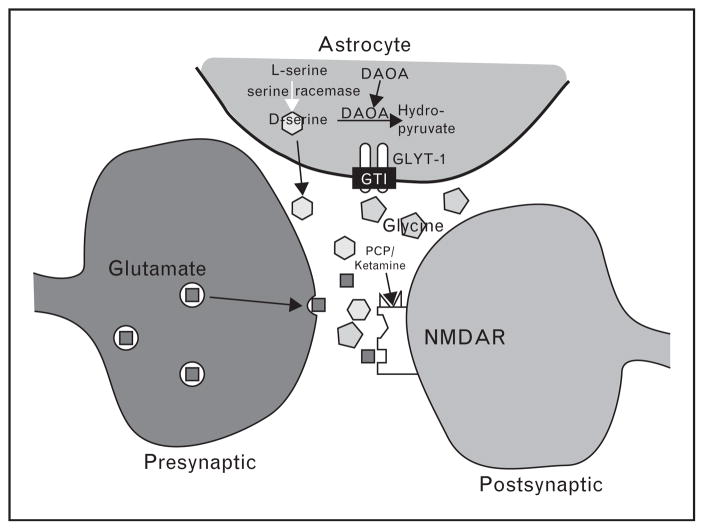
 ), D-serine (
 ), and glycine (
 ) regulation and metabolism. The nonphysiologic NMDA antagonist PCP and ketamine site is also shown. DAOA, D-amino acid oxidase activator; PCP, phencyclidine. Reproduced from [2].
References
-
- Krystal JH, Mathew SJ, D’Souza DC, et al. Potential psychiatric applications of metabotropic glutamate receptor agonists and antagonists. CNS Drugs. 2011;24:669–693. - PubMed
Publication types
MeSH terms
Substances
Grants and funding
LinkOut - more resources
Full Text Sources
Medical
Research Materials
Miscellaneous
