Evaluating cognitive impairment in the clinical setting: practical screening and assessment tools
- PMID: 22298886
- PMCID: PMC6148899
Evaluating cognitive impairment in the clinical setting: practical screening and assessment tools
Abstract
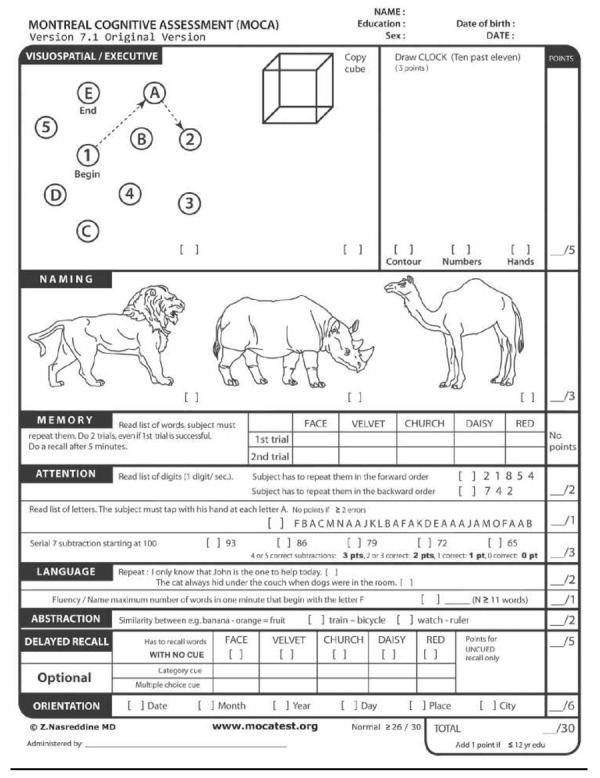
HIV-associated neurocognitive disorders (HAND) remain a substantial problem in the era of combination antiretroviral therapy. Neither the Mini Mental State Exam nor the HIV Dementia Scale is sufficiently sensitive for HAND. The Montreal Cognitive Assessment shows promise, but current data suggest that adding an additional test will be needed to improve sensitivity for the clinical setting. Patient reporting of symptoms is insensitive as most cases of HAND are asymptomatic. Examination of cerebrospinal fluid (CSF) is sometimes warranted in select patients to evaluate for CSF HIV RNA detectability. CSF escape of virus, when CSF HIV RNA is detectable but plasma HIV RNA is not, appears to be a relatively uncommon event in the clinical setting where the level of detectability for typical clinical assays is around 50 copies/mL. In cases of CSF escape, cognitive improvement has been linked to changes in antiretroviral regimens that are aimed at either overcoming antiretroviral resistance or improving central nervous system (CNS) penetration-effectiveness. Currently, for most patients with HAND in the absence of unusual features, there are insufficient data for a recommendation to routinely intensify therapy with a neurointensive antiretroviral regimen; however, there is considerable uncertainty given emerging data and variability in approach among experts in the field. This article summarizes a case-based presentation by Victor G. Valcour, MD, at the 14th Annual Clinical Conference for the Ryan White HIV/AIDS Program held in Tampa, Florida, in June 2011. The Clinical Conference is sponsored by the IAS-USA under the Health Resources and Services Administration (HRSA) contract number HHSH250200900010C.
Conflict of interest statement
Financial Disclosure: Dr Valcour has no relevant affiliations to disclose.
Figures
References
-
- McArthur JC, Haughey N, Gartner S, et al. Human immunodeficiency virus-associated dementia: an evolving disease. J Neurovirol. 2003;9:205-221. - PubMed
-
- Ganasen KA, Fincham D, Smit J, Seedat S, Stein D. Utility of the HIV Dementia Scale (HDS) in identifying HIV dementia in a South African sample. J Neurol Sci. 2008;269:62-64. - PubMed
-
- Skinner S, Adewale AJ, DeBlock L, Gill MJ, Power C. Neurocognitive screening tools in HIV/AIDS: comparative performance among patients exposed to antiretroviral therapy. HIV Med. 2009;10:246-252. - PubMed
Publication types
MeSH terms
Substances
Grants and funding
LinkOut - more resources
Full Text Sources
Medical