


Specific post-translational histone modifications of neutrophil extracellular traps as immunogens and potential targets of lupus autoantibodies
- PMID: 22300536
- PMCID: PMC3392818
- DOI: 10.1186/ar3707
Specific post-translational histone modifications of neutrophil extracellular traps as immunogens and potential targets of lupus autoantibodies
Abstract
Introduction: Autoreactivity to histones is a pervasive feature of several human autoimmune disorders, including systemic lupus erythematosus (SLE). Specific post-translational modifications (PTMs) of histones within neutrophil extracellular traps (NETs) may potentially drive the process by which tolerance to these chromatin-associated proteins is broken. We hypothesized that NETs and their unique histone PTMs might be capable of inducing autoantibodies that target histones.
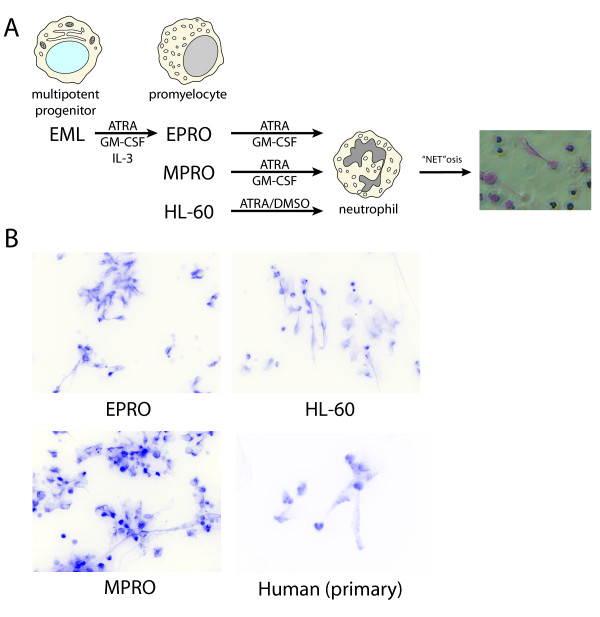
Methods: We developed a novel and efficient method for the in vitro production, visualization, and broad profiling of histone-PTMs of human and murine NETs. We also immunized Balb/c mice with murine NETs and profiled their sera on autoantigen and histone peptide microarrays for evidence of autoantibody production to their immunogen.
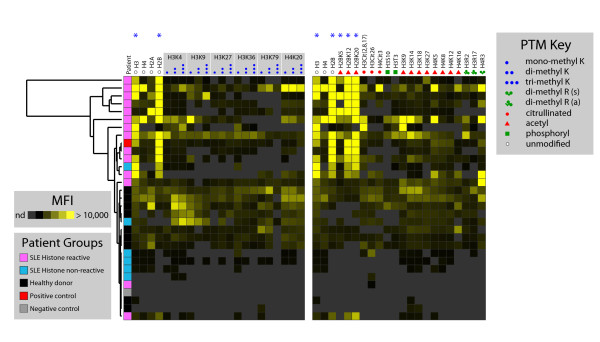
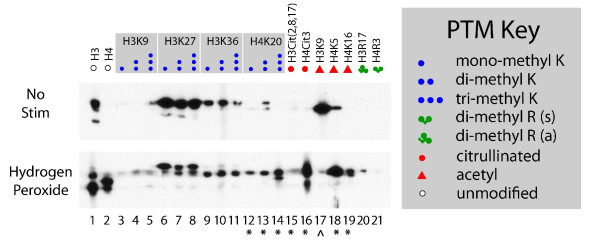
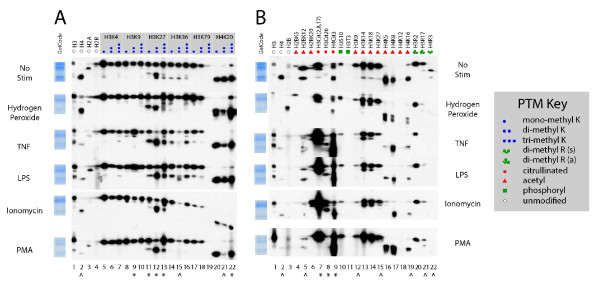
Results: We confirmed specificity toward acetyl-modified histone H2B as well as to other histone PTMs in sera from patients with SLE known to have autoreactivity against histones. We observed enrichment for distinctive histone marks of transcriptionally silent DNA during NETosis triggered by diverse stimuli. However, NETs derived from human and murine sources did not harbor many of the PTMs toward which autoreactivity was observed in patients with SLE or in MRL/lpr mice. Further, while murine NETs were weak autoantigens in vivo, there was only partial overlap in the immunoglobulin G (IgG) and IgM autoantibody profiles induced by vaccination of mice with NETs and those seen in patients with SLE.
Conclusions: Isolated in vivo exposure to NETs is insufficient to break tolerance and may involve additional factors that have yet to be identified.
Figures
Comment in
-
Knotting the NETs: analyzing histone modifications in neutrophil extracellular traps.Arthritis Res Ther. 2012 Apr 6;14(2):115. doi: 10.1186/ar3773. Arthritis Res Ther. 2012. PMID: 22524286 Free PMC article.
References
-
- Baker VS, Imade GE, Molta NB, Tawde P, Pam SD, Obadofin MO, Sagay SA, Egah DZ, Iya D, Afolabi BB, Baker M, Ford K, Ford R, Roux KH, Keller TC. Cytokine-associated neutrophil extracellular traps and antinuclear antibodies in Plasmodium falciparum infected children under six years of age. Malar J. 2008;7:41. doi: 10.1186/1475-2875-7-41. - DOI - PMC - PubMed
-
- Garcia-Romo GS, Caielli S, Vega B, Connolly J, Allantaz F, Xu Z, Punaro M, Baisch J, Guiducci C, Coffman RL, Barrat FJ, Banchereau J, Pascual V. Netting neutrophils are major inducers of type I IFN production in pediatric systemic lupus erythematosus. Sci Transl Med. 2011;3:73ra20. doi: 10.1126/scitranslmed.3001201. - DOI - PMC - PubMed
Publication types
MeSH terms
Substances
Associated data
- Actions
Grants and funding
LinkOut - more resources
Full Text Sources
Other Literature Sources
Medical
Molecular Biology Databases
Miscellaneous
