


GluN1 hypomorph mice exhibit wide-ranging behavioral alterations
- PMID: 22300668
- PMCID: PMC3489048
- DOI: 10.1111/j.1601-183X.2012.00767.x
GluN1 hypomorph mice exhibit wide-ranging behavioral alterations
Abstract
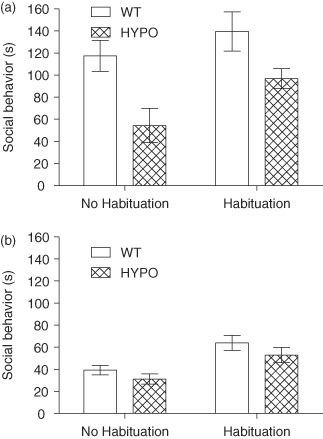
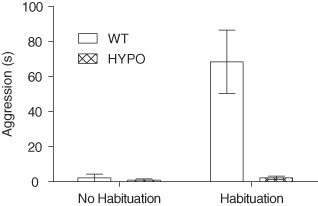
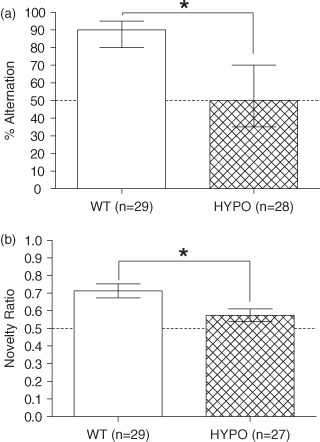
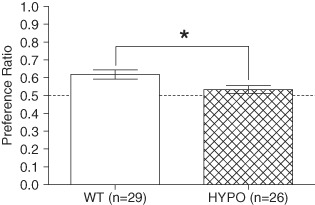
The psychotomimetic effects of N-methyl-d-aspartate receptor (NMDA) antagonists such as ketamine and phencyclidine suggest a role for reduced NMDA receptor-mediated neurotransmission in schizophrenia. GluN1 'hypomorph' (GluN1(hypo) ) mice exhibit reduced NMDA receptor expression and have been suggested as a mouse model of schizophrenia. However, NMDA receptors are ubiquitous and are implicated in many physiological and pathological processes. The GluN1(hypo) mice have a global reduction of NMDA receptors and the consequences of such a global manipulation are likely to be wide-ranging. We therefore assessed GluN1(hypo) mice on a battery of behavioral tests, including tests of naturalistic behaviors, anxiety and cognition. GluN1(hypo) mice exhibited impairments on all tests of cognition that we employed, as well as reduced engagement in naturalistic behaviors, including nesting and burrowing. Behavioral deficits were present in both spatial and non-spatial domains, and included deficits on both short- and long-term memory tasks. Results from anxiety tests did not give a clear overall picture. This may be the result of confounds such as the profound hyperactivity seen in GluN1(hypo) mice, although hyperactivity cannot account for all of the results obtained. When viewed against this background of far-reaching behavioral abnormalities, the specificity of any one behavioral deficit is inevitably called into question. Indeed, the present data from GluN1(hypo) mice are indicative of a global impairment rather than any specific disease. The deficits seen go beyond what one would expect from a mouse model of schizophrenia, thus questioning their utility as a selective model of this disease.
© 2012 The Authors. Genes, Brain and Behavior © 2012 Blackwell Publishing Ltd and International Behavioural and Neural Genetics Society.
Figures
References
-
- American Psychiatric Association. Diagnostic and statistical manual of mental disorders. Washington DC: American Psychiatric Association; 2000.
-
- Barkus C, Feyder M, Graybeal C, Wright T, Wiedholz L, Izquierdo A, Kiselycznyk C, Schmitt W, Sanderson DJ, Rawlins JN, Saksida LM, Bussey TJ, Sprengel R, Bannerman D, Holmes A. Do GluA1 knockout mice exhibit behavioral abnormalities relevant to the negative or cognitive symptoms of schizophrenia and schizoaffective disorder? Neuropharmacology. 2011;62:1263–1272. - PMC - PubMed
-
- Burns LH, Annett L, Kelley AE, Everitt BJ, Robbins TW. Effects of lesions to amygdala, ventral subiculum, medial prefrontal cortex, and nucleus accumbens on the reaction to novelty: implication for limbic-striatal interactions. Behav Neurosci. 1996;110:60–73. - PubMed
Publication types
MeSH terms
Substances
Grants and funding
LinkOut - more resources
Full Text Sources
Medical
Molecular Biology Databases
