


Impairment of gastric nitrergic and NRF2 system in apolipoprotein E knockout mice
- PMID: 22302246
- PMCID: PMC3677538
- DOI: 10.1007/s10620-012-2070-2
Impairment of gastric nitrergic and NRF2 system in apolipoprotein E knockout mice
Abstract
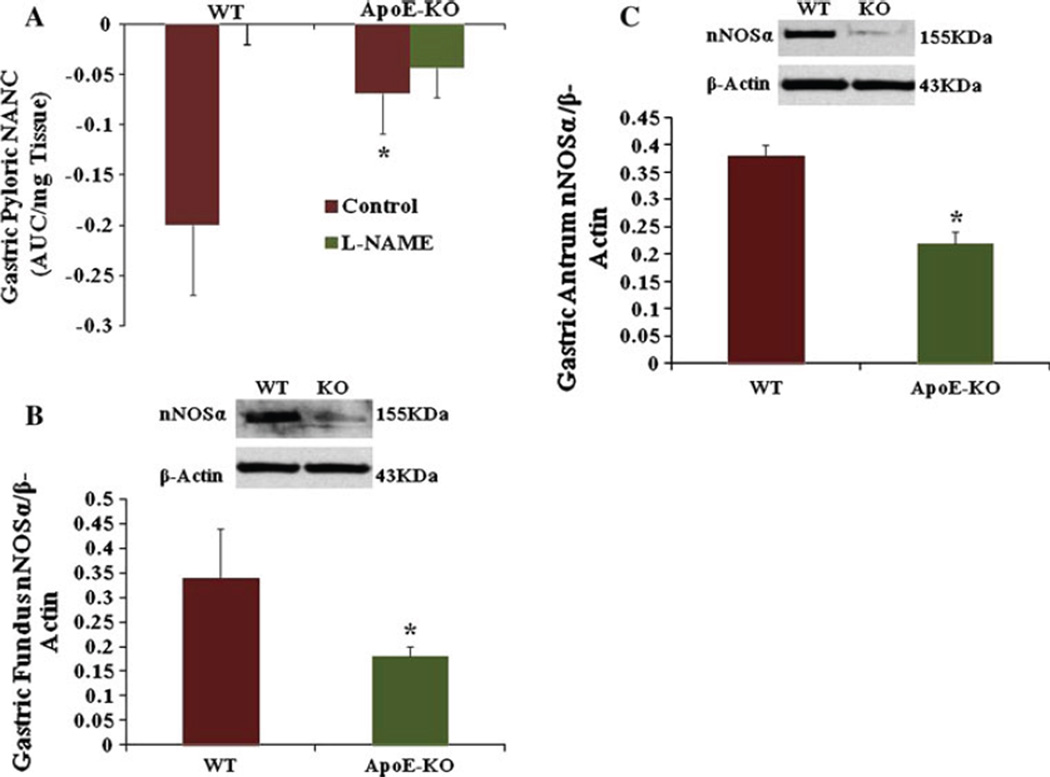
Background and aim: Gastric motility dysfunction is most commonly seen in diabetic and idiopathic gastroparesis patients. Recently we reported that impaired nitrergic relaxation and a reduced NO (nitric oxide) bioavailability were responsible for gastric motility dysfunction in diabetic female rats. One of the main factors involved in the inactivation of the nitrergic system is oxidative stress commonly seen in diabetic patients. Hyperlipidemia may also be one of the detrimental causes for impaired gastric motility associated with diabetes. In the current study, we investigated whether apolipoprotein E knockout mice (ApoE-KO), an oxidative stress animal model with a hyperlipidemia burden, also displays an impaired nitrergic system. To test this, nitrergic relaxation (AUC/mg tissue) was measured at 2 Hz through electric field stimulation using gastric pyloric strips prepared from C57BL WT or ApoE-KO female mice. Protein expression was determined by Western blots.
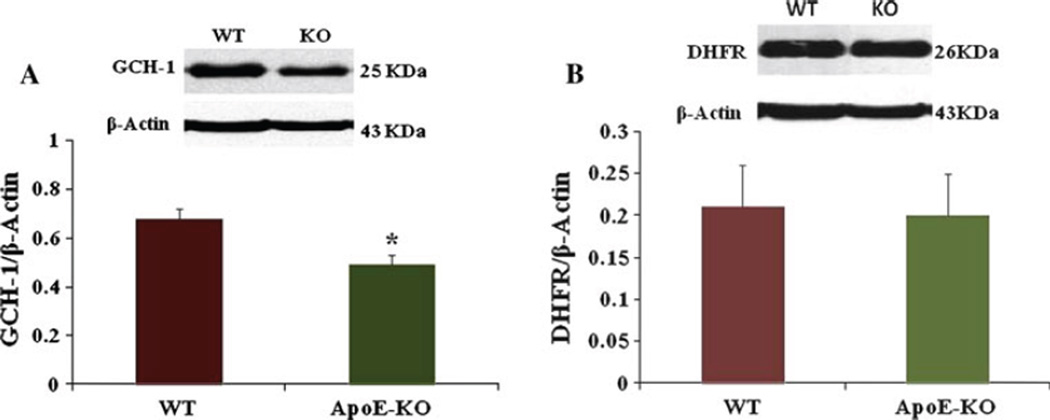
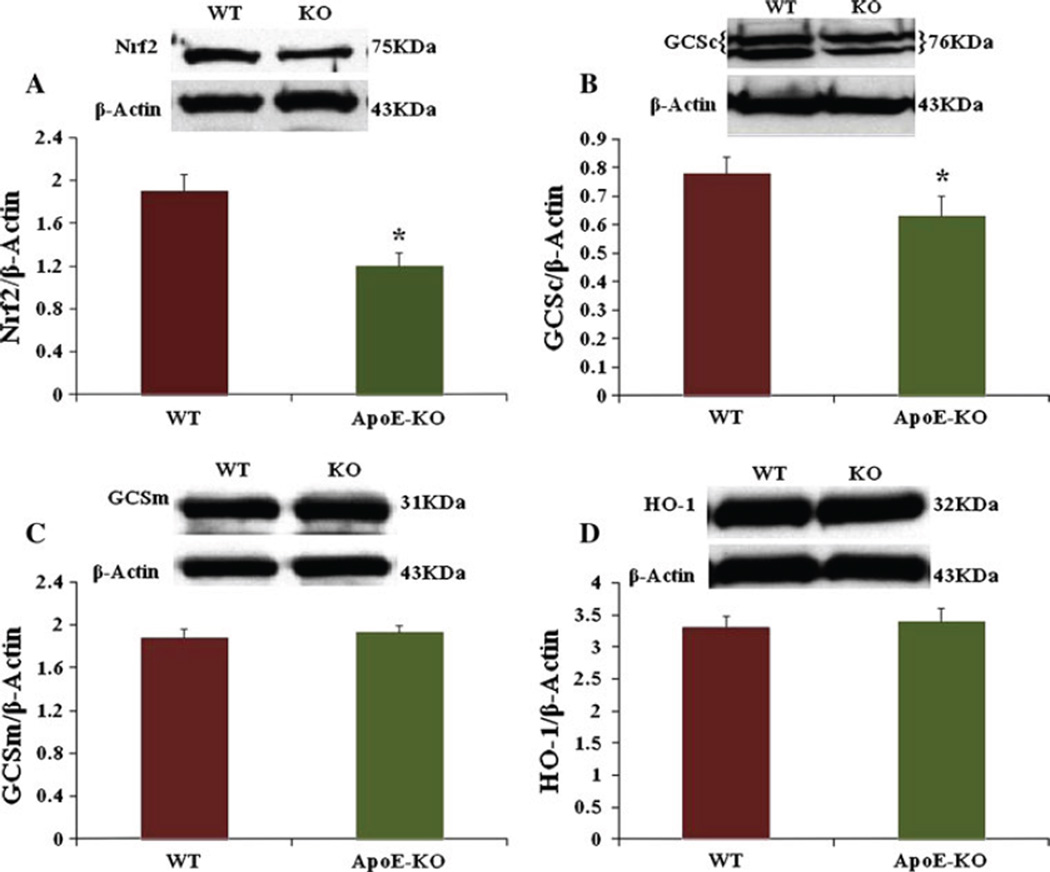
Results: Nitrergic relaxation was reduced in gastric strips from ApoE-KO versus WT mice. Protein levels of nNOS (neuronal nitric oxide synthase), GCH-1 (GTP cyclohydrolase 1), Nrf2 (nuclear factor E-2 related factor 2) and GCSc (glutamate-cysteine ligase catalytic) were also reduced in ApoE-KO compared to controls, with no significant change in GCSm (glutamate-cysteine ligase modifier) and HO-1 (heme oxygenase 1). The activities of DHFR (dihydrofolate reductase) and antioxidant enzymes were also reduced in ApoE-KO mice.
Conclusions: This novel study is the first to reveal that a deficiency in ApoE impairs gastric motility functions, and that hyperlipidemia and the suppression of selective antioxidants may be an underlying mechanism for this pathological change.
Conflict of interest statement
Figures
References
-
- Breslow JL, Zannis VI, SanGiacomo TR, Third JL, Tracy T, Glueck CJ. Studies of familial type III hyperlipoproteinemia using as a genetic marker the apoE phenotype E2/2. J Lipid Res. 1982;23:1224–1235. - PubMed
-
- Feussner G, Feussner V, Hoffmann MM, Lohrmann J, Wieland H, Marz W. Molecular basis of type III hyperlipoproteinemia in Germany. Hum Mutat. 1998;11:417–423. - PubMed
-
- Civeira F, Pocovi M, Cenarro A, Casao E, et al. Apo E variants in patients with type III hyperlipoproteinemia. ApoE variants in patients with type III hyperlipoproteinemia. Atherosclerosis. 1996;127:273–282. - PubMed
-
- Schreyer SA, Vick C, Lystig TC, Mystkowski P, Leboeuf REC. LDL receptor but not apolipoprotein E deficiency increases diet-induced obesity and diabetes in mice. Am J Physiol Endocrinol Metab. 2002;282:E207–E214. - PubMed
Publication types
MeSH terms
Substances
Grants and funding
LinkOut - more resources
Full Text Sources
Research Materials
Miscellaneous
