


The Extended Nutrigenomics - Understanding the Interplay between the Genomes of Food, Gut Microbes, and Human Host
- PMID: 22303317
- PMCID: PMC3268576
- DOI: 10.3389/fgene.2011.00021
The Extended Nutrigenomics - Understanding the Interplay between the Genomes of Food, Gut Microbes, and Human Host
Abstract
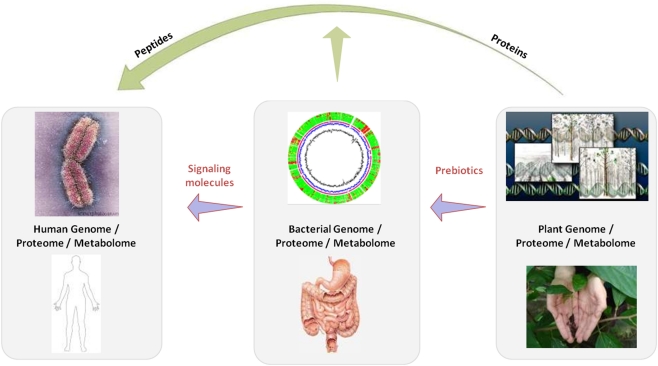
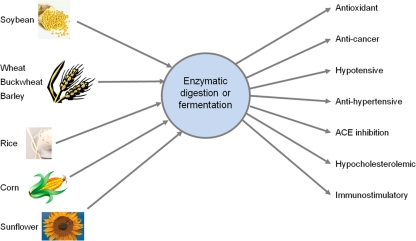
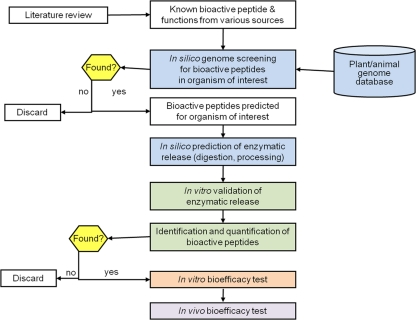
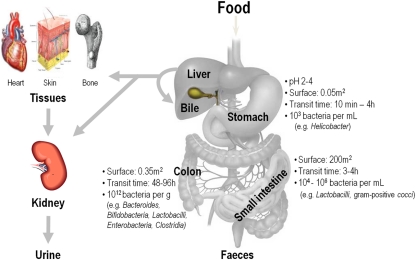
Comprehensive investigation of nutritional health effects at the molecular level requires the understanding of the interplay between three genomes, the food, the gut microbial, and the human host genome. Food genomes are researched for discovery and exploitation of macro- and micronutrients as well as specific bioactives, with those genes coding for bioactive proteins and peptides being of central interest. The human gut microbiota encompasses a complex ecosystem in the intestine with profound impact on host metabolism. It is being studied at genomic and, more recently, also at proteomic and metabonomic level. Humans are being characterized at the level of genetic pre-disposition and inter-individual variability in terms of (i) response to nutritional interventions and direction of health trajectories; (ii) epigenetic, metabolic programming at certain life stages with health consequences later in life and even for subsequent generations; and (iii) acute genomic expression as a holistic response to diet, monitored at gene transcript, protein and metabolite level. Modern nutrition science explores health-related aspects of bioactive food components, thereby promoting health, preventing, or delaying the onset of disease, optimizing performance and assessing benefits and risks in individuals and subpopulations. Personalized nutrition means adapting food to individual needs, depending on the human host's life stage, -style, and -situation. Traditionally, nutrigenomics and nutri(epi)genetics are seen as the key sciences to understand human variability in preferences and requirements for diet as well as responses to nutrition. This article puts the three nutrition and health-relevant genomes into perspective, namely the food, the gut microbial and the human host's genome, and calls for an "extended nutrigenomics" approach in order to build the future tools for personalized nutrition, health maintenance, and disease prevention. We discuss examples of these genomes, proteomes, transcriptomes, and metabolomes under the definition of genomics as the overarching term covering essentially all Omics rather than the sole study of DNA and RNA.
Keywords: bioactive; biomarker; epigenetics; gut microbiota; nutrigenetics; nutrigenomics; personalized nutrition.
Figures
References
-
- Astle J., Ferguson J. T., German J. B., Harrigan G. G., Kelleher N. L., Kodadek T., Parks B. A., Roth M. J., Singletary K. W., Wenger C. D., Mahady G. B. (2007). Characterization of proteomic and metabolomic responses to dietary factors and supplements. J. Nutr. 137, 2787–2793 - PubMed
-
- Bailey L. B., Gregory J. F., III. (1999). Polymorphisms of methylenetetrahydrofolate reductase and other enzymes: metabolic significance, risks and impact on folate requirement. J. Nutr. 129, 919–922 - PubMed
LinkOut - more resources
Full Text Sources
