


Neuropeptide modulation of microcircuits
- PMID: 22305485
- PMCID: PMC3346881
- DOI: 10.1016/j.conb.2012.01.003
Neuropeptide modulation of microcircuits
Abstract
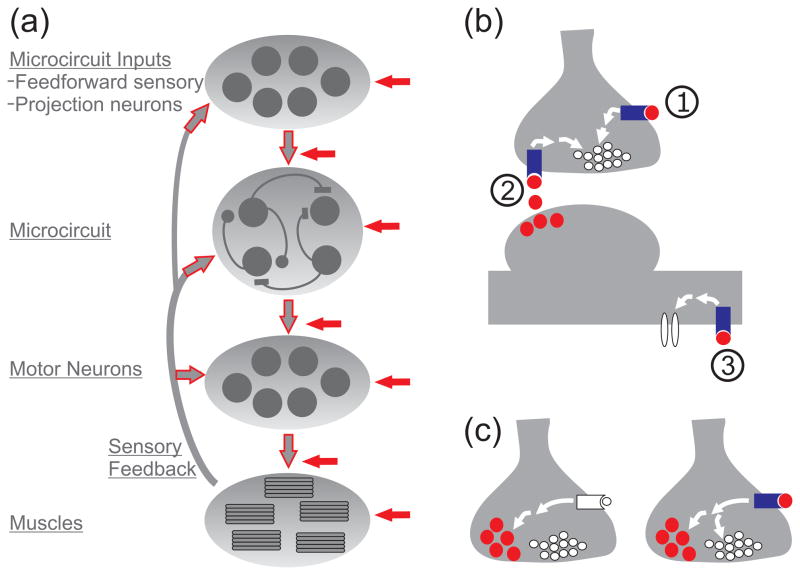
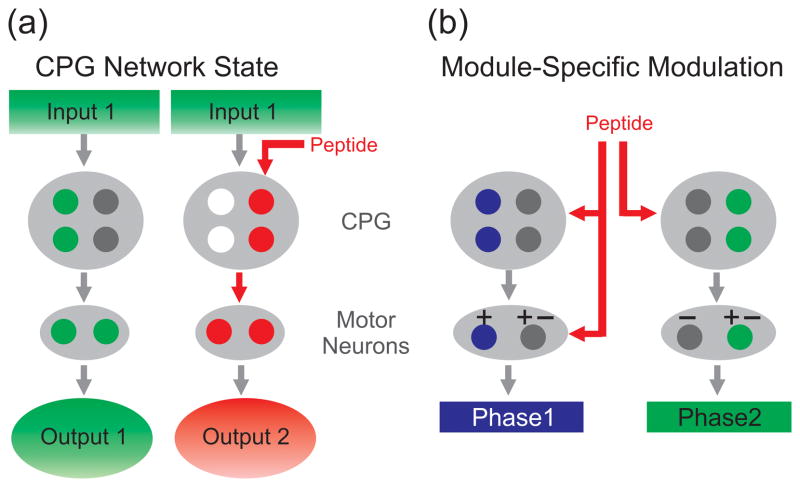
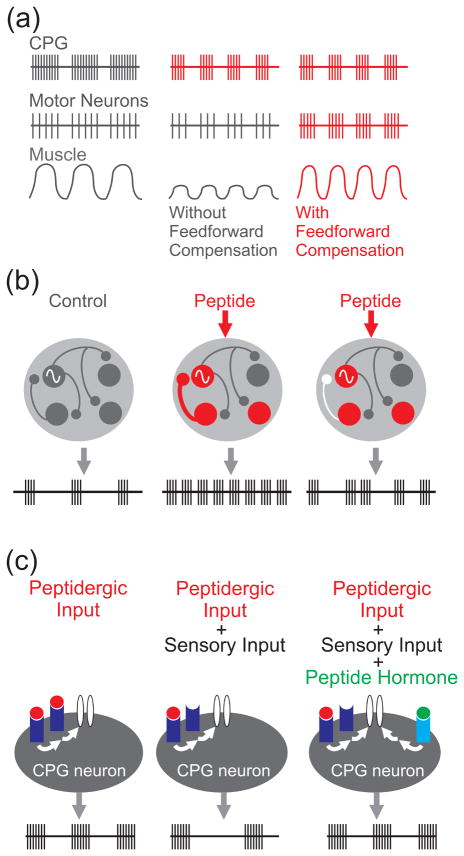
Neuropeptides provide functional flexibility to microcircuits, their inputs and effectors by modulating presynaptic and postsynaptic properties and intrinsic currents. Recent studies have relied less on applied neuropeptide and more on their neural release. In rhythmically active microcircuits (central pattern generators, CPGs), recent studies show that neuropeptide modulation can enable particular activity patterns by organizing specific circuit motifs. Neuropeptides can also modify microcircuit output indirectly, by modulating circuit inputs. Recently elucidated consequences of neuropeptide modulation include changes in motor patterns and behavior, stabilization of rhythmic motor patterns and changes in CPG sensitivity to sensory input. One aspect of neuropeptide modulation that remains enigmatic is the presence of multiple peptide family members in the same nervous system and even the same neurons.
Copyright © 2012 Elsevier Ltd. All rights reserved.
Figures
References
-
- Lingueglia E, Deval E, Lazdunski M. FMRFamide-gated sodium channel and ASIC channels: a new class of ionotropic receptors for FMRFamide and related peptides. Peptides. 2006;27:1138–1152. - PubMed
-
- Salio C, Lossi L, Ferrini F, Merighi A. Neuropeptides as synaptic transmitters. Cell Tissue Res. 2006;326:583–598. - PubMed
-
- Nässel DR. Neuropeptide signaling near and far: how localized and timed is the action of neuropeptides in brain circuits? Invert Neurosci. 2009;9:57–75. - PubMed
Publication types
MeSH terms
Substances
Grants and funding
LinkOut - more resources
Full Text Sources
