


NAD(P)+-malic enzyme mutants of Sinorhizobium sp. strain NGR234, but not Azorhizobium caulinodans ORS571, maintain symbiotic N2 fixation capabilities
- PMID: 22307295
- PMCID: PMC3318798
- DOI: 10.1128/AEM.06412-11
NAD(P)+-malic enzyme mutants of Sinorhizobium sp. strain NGR234, but not Azorhizobium caulinodans ORS571, maintain symbiotic N2 fixation capabilities
Abstract
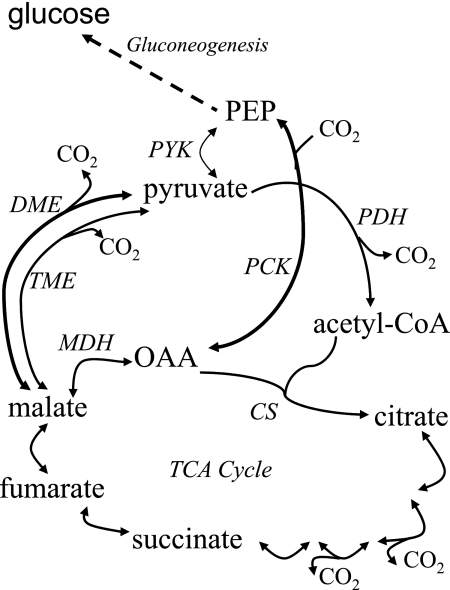
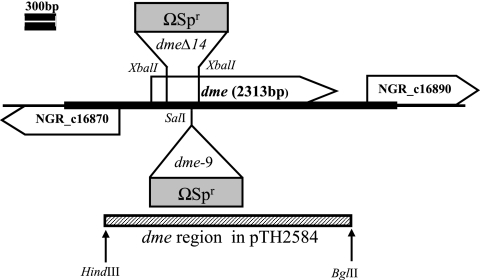
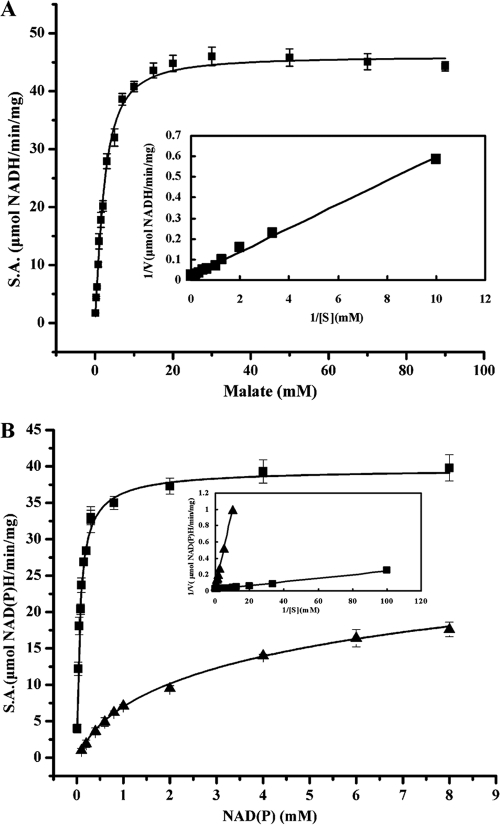
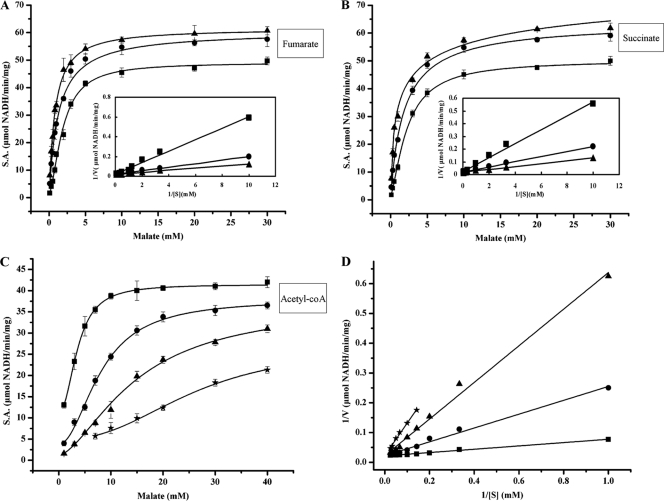
C(4)-dicarboxylic acids appear to be metabolized via the tricarboxylic acid (TCA) cycle in N(2)-fixing bacteria (bacteroids) within legume nodules. In Sinorhizobium meliloti bacteroids from alfalfa, NAD(+)-malic enzyme (DME) is required for N(2) fixation, and this activity is thought to be required for the anaplerotic synthesis of pyruvate. In contrast, in the pea symbiont Rhizobium leguminosarum, pyruvate synthesis occurs via either DME or a pathway catalyzed by phosphoenolpyruvate carboxykinase (PCK) and pyruvate kinase (PYK). Here we report that dme mutants of the broad-host-range Sinorhizobium sp. strain NGR234 formed nodules whose level of N(2) fixation varied from 27 to 83% (plant dry weight) of the wild-type level, depending on the host plant inoculated. NGR234 bacteroids had significant PCK activity, and while single pckA and single dme mutants fixed N(2) at reduced rates, a pckA dme double mutant had no N(2)-fixing activity (Fix(-)). Thus, NGR234 bacteroids appear to synthesize pyruvate from TCA cycle intermediates via DME or PCK pathways. These NGR234 data, together with other reports, suggested that the completely Fix(-) phenotype of S. meliloti dme mutants may be specific to the alfalfa-S. meliloti symbiosis. We therefore examined the ME-like genes azc3656 and azc0119 from Azorhizobium caulinodans, as azc3656 mutants were previously shown to form Fix(-) nodules on the tropical legume Sesbania rostrata. We found that purified AZC3656 protein is an NAD(P)(+)-malic enzyme whose activity is inhibited by acetyl-coenzyme A (acetyl-CoA) and stimulated by succinate and fumarate. Thus, whereas DME is required for symbiotic N(2) fixation in A. caulinodans and S. meliloti, in other rhizobia this activity can be bypassed via another pathway(s).
Figures
References
-
- Arwas R, McKay IA, Rowney FRP, Dilworth MJ, Glenn AR. 1985. Properties of organic-acid utilization mutants of Rhizobium leguminosarum strain-300. J. Gen. Microbiol. 131:2059–2066
-
- Bala A, Giller KE. 2001. Symbiotic specificity of tropical tree rhizobia for host legumes. New Phytol. 149:495–507 - PubMed
-
- Blasing OE, Westhoff P, Svensson P. 2000. Evolution of C4 phospho-enolpyruvate carboxylase in Flaveria, a conserved serine residue in the carboxyl-terminal part of the enzyme is a major determinant for C4-specific characteristics. J. Biol. Chem. 275:27917–27923 - PubMed
-
- Reference deleted.
-
- Bradford MM. 1976. Rapid and sensitive method for quantitation of microgram quantities of protein utilizing principle of protein-dye binding. Anal. Biochem. 72:248–254 - PubMed
Publication types
MeSH terms
Substances
Associated data
- Actions
Grants and funding
LinkOut - more resources
Full Text Sources
Molecular Biology Databases
