


Systematic review of supportive care needs in patients with primary malignant brain tumors
- PMID: 22307475
- PMCID: PMC3309849
- DOI: 10.1093/neuonc/nor229
Systematic review of supportive care needs in patients with primary malignant brain tumors
Abstract
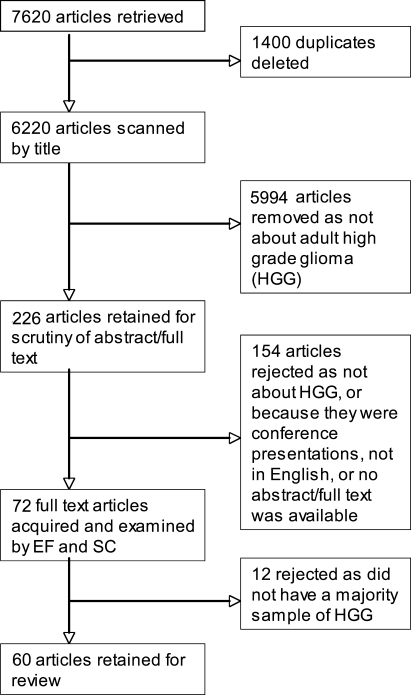
In adults, primary malignant brain tumors (PMBT) are rare, but they have a devastating impact and the chances for survival are limited. UK clinical guidance on supportive care for patients with brain and central nervous system tumors was published in 2006 and relied on very limited evidence. The current article reviews literature from 2005 through 2011 on the psychosocial and supportive needs of patients with PMBT and their families or caregivers. Searches were conducted in PubMed, Web of Science, Psychinfo, Cochrane, Scopus, ASSIA, and Sciencedirect. The search initially yielded 6220 articles, of which 60 were found to be eligible (1%). Eleven qualitative and 49 quantitative studies are reviewed here and mapped onto the structure of the existing UK clinical guidance. Studies suggest rates of depression and anxiety up to 48% in patients and up to 40% in caregivers, with many unmet needs and dissatisfaction with health care provider communication and information. Cognitive deficits increase as the disease progresses, hampering communication and decision-making. A range of neurological and physical symptoms at the end of life need recognition. Some successful supportive and neuropsychological interventions are reported. Although the volume of available studies has increased since UK guidance, many remain observational in nature, with few trials of interventions. However, this review provides an up to date resource for clinicians involved with patients with PMBT, describing current knowledge on patients' psychosocial needs, the type of care which has been found to be beneficial, and highlighting areas where more research needs to be done.
Figures
References
-
- Polednak AP, Flannery JT. Brain, Other Central Nervous System, and Eye Cancer. Cancer. 1995;75:330–337. - PubMed
-
- DeAngelis LM. Brain Tumours. New England Journal of Medicine. 2001;344(2):114–123. - PubMed
-
- Mirimanoff R-O, Gorlia T, Mason W, et al. Radiotherapy and Temozolomide for Newly Diagnosed Glioblastoma: Recursive Partitioning Analysis of the EORTC 26981/22981-NCIC CE3 Phase III Randomized Trial. Journal of Clinical Oncology. 2006;24(16):2563–2569. - PubMed
-
- Stupp R, Mason WP, van den Bent MJ, et al. Radiotherapy plus Concomitant and Adjuvant Temozolomide for Glioblastoma. New England Journal of Medicine. 2005;352:987–996. - PubMed
-
- Stupp R, Hegi ME, Mason WP, et al. Effects of radiotherapy with concomitant and adjuvant temozolomide versus radiotherapy alone on survival in glioblastoma in a randomised phase III study: 5-year analysis of the EORTC-NCIC trial. The Lancet Oncology. 2009;10:459–466. - PubMed
Publication types
MeSH terms
Grants and funding
LinkOut - more resources
Full Text Sources
Other Literature Sources
Medical
