


Stabilization of RNT-1 protein, runt-related transcription factor (RUNX) protein homolog of Caenorhabditis elegans, by oxidative stress through mitogen-activated protein kinase pathway
- PMID: 22308034
- PMCID: PMC3323012
- DOI: 10.1074/jbc.M111.314146
Stabilization of RNT-1 protein, runt-related transcription factor (RUNX) protein homolog of Caenorhabditis elegans, by oxidative stress through mitogen-activated protein kinase pathway
Abstract
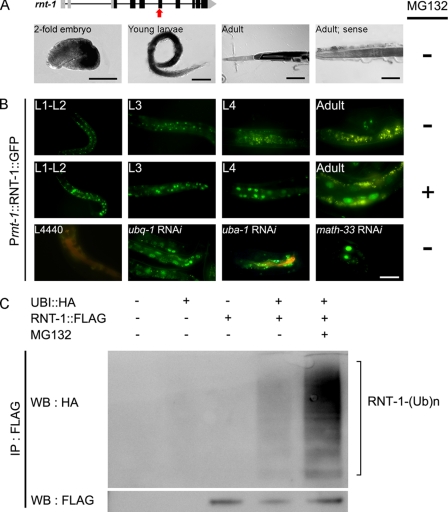
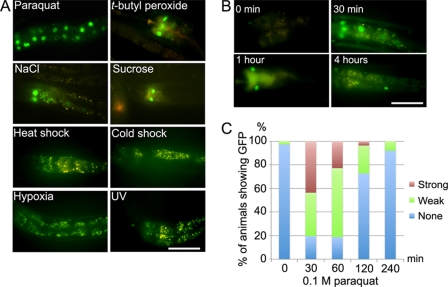
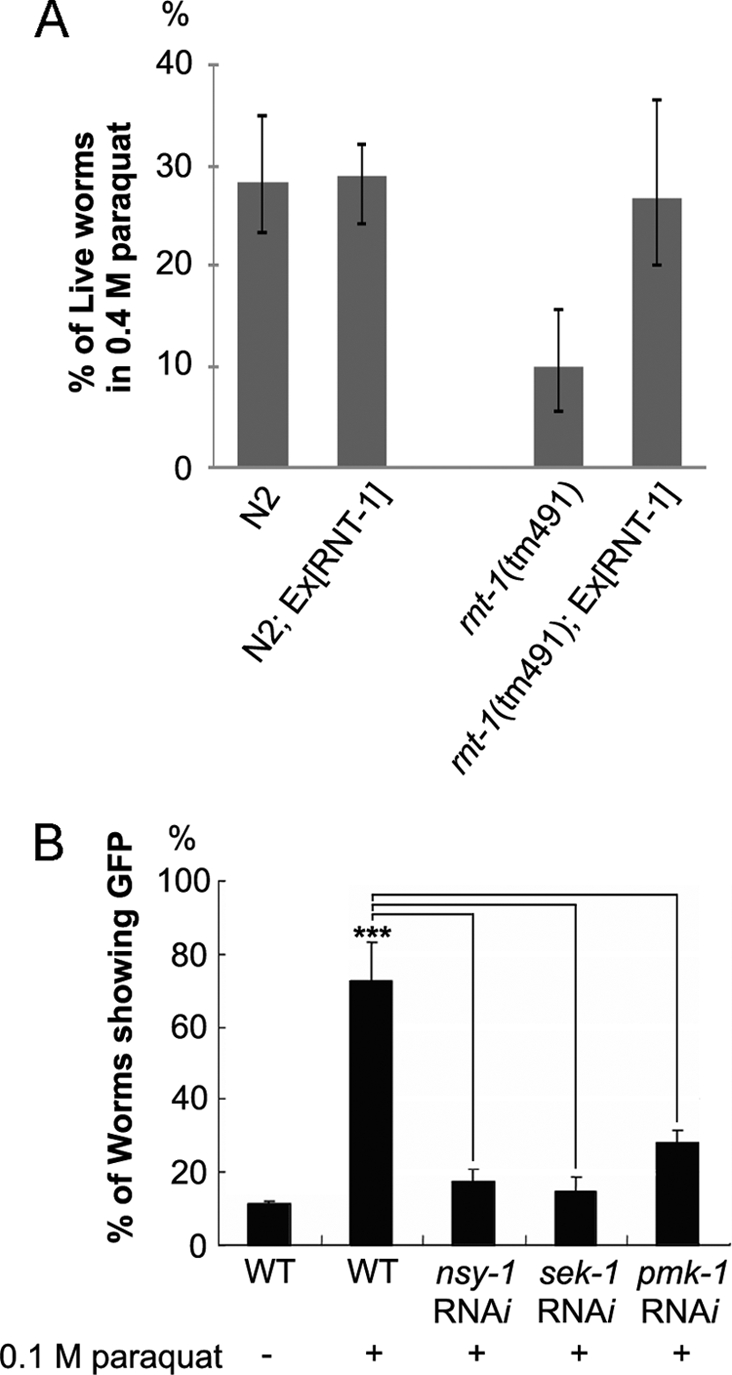
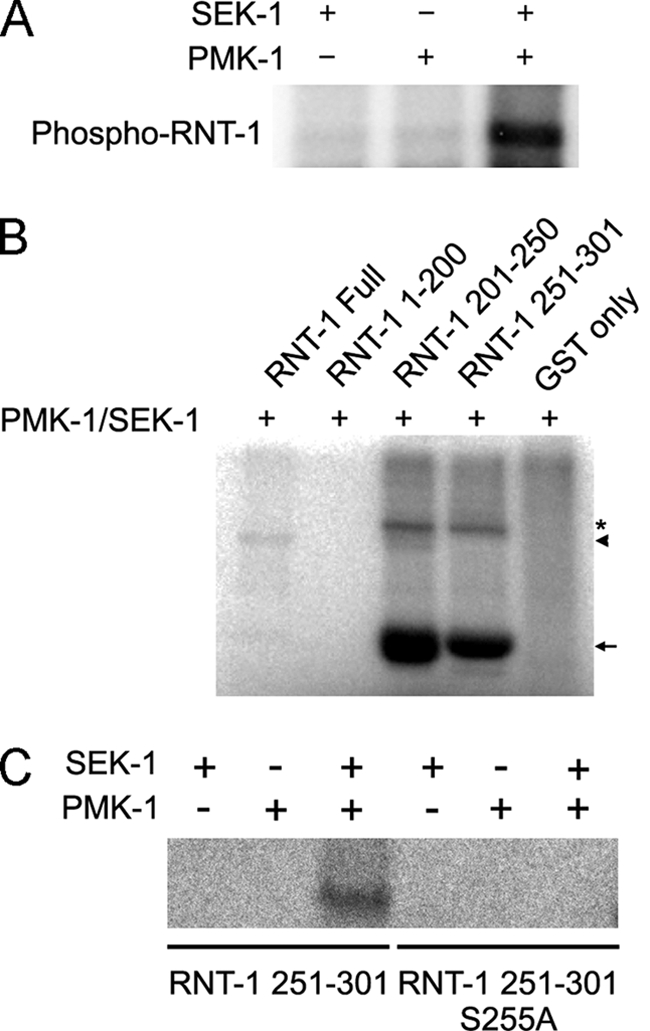
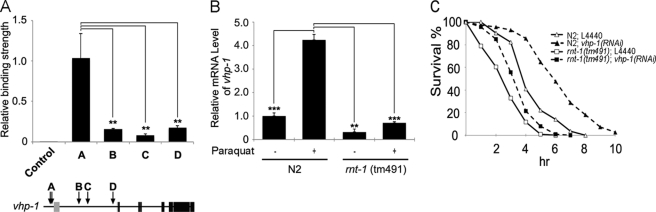
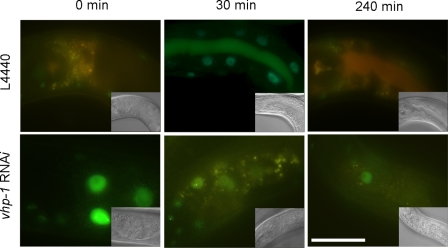
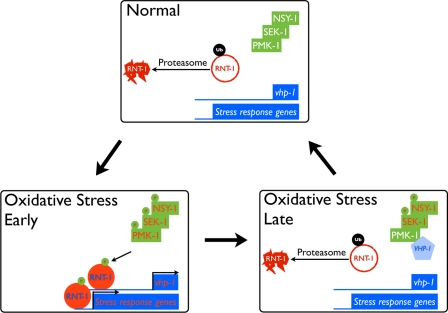
RUNX proteins are evolutionarily conserved transcription factors known to be involved in various developmental processes. Here we report a new role for a RUNX protein: a role in stress response. We show that RNT-1, the Caenorhabditis elegans RUNX homolog, is constantly produced and degraded by the ubiquitination-proteasome pathway in the intestine of the nematode. RNT-1 was rapidly stabilized by oxidative stress, and the rnt-1-mutant animals were more sensitive to oxidative stress, indicating that rapid RNT-1 stabilization is a defense response against the oxidative stress. The MAP kinase pathway is required for RNT-1 stabilization, and RNT-1 was phosphorylated by SEK-1/PMK-1 in vitro. ChIP-sequencing analysis revealed a feedback loop mechanism of the MAP kinase pathway by the VHP-1 phosphatase in the RNT-1-mediated oxidative stress response. We propose that rnt-1 is regulated at the protein level for its role in the immediate response to environmental challenges in the intestine.
Figures
References
-
- Yoshida C. A., Komori T. (2005) Role of Runx proteins in chondrogenesis. Crit. Rev. Eukaryot. Gene Expr. 15, 243–254 - PubMed
-
- Ito Y. (2008) RUNX genes in development and cancer. Regulation of viral gene expression and the discovery of RUNX family genes. Adv. Cancer Res. 99, 33–76 - PubMed
-
- Cohen M. M., Jr. (2009) Perspectives on RUNX genes: an update. Am. J. Med. Genet. Part A 149A, 2629–2646 - PubMed
Publication types
MeSH terms
Substances
LinkOut - more resources
Full Text Sources
Research Materials
Miscellaneous
