


Elevated angiotensin II in rat nodose ganglia primes diabetes-blunted arterial baroreflex sensitivity: involvement of NADPH oxidase-derived superoxide
- PMID: 22308229
- PMCID: PMC3269316
- DOI: 10.4172/2155-6156.1000135
Elevated angiotensin II in rat nodose ganglia primes diabetes-blunted arterial baroreflex sensitivity: involvement of NADPH oxidase-derived superoxide
Abstract
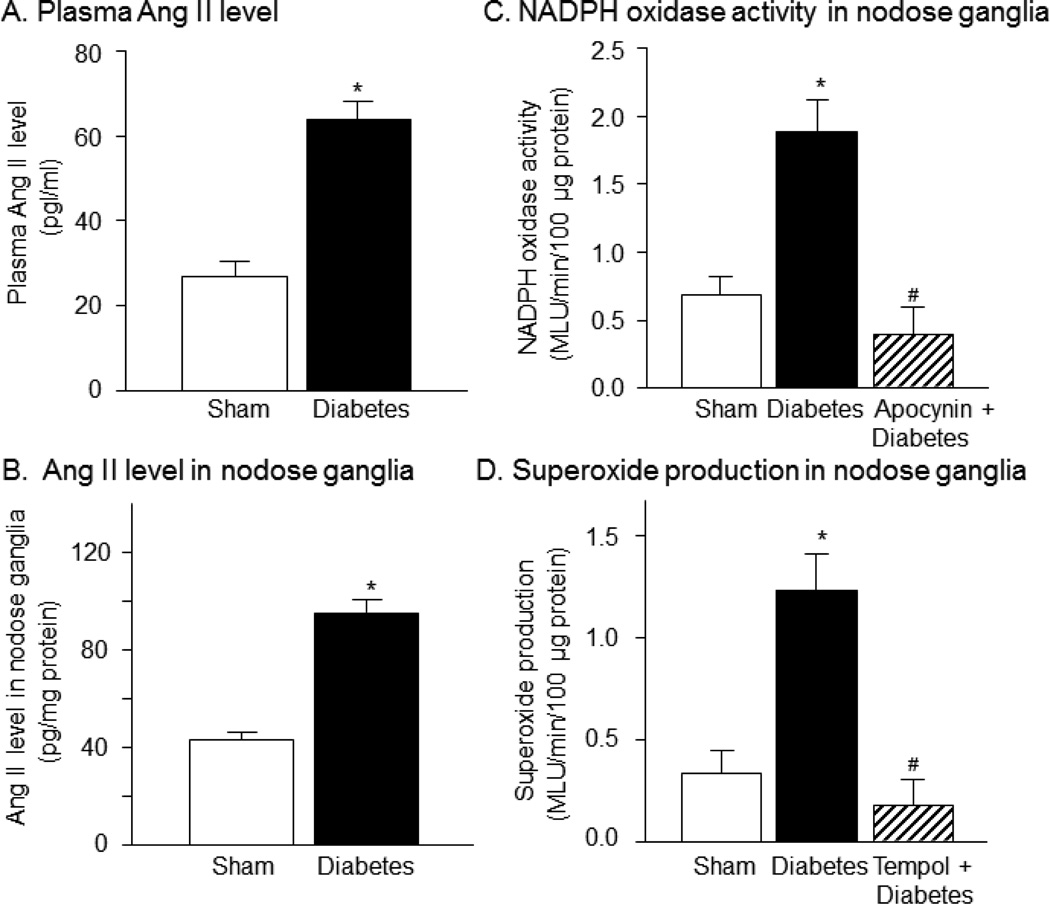
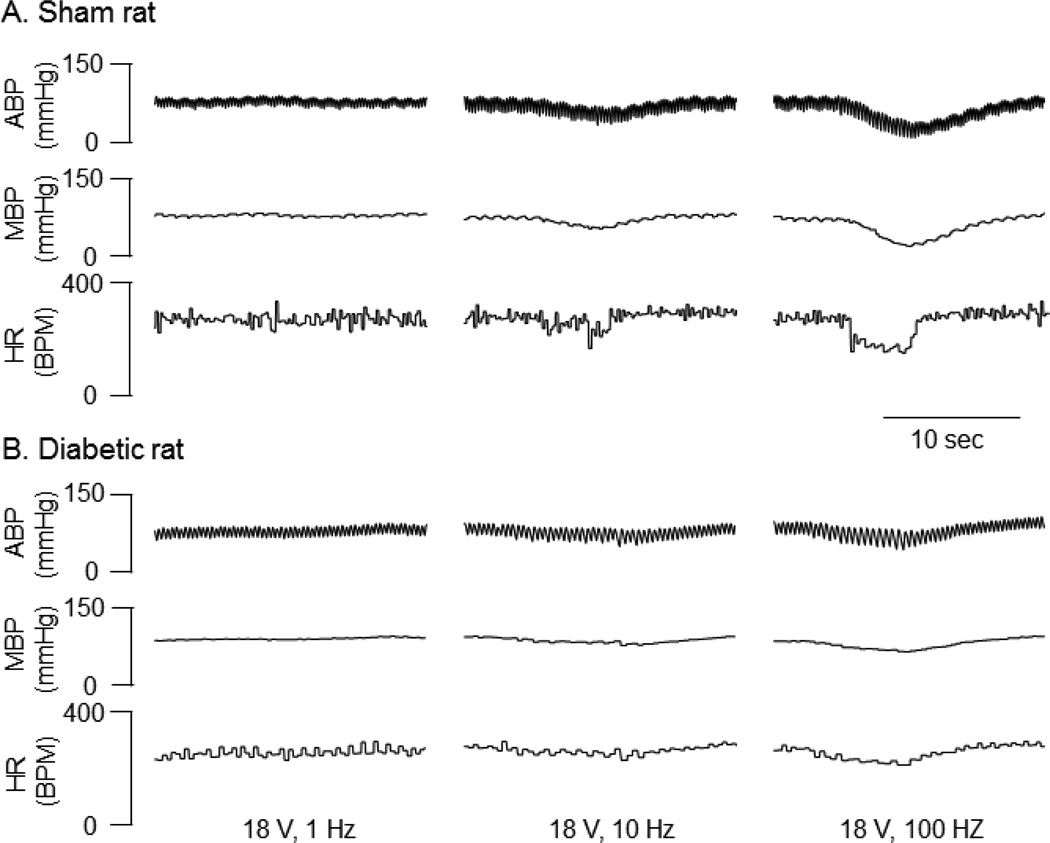
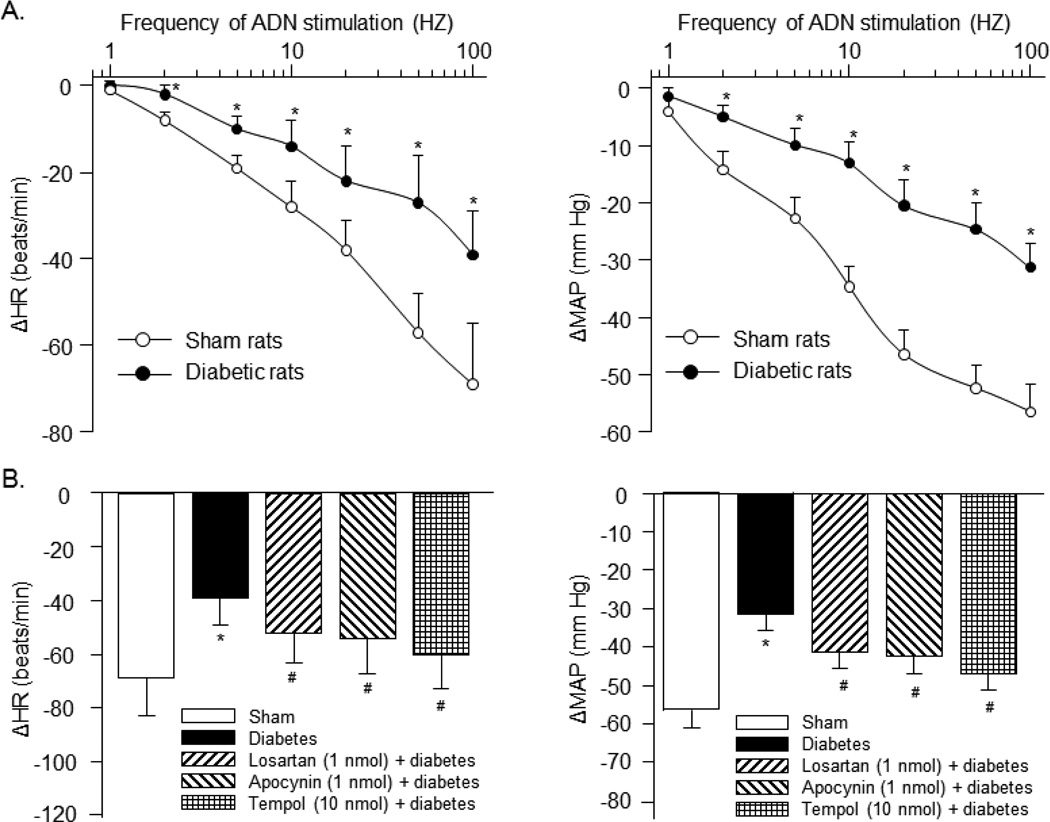
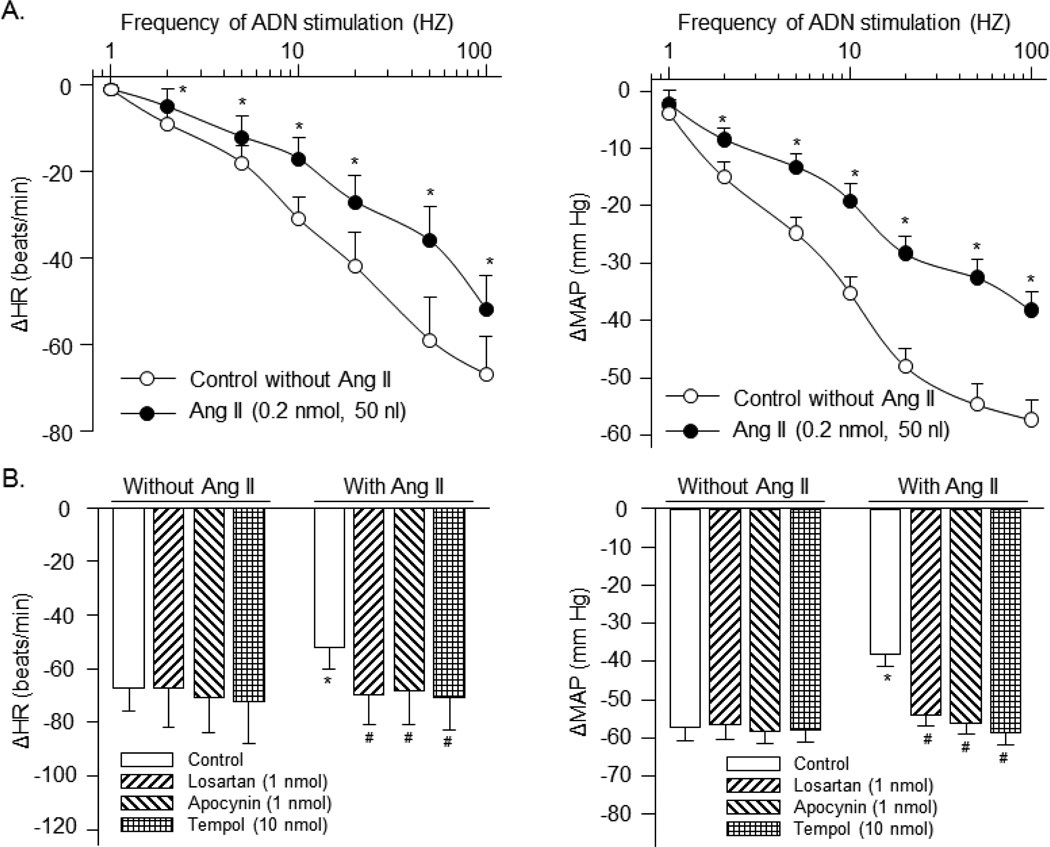
Clinical trials and experimental animal studies have confirmed the contribution of arterial baroreflex impairment in causing excess morbidity and mortality in type-1 diabetes. Our previous study has shown that angiotensin II (Ang II)-NADPH oxidase-superoxide signaling is associated with the reduced cell excitability in the aortic baroreceptor neurons (a primary afferent limb of the arterial baroreflex) from diabetic rats. In this study, we examined whether above-mentioned signaling might contribute to the blunted baroreflex sensitivity in streptozotocin-induced diabetic rats. Using Ang II (125)I radioimmunoassay and lucigenin chemiluminescence method, we found Ang II concentration, NADPH oxidase activity, and superoxide production in the nodose ganglia were enhanced in diabetic rats, compared to sham rats. As an index of the arterial baroreflex sensitivity, the reflex decreases in blood pressure and heart rate evoked by unilateral steady-frequency aortic depressor nerve stimulation were attenuated in diabetic rats. Local microinjection (50 nl) of losartan (an AT(1) receptor antagonist, 1 nmol), apocynin (a NADPH oxidase inhibitor, 1 nmol), and tempol (a superoxide dismutase mimetic, 10 nmol) into the nodose ganglia significantly improved the arterial baroreflex sensitivity in diabetic rats. In addition, these three chemicals also normalized exogenous Ang II-attenuated arterial baroreflex sensitivity in sham rats. These results indicate that overactivation of the Ang II-NADPH oxidase-superoxide signal pathway in the nodose ganglia contributes to the blunted baroreflex sensitivity in diabetes.
Figures
References
-
- Bennett T, Farquhar IK, Hosking DJ, Hampton JR. Assessment of methods for estimating autonomic nervous control of the heart in patients with diabetes mellitus. Diabetes. 1978;27:1167–1174. - PubMed
-
- Dall'Ago P, Fernandes TG, Machado UF, Bello AA, Irigoyen MC. Baroreflex and chemoreflex dysfunction in streptozotocin-diabetic rats. Braz J Med Biol Res. 1997;30:119–124. - PubMed
-
- De Angelis KL, Oliveira AR, Dall'Ago P, Peixoto LR, Gadonski G, Lacchini S, et al. Effects of exercise training on autonomic and myocardial dysfunction in streptozotocin-diabetic rats. Braz J Med Biol Res. 2000;33:635–641. - PubMed
-
- Frattola A, Parati G, Gamba P, Paleari F, Mauri G, Di RM, et al. Time and frequency domain estimates of spontaneous baroreflex sensitivity provide early detection of autonomic dysfunction in diabetes mellitus. Diabetologia. 1997;40:1470–1475. - PubMed
-
- Lishner M, Akselrod S, Avi VM, Oz O, Divon M, Ravid M. Spectral analysis of heart rate fluctuations. A non-invasive, sensitive method for the early diagnosis of autonomic neuropathy in diabetes mellitus. J Auton Nerv Syst. 1987;19:119–125. - PubMed
Grants and funding
LinkOut - more resources
Full Text Sources
Research Materials
Miscellaneous