


Ecotopic viral integration site 1 (EVI1) regulates multiple cellular processes important for cancer and is a synergistic partner for FOS protein in invasive tumors
- PMID: 22308434
- PMCID: PMC3277513
- DOI: 10.1073/pnas.1119229109
Ecotopic viral integration site 1 (EVI1) regulates multiple cellular processes important for cancer and is a synergistic partner for FOS protein in invasive tumors
Abstract
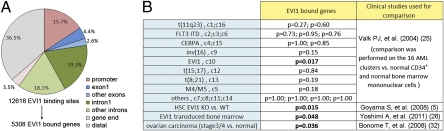
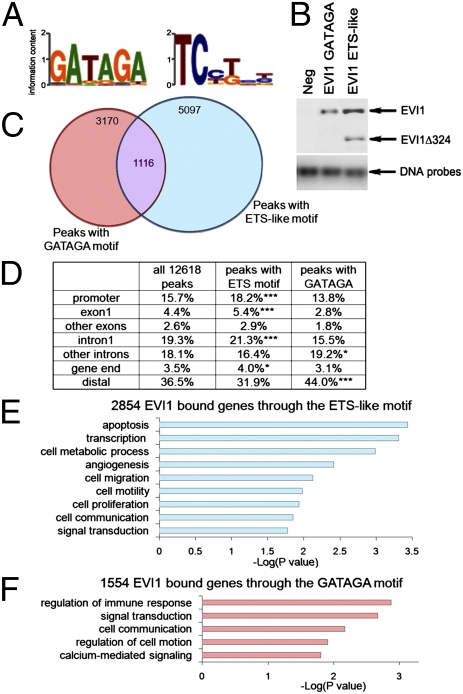
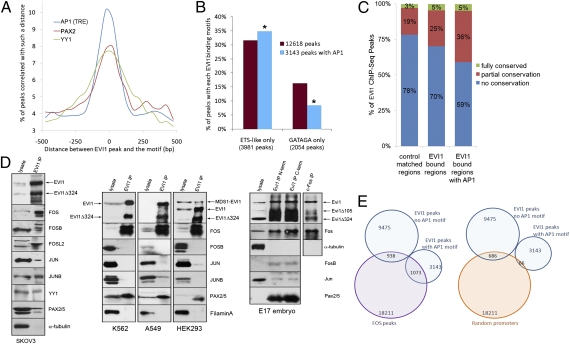
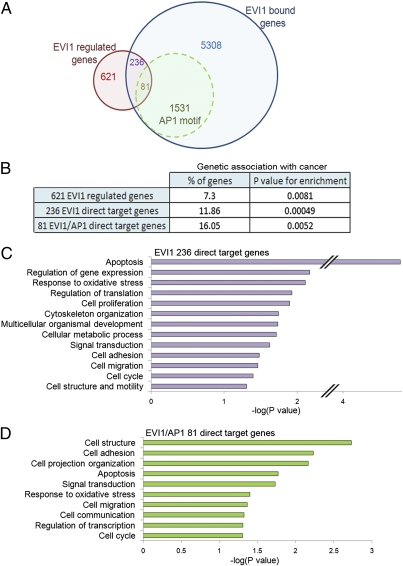
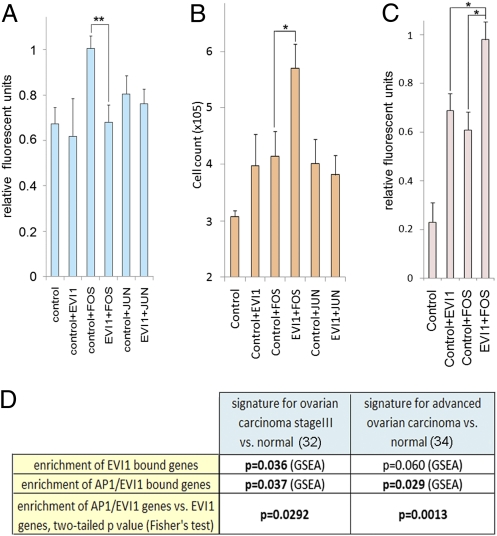
Ecotropic viral integration site 1 (EVI1) is an oncogenic dual domain zinc finger transcription factor that plays an essential role in the regulation of hematopoietic stem cell renewal, and its overexpression in myeloid leukemia and epithelial cancers is associated with poor patient survival. Despite the discovery of EVI1 in 1988 and its emerging role as a dominant oncogene in various types of cancer, few EVI1 target genes are known. This lack of knowledge has precluded a clear understanding of exactly how EVI1 contributes to cancer. Using a combination of ChIP-Seq and microarray studies in human ovarian carcinoma cells, we show that the two zinc finger domains of EVI1 bind to DNA independently and regulate different sets of target genes. Strikingly, an enriched fraction of EVI1 target genes are cancer genes or genes associated with cancer. We also show that more than 25% of EVI1-occupied genes contain linked EVI1 and activator protein (AP)1 DNA binding sites, and this finding provides evidence for a synergistic cooperative interaction between EVI1 and the AP1 family member FOS in the regulation of cell adhesion, proliferation, and colony formation. An increased number of dual EVI1/AP1 target genes are also differentially regulated in late-stage ovarian carcinomas, further confirming the importance of the functional cooperation between EVI1 and FOS. Collectively, our data indicate that EVI1 is a multipurpose transcription factor that synergizes with FOS in invasive tumors.
Conflict of interest statement
The authors declare no conflict of interest.
Figures
References
-
- Ogawa S, et al. Increased Evi-1 expression is frequently observed in blastic crisis of chronic myelocytic leukemia. Leukemia. 1996;10:788–794. - PubMed
-
- Lugthart S, et al. High EVI1 levels predict adverse outcome in acute myeloid leukemia: Prevalence of EVI1 overexpression and chromosome 3q26 abnormalities underestimated. Blood. 2008;111:4329–4337. - PubMed
-
- Bei JX, et al. A genome-wide association study of nasopharyngeal carcinoma identifies three new susceptibility loci. Nat Genet. 2010;42:599–603. - PubMed
-
- Choi YW, et al. Comparative genomic hybridization array analysis and real time PCR reveals genomic alterations in squamous cell carcinomas of the lung. Lung Cancer. 2007;55:43–51. - PubMed
Publication types
MeSH terms
Substances
Associated data
- Actions
- Actions
- Actions
LinkOut - more resources
Full Text Sources
Other Literature Sources
Molecular Biology Databases
