


Cytotoxic mechanism of selenomethionine in yeast
- PMID: 22311978
- PMCID: PMC3323055
- DOI: 10.1074/jbc.M111.324244
Cytotoxic mechanism of selenomethionine in yeast
Abstract
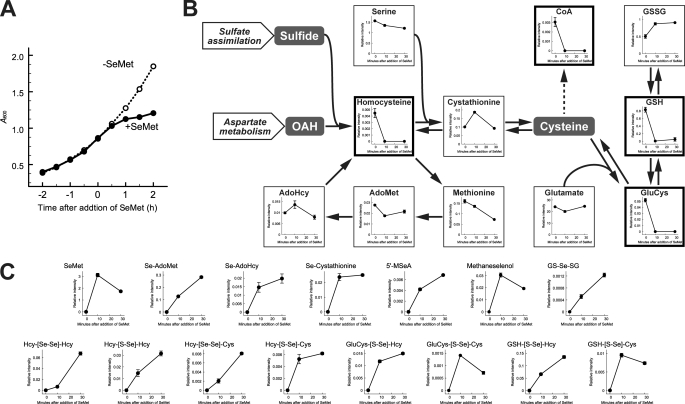
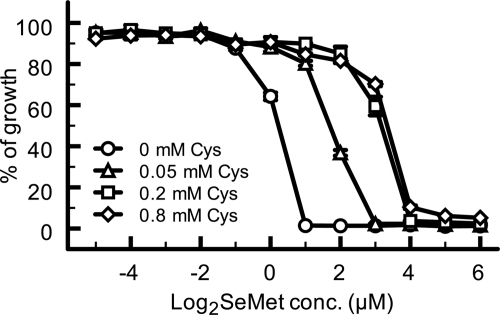
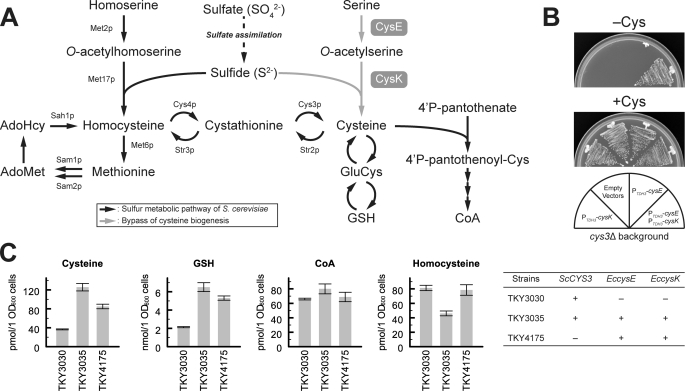
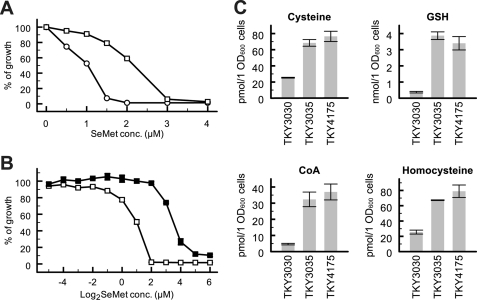
Although selenium is an essential element, its excessive uptake is detrimental to living organisms. The significance of selenium for living organisms has been exploited for various purposes. However, the molecular basis of selenium toxicity is not completely understood. Here, we applied a capillary electrophoresis time-of-flight mass spectrometry-based metabolomics approach to analysis of yeast cells treated with selenomethionine. The data indicated that intracellular thiol compounds are significantly decreased, and diselenide and selenosulfide compounds are increased in selenomethionine-treated cells. The growth defect induced by selenomethionine was recovered by extracellular addition of cysteine and by genetic modification of yeast cells that have an additional de novo synthetic pathway for cysteine. Because cysteine is an intermediate of thiol compounds, these results suggested that the loss of a reduced form of thiol compounds due to selenomethionine causes a growth defect of yeast cells.
Figures
References
-
- Pappas A. C., Zoidis E., Surai P. F., Zervas G. (2008) Selenoproteins and maternal nutrition. Comp. Biochem. Physiol. B Biochem. Mol. Biol. 151, 361–372 - PubMed
-
- Leinfelder W., Zehelein E., Mandrand-Berthelot M. A., Böck A. (1988) Gene for a novel tRNA species that accepts l-serine and cotranslationally inserts selenocysteine. Nature 331, 723–725 - PubMed
-
- Kaiser J. T., Gromadski K., Rother M., Engelhardt H., Rodnina M. V., Wahl M. C. (2005) Structural and functional investigation of a putative archaeal selenocysteine synthase. Biochemistry 44, 13315–13327 - PubMed
MeSH terms
Substances
LinkOut - more resources
Full Text Sources
Other Literature Sources
Molecular Biology Databases
