


Neurocysticercosis: a review
- PMID: 22312322
- PMCID: PMC3261519
- DOI: 10.1100/2012/159821
Neurocysticercosis: a review
Abstract
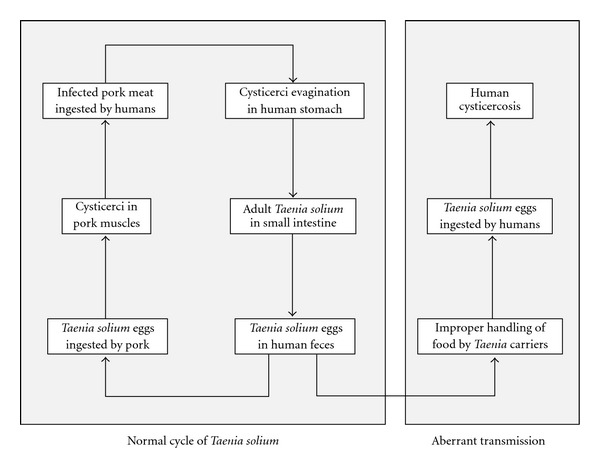
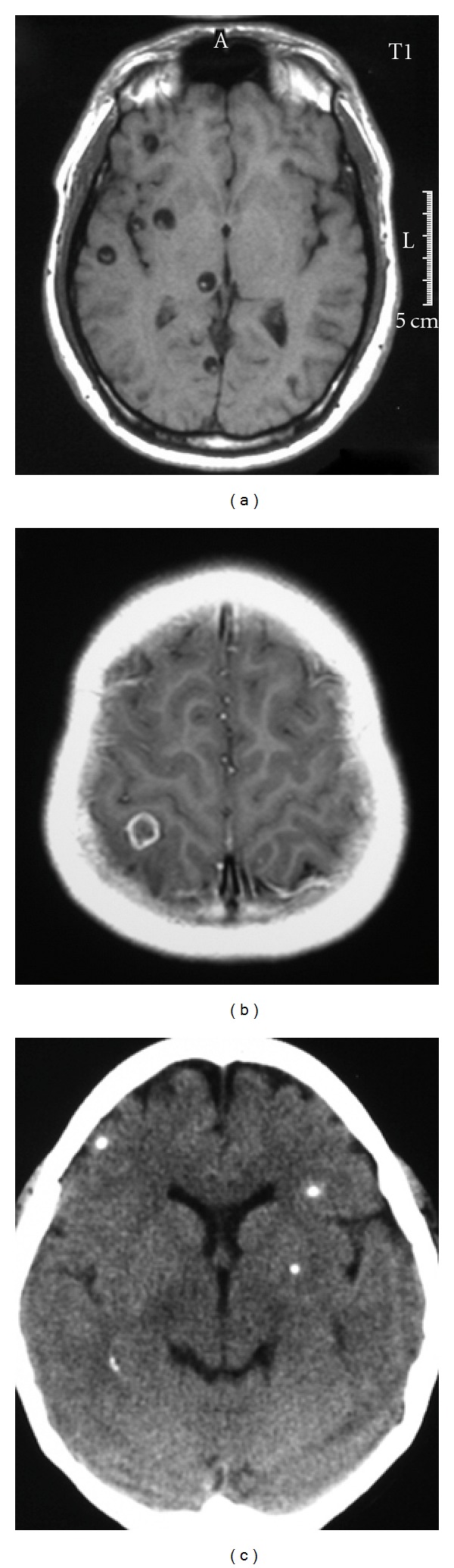
Neuroysticercosis is the most common helminthic infection of the nervous system, and a leading cause of acquired epilepsy worldwide. The disease occurs when humans become intermediate hosts of Taenia solium by ingesting its eggs from contaminated food or, most often, directly from a taenia carrier by the fecal-to-oral route. Cysticerci may be located in brain parenchyma, subarachnoid space, ventricular system, or spinal cord, causing pathological changes that are responsible for the pleomorphism of neurocysticercosis. Seizures are the most common clinical manifestation, but many patients present with focal deficits, intracranial hypertension, or cognitive decline. Accurate diagnosis of neurocysticercosis is possible after interpretation of clinical data together with findings of neuroimaging studies and results of immunological tests. The introduction of cysticidal drugs have changed the prognosis of most patients with neurocysticercosis. These drugs have shown to reduce the burden of infection in the brain and to improve the clinical course of the disease in most patients. Further efforts should be directed to eradicate the disease through the implementation of control programs against all the interrelated steps in the life cycle of T. solium, including human carriers of the adult tapeworm, infected pigs, and eggs in the environment.
Figures
References
-
- Del Brutto OH, Santibañez R, Idrovo L, et al. Epilepsy and neurocysticercosis in Atahualpa: a door-to-door survey in rural coastal Ecuador. Epilepsia. 2005;46(4):583–587. - PubMed
-
- Medina MT, Duron RM, Martinez L. Prevalence, incidence, and etioloy of epilepsies in rural Honduras: the Salama study. Epilepsia. 2005;46:124–131. - PubMed
-
- Montano SM, Villaran MV, Ylquimiche L, et al. Neurocysticercosis: association between seizures, serology, and brain CT in rural Peru. Neurology. 2005;65(2):229–234. - PubMed
-
- White AC., Jr. Neurocysticercosis: updates on epidemiology, pathogenesis, diagnosis, and management. Annual Review of Medicine. 2000;51:187–206. - PubMed
Publication types
MeSH terms
Substances
LinkOut - more resources
Full Text Sources
