


The Effects of Temperature and Relative Humidity on the Viability of the SARS Coronavirus
- PMID: 22312351
- PMCID: PMC3265313
- DOI: 10.1155/2011/734690
The Effects of Temperature and Relative Humidity on the Viability of the SARS Coronavirus
Abstract
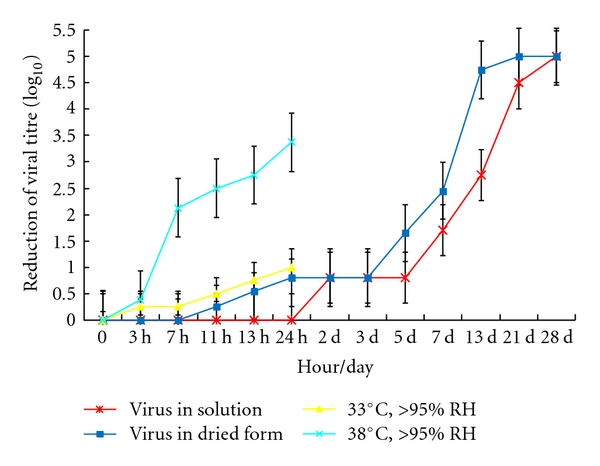
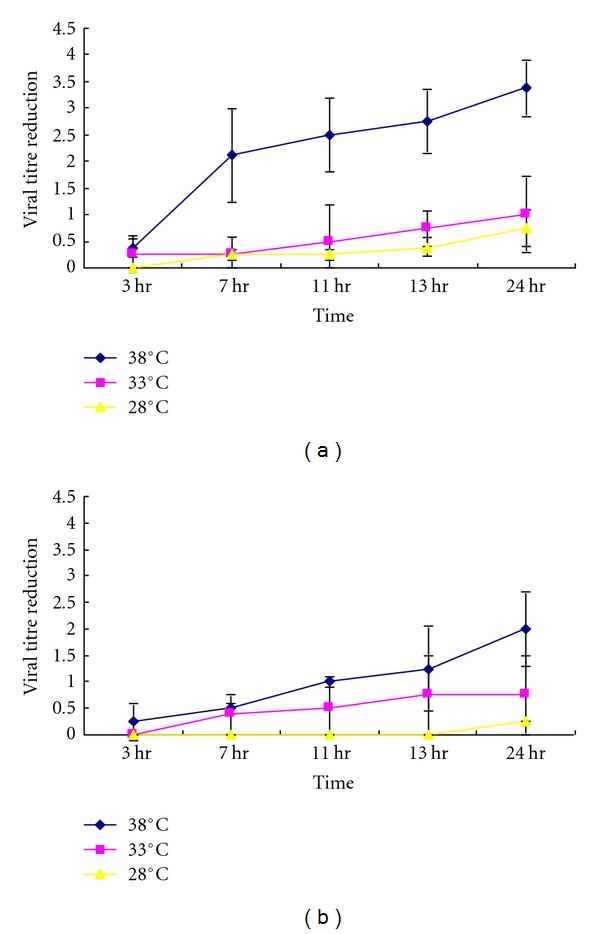
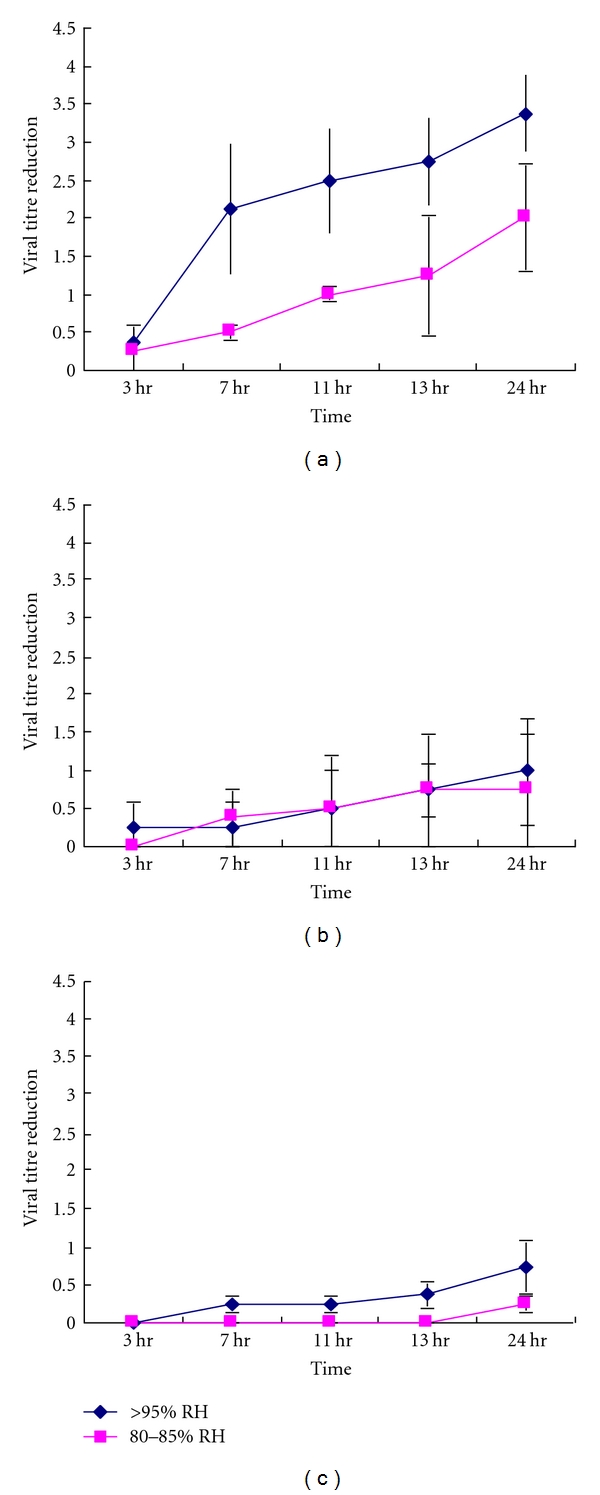
The main route of transmission of SARS CoV infection is presumed to be respiratory droplets. However the virus is also detectable in other body fluids and excreta. The stability of the virus at different temperatures and relative humidity on smooth surfaces were studied. The dried virus on smooth surfaces retained its viability for over 5 days at temperatures of 22-25°C and relative humidity of 40-50%, that is, typical air-conditioned environments. However, virus viability was rapidly lost (>3 log(10)) at higher temperatures and higher relative humidity (e.g., 38°C, and relative humidity of >95%). The better stability of SARS coronavirus at low temperature and low humidity environment may facilitate its transmission in community in subtropical area (such as Hong Kong) during the spring and in air-conditioned environments. It may also explain why some Asian countries in tropical area (such as Malaysia, Indonesia or Thailand) with high temperature and high relative humidity environment did not have major community outbreaks of SARS.
Figures
References
-
- Ksiazek TG, Erdman D, Goldsmith CS, et al. A novel coronavirus associated with severe acute respiratory syndrome. New England Journal of Medicine. 2003;348(20):1953–1966. - PubMed
-
- Drosten C, Günther S, Preiser W, et al. Identification of a novel coronavirus in patients with severe acute respiratory syndrome. New England Journal of Medicine. 2003;348(20):1967–1976. - PubMed
LinkOut - more resources
Full Text Sources
Other Literature Sources
Miscellaneous
