


Parenteral anticoagulants: Antithrombotic Therapy and Prevention of Thrombosis, 9th ed: American College of Chest Physicians Evidence-Based Clinical Practice Guidelines
- PMID: 22315264
- PMCID: PMC3278070
- DOI: 10.1378/chest.11-2291
Parenteral anticoagulants: Antithrombotic Therapy and Prevention of Thrombosis, 9th ed: American College of Chest Physicians Evidence-Based Clinical Practice Guidelines
Erratum in
- Chest. 2012 May;141(5):1369. Dosage error in article text
- Chest. 2013 Aug;144(2):721. Dosage error in article text
Abstract
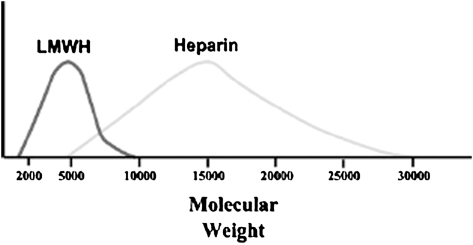
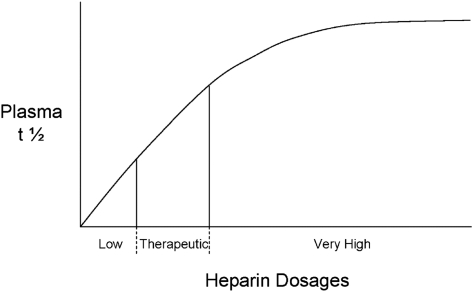
This article describes the pharmacology of approved parenteral anticoagulants. These include the indirect anticoagulants, unfractionated heparin (UFH), low-molecular-weight heparins (LMWHs), fondaparinux, and danaparoid, as well as the direct thrombin inhibitors hirudin, bivalirudin, and argatroban. UFH is a heterogeneous mixture of glycosaminoglycans that bind to antithrombin via a unique pentasaccharide sequence and catalyze the inactivation of thrombin, factor Xa, and other clotting enzymes. Heparin also binds to cells and plasma proteins other than antithrombin causing unpredictable pharmacokinetic and pharmacodynamic properties and triggering nonhemorrhagic side effects, such as heparin-induced thrombocytopenia (HIT) and osteoporosis. LMWHs have greater inhibitory activity against factor Xa than thrombin and exhibit less binding to cells and plasma proteins than heparin. Consequently, LMWH preparations have more predictable pharmacokinetic and pharmacodynamic properties, have a longer half-life than heparin, and are associated with a lower risk of nonhemorrhagic side effects. LMWHs can be administered once daily or bid by subcutaneous injection, without coagulation monitoring. Based on their greater convenience, LMWHs have replaced UFH for many clinical indications. Fondaparinux, a synthetic pentasaccharide, catalyzes the inhibition of factor Xa, but not thrombin, in an antithrombin-dependent fashion. Fondaparinux binds only to antithrombin. Therefore, fondaparinux-associated HIT or osteoporosis is unlikely to occur. Fondaparinux exhibits complete bioavailability when administered subcutaneously, has a longer half-life than LMWHs, and is given once daily by subcutaneous injection in fixed doses, without coagulation monitoring. Three additional parenteral direct thrombin inhibitors and danaparoid are approved as alternatives to heparin in patients with HIT.
Figures


Comment in
-
The use of average body weight in dosing unfractionated heparin.Chest. 2013 Jun;143(6):1840-1841. doi: 10.1378/chest.13-0255. Chest. 2013. PMID: 23732612 No abstract available.
References
-
- McLean J. The thromboplastic action of cephalin. Am J Physiol. 1916;41:250–257.
-
- Brinkhous K, Smith H, Warner E, et al. The inhibition of blood clotting: an unidentified substance which acts in conjunction with heparin to prevent the conversion of prothrombin into thrombin. Am J Physiol. 1939;125:683–687.
-
- Abildgaard U. Highly purified antithrombin 3 with heparin cofactor activity prepared by disc electrophoresis. Scand J Clin Lab Invest. 1968;21(1):89–91. - PubMed
-
- Merlini PA, Bauer KA, Oltrona L, et al. Persistent activation of coagulation mechanism in unstable angina and myocardial infarction. Circulation. 1994;90(1):61–68. - PubMed
Publication types
MeSH terms
Substances
Grants and funding
LinkOut - more resources
Full Text Sources
Other Literature Sources
Medical
