


Complex etiology underlies risk and survival in head and neck cancer human papillomavirus, tobacco, and alcohol: a case for multifactor disease
- PMID: 22315596
- PMCID: PMC3270416
- DOI: 10.1155/2012/571862
Complex etiology underlies risk and survival in head and neck cancer human papillomavirus, tobacco, and alcohol: a case for multifactor disease
Abstract
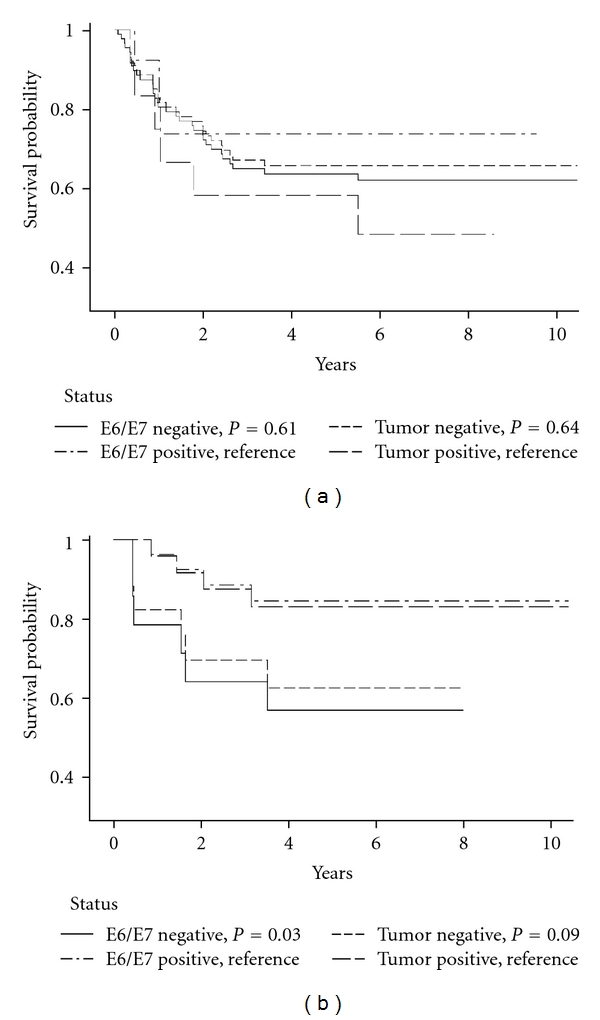
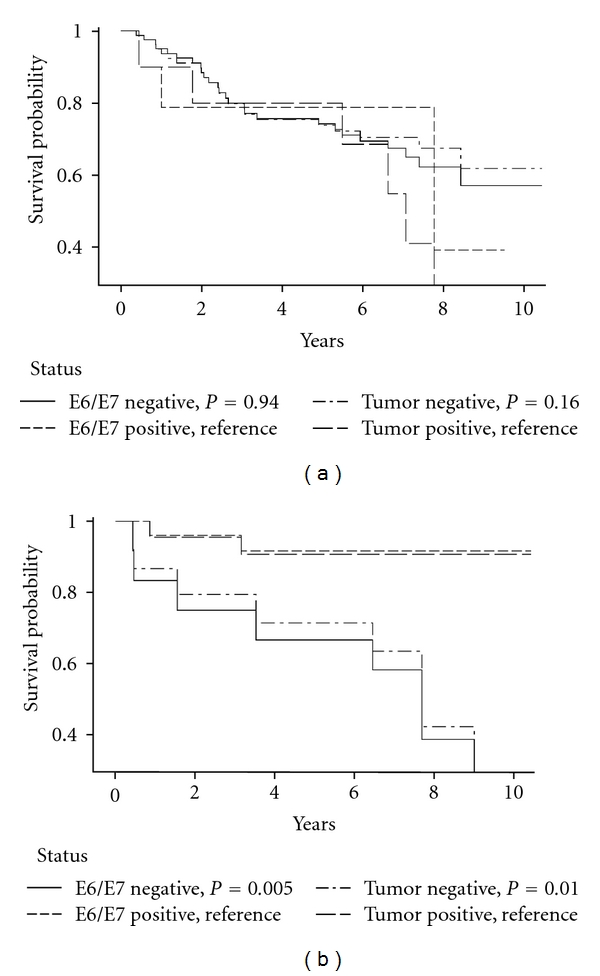
Findings are inconsistent about whether tobacco, alcohol, and human papillomavirus (HPV) are two independent HNC risk factor groups that distinguish an infection-associated cancer from a tobacco/alcohol-associated HNC. We found that cancer in the oral cavity risk was greater in HPV-E6/E7 seropositive/heavy tobacco users (adjusted OR = 3.5) than in HPV-seronegative/heavy tobacco users (adjusted OR = 1.4); and HPV-seropositive/heavy alcohol users (adjusted OR = 9.8) had greater risk than HPV-seronegative/heavy alcohol users (adjusted OR = 3.1). In contrast, the risk of oropharyngeal cancer was greater in the HPV-seronegative/heavy tobacco (adjusted OR = 11.0) than in HPV-seropositive/heavy tobacco (adjusted OR = 4.7) users and greater in HPV-seronegative/heavy alcohol users (adjusted OR = 24.3) compared to HPV-seropositive/heavy alcohol users (adjusted OR = 8.5). Disease-specific and recurrence-free adjusted survival were significantly worse in oropharyngeal HPV-seronegative cases with no survival differences by HPV status seen in oral cavity cases. The association between tobacco/alcohol, HPV, and tumor site is complex. There appear to be distinct tumor site differences in the combined exposure risks, suggesting that different molecular pathways are involved.
Figures
References
-
- Smith EM, Rubenstein LM, Haugen TH, Hamsikova E, Turek LP. Tobacco and alcohol use increases the risk of both HPV-associated and HPV-independent head and neck cancers. Cancer Causes and Control. 2010;21(9):1369–1378. - PubMed
-
- Kreimer AR, Clifford GM, Boyle P, Franceschi S. Human papillomavirus types in head and neck squamous cell carcinomas worldwide: a systemic review. Cancer Epidemiology Biomarkers and Prevention. 2005;14(2):467–475. - PubMed
-
- Gillison ML, D’Souza G, Westra W, et al. Distinct risk factor profiles for human papillomavirus type 16-positive and human papillomavirus type 16-negative head and neck cancers. Journal of the National Cancer Institute. 2008;100(6):407–420. - PubMed
-
- Applebaum KM, Furniss CS, Zeka A, et al. Lack of association of alcohol and tobacco with HPV16-associated head and neck cancer. Journal of the National Cancer Institute. 2007;99(23):1801–1810. - PubMed
-
- Herrero R, Castellsagué X, Pawlita M, et al. Human papillomavirus and oral cancer: the international agency for research on cancer multicenter study. Journal of the National Cancer Institute. 2003;95(23):1772–1783. - PubMed
Grants and funding
LinkOut - more resources
Full Text Sources
