


Advances in SXFA-coated SAW chemical sensors for organophosphorous compound detection
- PMID: 22319366
- PMCID: PMC3274004
- DOI: 10.3390/s110201526
Advances in SXFA-coated SAW chemical sensors for organophosphorous compound detection
Abstract
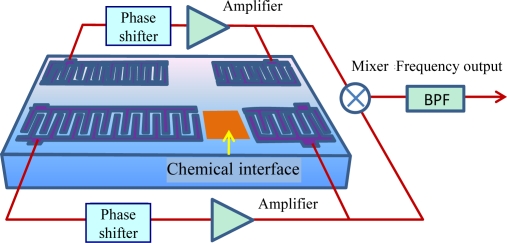
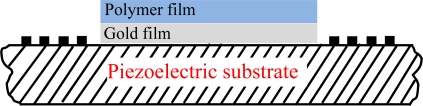
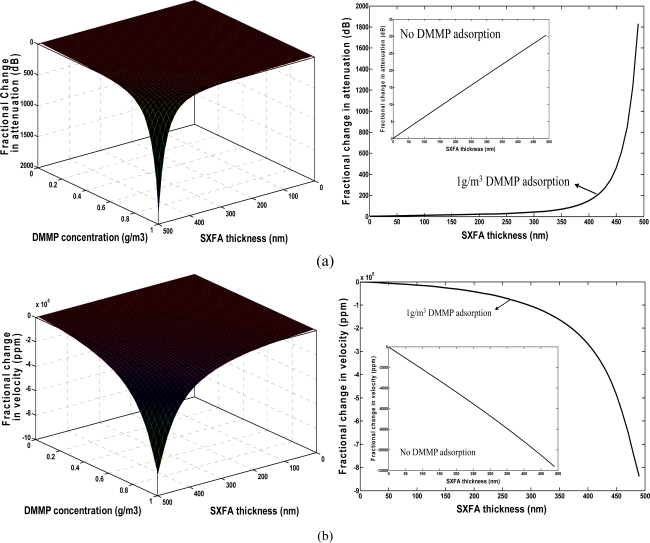
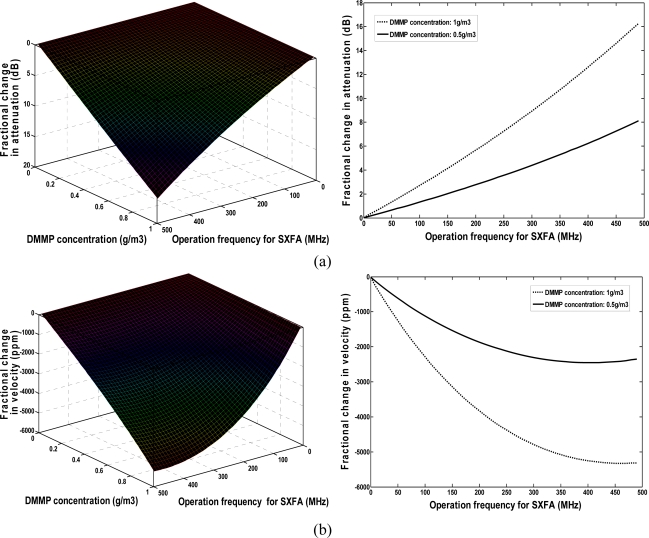
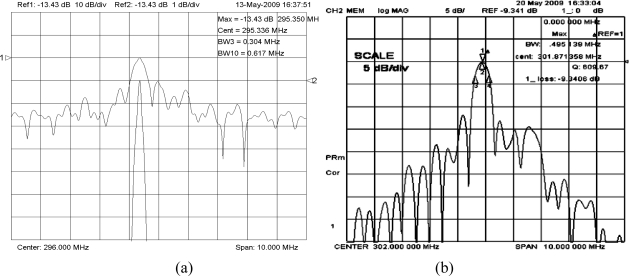
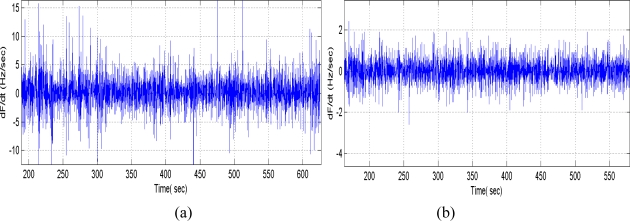
A polymer-coated surface acoustic wave (SAW)-based chemical sensor for organophosphorous compound sensing at extremely low concentrations was developed, in which a dual-delay-line oscillator coated with fluoroalcoholpolysiloxane (SXFA) acted as the sensor element. Response mechanism analysis was performed on the SXFA-coated chemical sensor, resulting in the optimal design parameters. The shear modulus of the SXFA, which is the key parameter for theoretical simulation, was extracted experimentally. New designs were done on the SAW devices to decrease the insertion loss. Referring to the new phase modulation approach, superior short-term frequency stability (±2 Hz in seconds) was achieved from the SAW oscillator using the fabricated 300 MHz delay line as the feedback element. In the sensor experiment on dimethylmethylphosphonate (DMMP) detection, the fabricated SXFA-coated chemical sensor exhibited an excellent threshold detection limit up to 0.004 mg/m(3) (0.7 ppb) and good sensitivity (∼485 Hz/mg/m(3) for a DMMP concentration of 2∼14 mg/m(3)).
Keywords: SAW chemical sensor; oscillator; response mechanism; threshold detection limit.
Figures
References
-
- Ballantine D.S., Jr., White R.M. Acoustic Wave Sensors: Theory, Design, & Physico-Chemical Applications. Academic Press; San Diego, CA. USA: 1996.
-
- Adhikari B., Majumdar S. Polymers in sensor applications. Prog. Polym. Sci. 2004;29:699–766.
-
- Ricco A.J., Martin S.J., Zipperian T.E. Surface acoustic wave gas sensor based on film conductivity changes. Sens. Actuat. 1985;8:319–333.
-
- Lec R., Vetelino J.F., Falconer R.S., Xu Z. Microscopic Theory of SAW gas microsensor. Proceedings of IEEE Ultrasonics Symp; Chicago, IL, USA. October 14–16, 1998; pp. 585–589.
-
- Shen C., Shen Y., Wu I. Viscoelastic properties of polymer films on surface acoustic wave organophosphorous vapor sensors. J. Mater. Sci. 2002;37:295–301.
Publication types
MeSH terms
Substances
LinkOut - more resources
Full Text Sources
Other Literature Sources
