


Designing and implementing research on a statewide quality improvement initiative: the DIAMOND study and initiative
- PMID: 22322100
- PMCID: PMC3360981
- DOI: 10.1097/MLR.0b013e318249d8a4
Designing and implementing research on a statewide quality improvement initiative: the DIAMOND study and initiative
Abstract
Objective: To demonstrate a rigorous methodology that optimally balanced internal validity with generalizability to evaluate a statewide collaborative that implemented an evidence-based, collaborative care model for depression management in primary care.
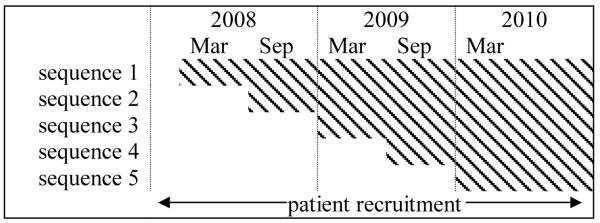
Study design and setting: Several operational features of the DIAMOND (Depression Improvement Across Minnesota, Offering a New Direction) Initiative suggested that the DIAMOND Study use a staggered implementation design with repeated cross-sections of patients across clinical settings. A multilevel recruitment strategy elicited virtually complete study participation from the medical groups, clinics, and health plans that coordinated efforts to deliver and reimburse DIAMOND care. Patient identification capitalized on large health plan claims databases to rapidly identify the population of patients newly treated for depression in DIAMOND clinics.
Results: The staggered implementation design and multilevel recruitment strategy made it possible to evaluate DIAMOND by holding confounding factors constant and accurately identifying an intent-to-treat population of patients treated for depression without intruding on or requiring effort from their clinics.
Conclusions: Recruitment and data collection from health plans, medical groups and clinics, and patients ensured a representative, intent-to-treat sample of study-enrolled patients. Separating patient identification from care delivery reduced threats of selection bias and enabled comparisons between the treated population and study sample. A key challenge is that intent-to-treat patients may not be exposed to DIAMOND which dilutes the effect size but offers realistic expectations of the impact of quality improvement in a population of treated patients.
Figures
References
-
- Gilbody S, Bower P, Fletcher J, et al. Collaborative care for depression: a cumulative meta-analysis and review of longer-term outcomes. Arch Intern Med. 2006;166:2314–2321. - PubMed
-
- Williams JW, Jr., Gerrity M, Holsinger T, et al. Systematic review of multifaceted interventions to improve depression care. Gen Hosp Psychiatry. 2007;29:91–116. - PubMed
-
- Korsen N, Pietruszewski P. Translating evidence to practice: two stories from the field. J Clin Psychol Med Settings. 2009;16:47–57. - PubMed
-
- Williams MD, Jaeckels N, Rummans TA, et al. Creating value in depression management. Qual Primary Care. 2010;18:327–333. - PubMed
Publication types
MeSH terms
Grants and funding
LinkOut - more resources
Full Text Sources
Other Literature Sources
Medical
