Psychological Co-morbidity in Functional Gastrointestinal Disorders: Epidemiology, Mechanisms and Management
- PMID: 22323984
- PMCID: PMC3271249
- DOI: 10.5056/jnm.2012.18.1.13
Psychological Co-morbidity in Functional Gastrointestinal Disorders: Epidemiology, Mechanisms and Management
Abstract
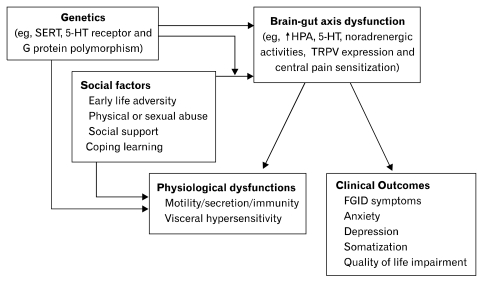
Functional gastrointestinal disorder (FGID) is one of the commonest digestive diseases worldwide and leads to significant morbidity and burden on healthcare resource. The putative bio-psycho-social pathophysiological model for FGID underscores the importance of psychological distress in the pathogenesis of FGID. Concomitant psychological disorders, notably anxiety and depressive disorders, are strongly associated with FGID and these psychological co-morbidities correlate with severity of FGID symptoms. Early life adversity such as sexual and physical abuse is more commonly reported in patients with FGID. There is mounting evidence showing that psychological disorders are commonly associated with abnormal central processing of visceral noxious stimuli. The possible causal link between psychological disorders and FGID involves functional abnormalities in various components of the brain-gut axis, which include hypothalamic-pituitary-adrenal system, sympathetic and parasympathetic nervous system, serotonergic and endocannabinoid systems. Moreover, recent studies have also shown that psychological distress may alter the systemic and gut immunity, which is increasingly recognized as a pathophysiologic feature of FGID. Psychotropic agent, in particular antidepressant, and psychological intervention such as cognitive behavioral therapy and meditation have been reported to be effective for alleviation of gastrointestinal symptoms and quality of life in FGID patients. Further studies are needed to evaluate the impact of early detection and management of co-morbid psychological disorders on the long-term clinical outcome and disease course of FGID.
Keywords: Depression; Functional dyspepsia; Generalized anxiety disorder; Irritable bowel syndrome; Psychological disorder.
Conflict of interest statement
Conflicts of interest: None.
Figures
References
-
- Levy RL, Olden KW, Naliboff BD, et al. Psychosocial aspects of the functional gastrointestinal disorders. Gastroenterology. 2006;130:1447–1458. - PubMed
-
- Lydiard RB, Fossey MD, Marsh W, Ballenger JC. Prevalence of psychiatric disorders in patients with irritable bowel syndrome. Psychosomatics. 1993;34:229–234. - PubMed
-
- Karling P, Danielsson A, Adolfsson R, Norrback KF. No difference in symptoms of irritable bowel syndrome between healthy subjects and patients with recurrent depression in remission. Neurogastroenterol Motil. 2007;19:896–904. - PubMed
-
- Pajala M, Heikkinen M, Hintikka J. Mental distress in patients with functional or organic dyspepsia: a comparative study with a sample of the general population. Aliment Pharmacol Ther. 2005;21:277–281. - PubMed
-
- Talley NJ, Fung LH, Gilligan IJ, McNeil D, Piper DW. Association of anxiety, neuroticism, and depression with dyspepsia of unknown cause. A case-control study. Gastroenterology. 1986;90:886–892. - PubMed
LinkOut - more resources
Full Text Sources