


Review
doi: 10.1186/1477-7819-10-33.
Primary clear cell adenocarcinoma of the bladder with recurrence: a case report and literature review
Affiliations
- PMID: 22325372
- PMCID: PMC3305464
- DOI: 10.1186/1477-7819-10-33
Item in Clipboard
Review
Primary clear cell adenocarcinoma of the bladder with recurrence: a case report and literature review
World J Surg Oncol.
.
Abstract
Clear cell carcinoma of the bladder is a rare tumor of the bladder. There are few reports available on this rare disease, and no cases with recurrence were reported. Here we present a case of 68-year-old woman with primary clear cell carcinoma of the bladder, who underwent repeat TUR-BT and tumor recurrence. We also reviewed the previous treatments and prognoses in previous case reports and evaluate the proper treatment for this disease. Once the diagnosis is determined, the radical surgery should be recommended. The recurrence is not prevented based on post-TUR intravesical therapy.
Figures
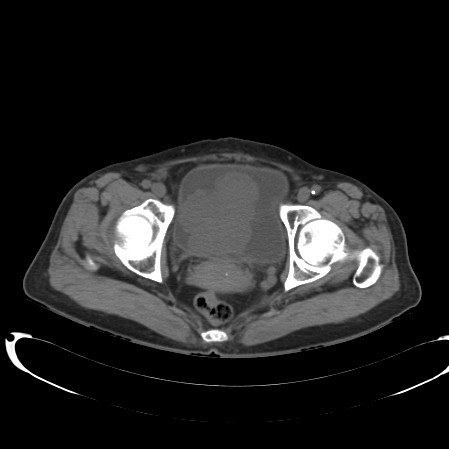
CT showed a tumor at posterior wall of the bladder which has not invaded the perivesical spaces and uterus.
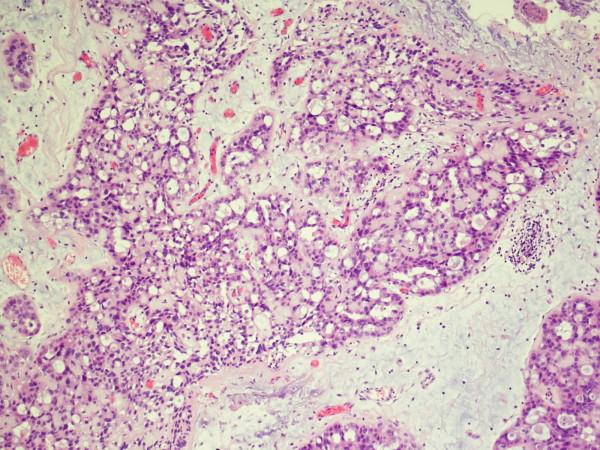
Tumour cells were arranged in tubular gland, microcysts or fine papillary in most area, partly in diffuse sheets or solid nests.
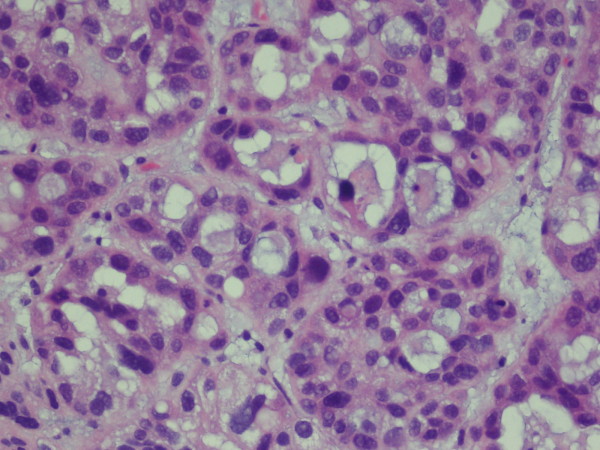
Tubular glands and microcysts have different sizes and irregular shapes with eosinophilic and/or basophilic secretions.
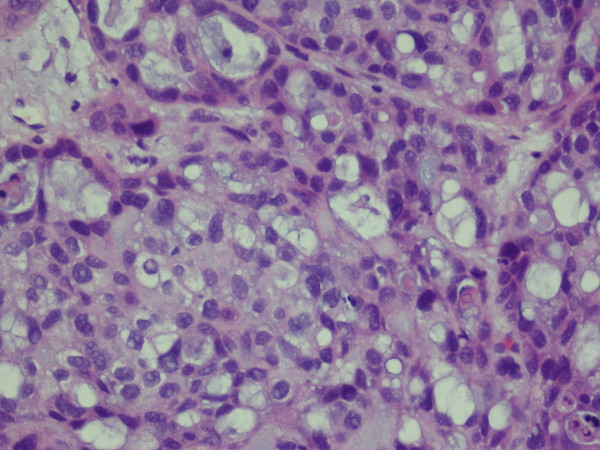
Tumor cells were in cuboidal, columnar or hobnail shape, with abundant clear cytoplasm.

Three months after TUR, CT showed the tumor recurrence at the posterior wall and bladder neck and the border with urethral orifice was not clear.
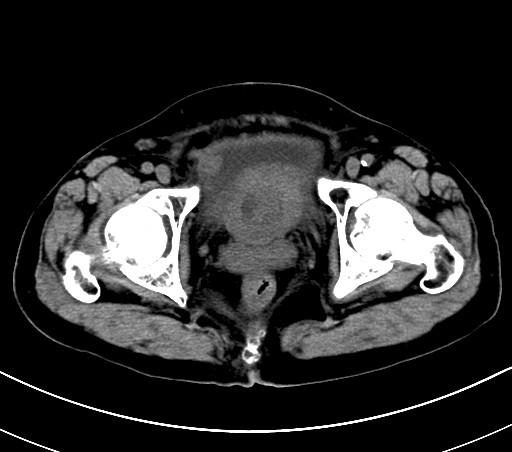
Two months after second TUR, CT showed that the tumor recurrence again at the anterior wall and the neck, invading urethra downward.
References
-
- Fleshner NE, Herr HW, Stewart AK, Murphy GP, Mettlin C, Menck HR. The National Cancer Data Base report on bladder carcinoma. The American College of Surgeons Commission on Cancer and the American Cancer Society. Cancer. 1996;78(7):1505–13. doi: 10.1002/(SICI)1097-0142(19961001)78:7<1505::AID-CNCR19>3.0.CO;2-3. - DOI - PubMed
-
- Kantor AF, Hartge P, Hoover RN, Fraumeni JF Jr. Epidemiological characteristics of squamous cell carcinoma and adenocarcinoma of the bladder. Cancer Res. 1988;48(13):3853–5. - PubMed
-
- Eble JN, Epstein JI, Seternhenn IA. World Health Organization Classification of Tumours Pathology and Genetics, Tumours of the Urinary System and Male Genital track. Lyon: IARC Press; 2004. pp. 128–132.
-
- Dow JA, Young JD Jr. Mesonephric adenocarcinoma of the bladder. J Urol. 1968;100(4):466–9. - PubMed
Publication types
MeSH terms
LinkOut - more resources
Full Text Sources
Medical
