


The metabolic profile of tumors depends on both the responsible genetic lesion and tissue type
- PMID: 22326218
- PMCID: PMC3282107
- DOI: 10.1016/j.cmet.2011.12.015
The metabolic profile of tumors depends on both the responsible genetic lesion and tissue type
Abstract
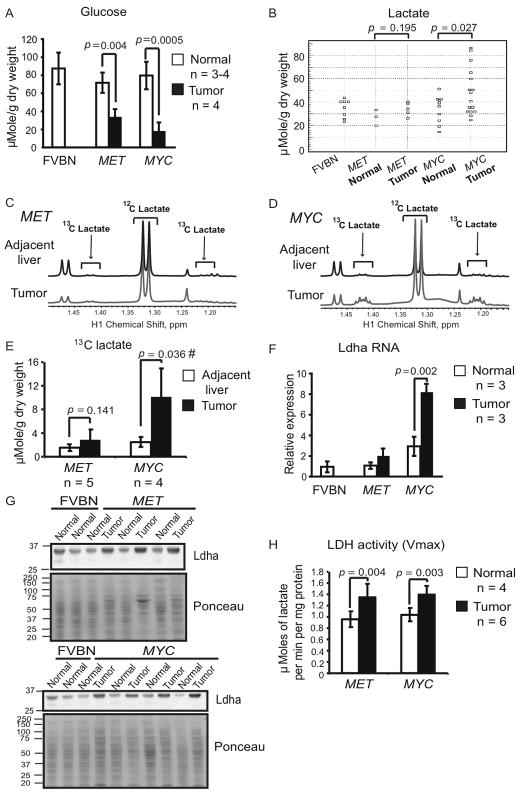
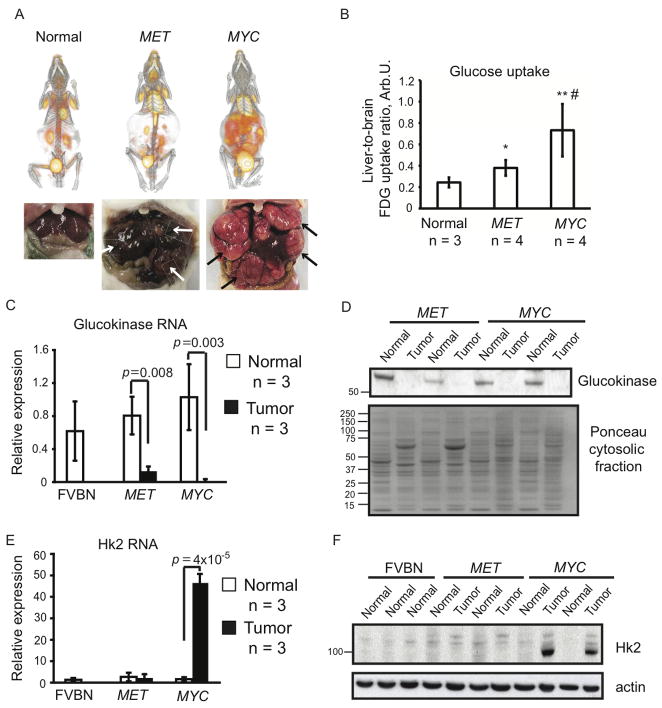
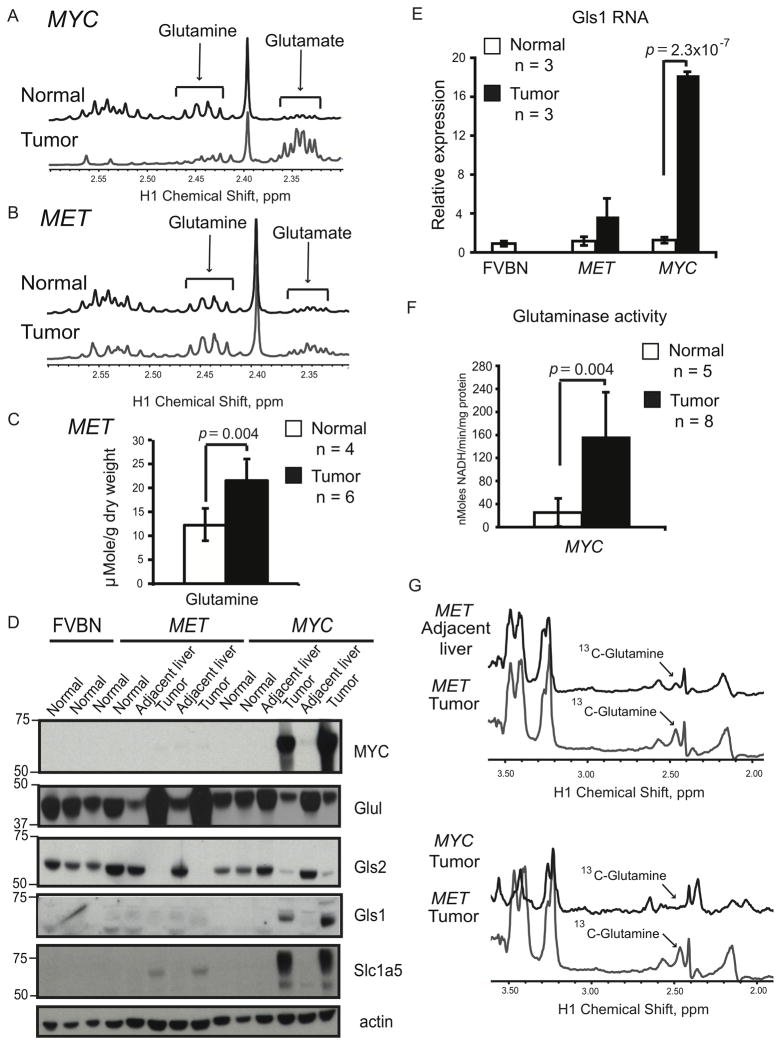
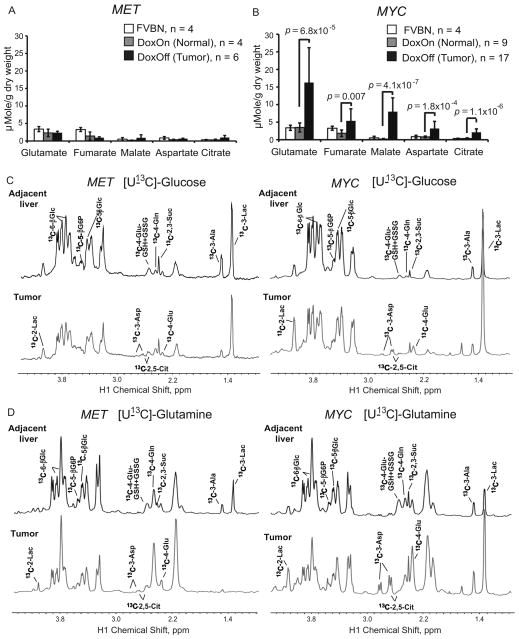
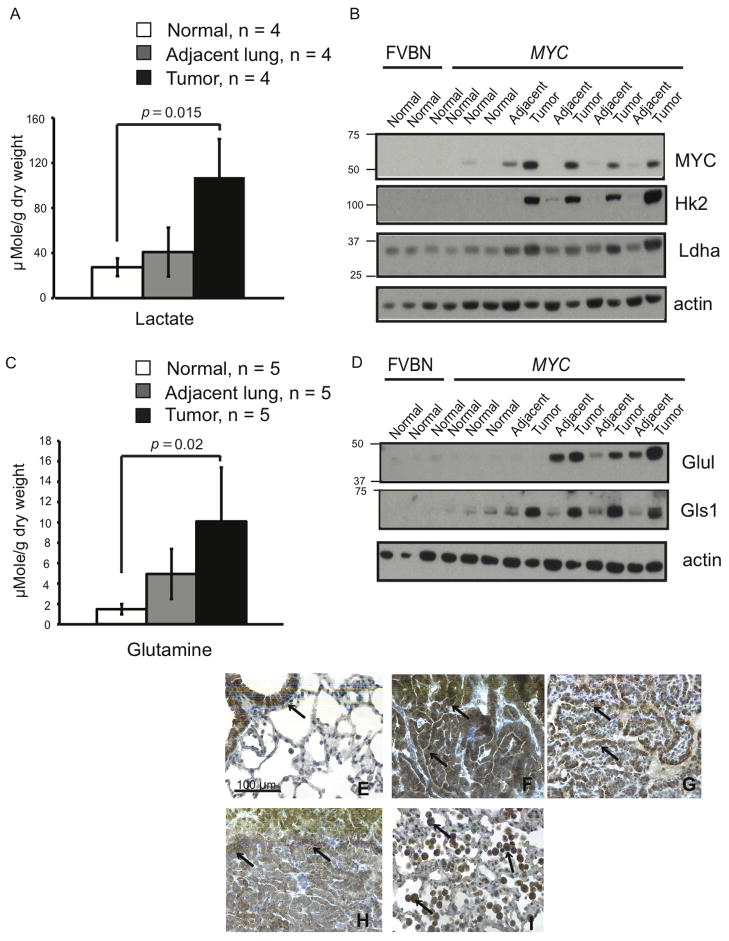
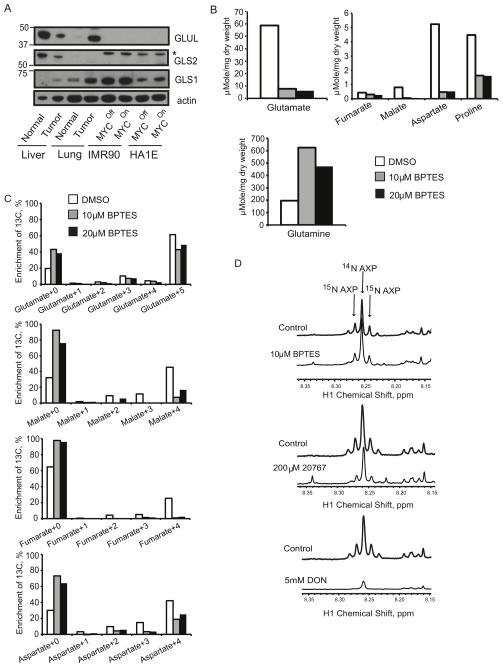
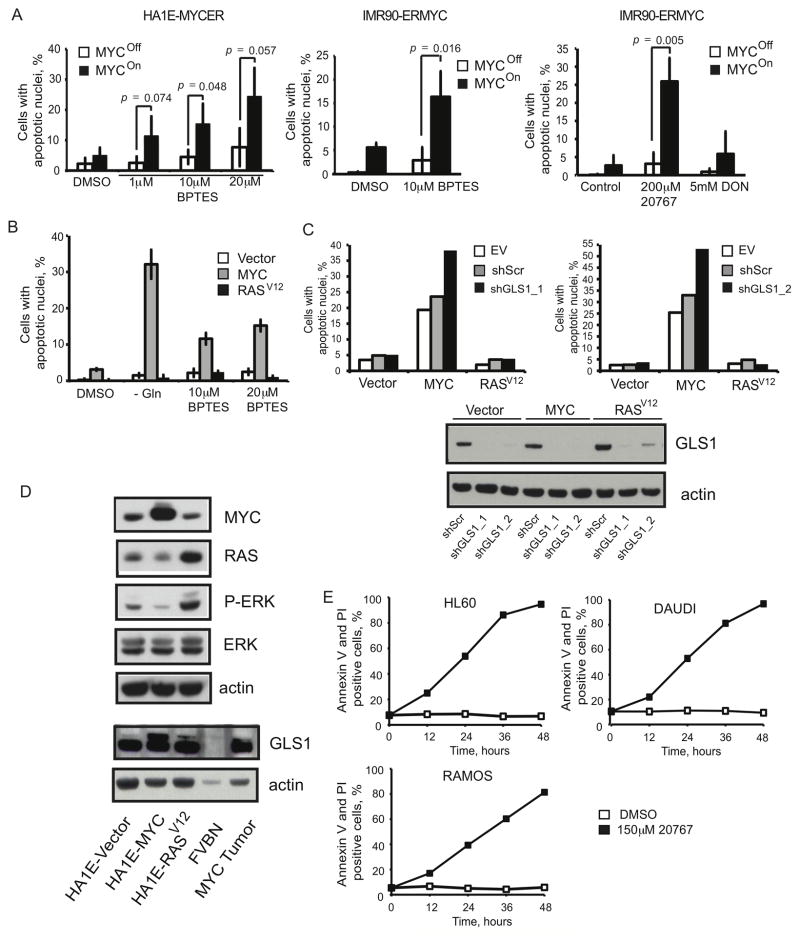
The altered metabolism of tumors has been considered a target for anticancer therapy. However, the relationship between distinct tumor-initiating lesions and anomalies of tumor metabolism in vivo has not been addressed. We report that MYC-induced mouse liver tumors significantly increase both glucose and glutamine catabolism, whereas MET-induced liver tumors use glucose to produce glutamine. Increased glutamine catabolism in MYC-induced liver tumors is associated with decreased levels of glutamine synthetase (Glul) and the switch from Gls2 to Gls1 glutaminase. In contrast to liver tumors, MYC-induced lung tumors display increased expression of both Glul and Gls1 and accumulate glutamine. We also show that inhibition of Gls1 kills cells that overexpress MYC and catabolize glutamine. Our results suggest that the metabolic profiles of tumors are likely to depend on both the genotype and tissue of origin and have implications regarding the design of therapies targeting tumor metabolism.
Copyright © 2012 Elsevier Inc. All rights reserved.
Figures
Comment in
-
METabolic adaptations in the tumor MYCroenvironment.Cell Metab. 2012 Feb 8;15(2):131-3. doi: 10.1016/j.cmet.2012.01.005. Cell Metab. 2012. PMID: 22326214
References
-
- Abcouwer SF, Lukaszewicz GC, Souba WW. Glucocorticoids regulate glutamine synthetase expression in lung epithelial cells. Am J Physiol. 1996;270:L141–151. - PubMed
-
- Baggetto LG. Deviant energetic metabolism of glycolytic cancer cells. Biochimie. 1992;74:959–974. - PubMed
-
- Bode BP. Recent molecular advances in mammalian glutamine transport. J Nutr. 2001;131:2475S–2485S. discussion 2486S–2477S. - PubMed
-
- Bustamante E, Morris HP, Pedersen PL. Energy metabolism of tumor cells. Requirement for a form of hexokinase with a propensity for mitochondrial binding. J Biol Chem. 1981;256:8699–8704. - PubMed
Publication types
MeSH terms
Substances
Grants and funding
LinkOut - more resources
Full Text Sources
Other Literature Sources
Medical
Miscellaneous
