


Neuroprotection: lessons from hibernators
- PMID: 22326449
- PMCID: PMC3334476
- DOI: 10.1016/j.cbpb.2012.01.008
Neuroprotection: lessons from hibernators
Abstract
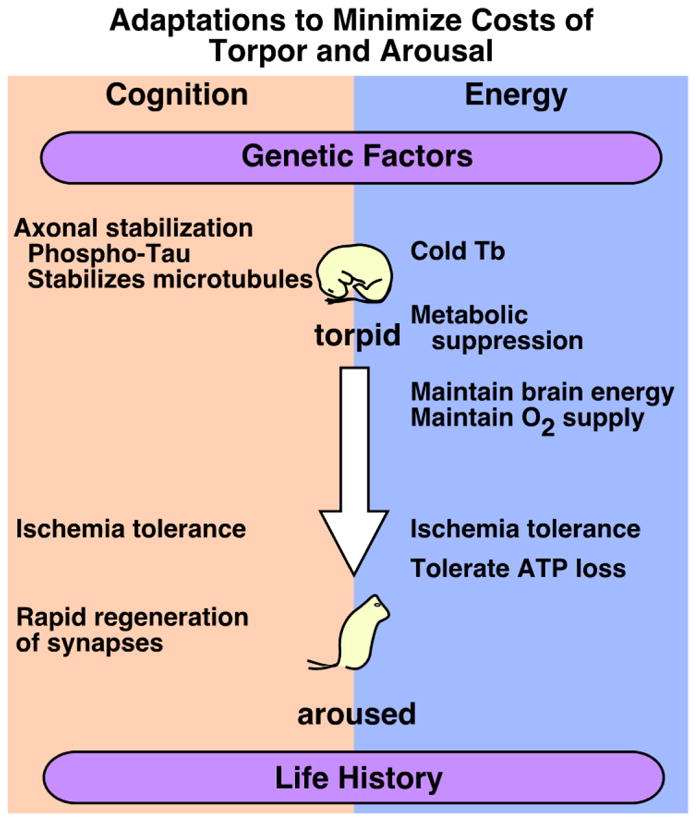
Mammals that hibernate experience extreme metabolic states and body temperatures as they transition between euthermia, a state resembling typical warm blooded mammals, and prolonged torpor, a state of suspended animation where the brain receives as low as 10% of normal cerebral blood flow. Transitions into and out of torpor are more physiologically challenging than the extreme metabolic suppression and cold body temperatures of torpor per se. Mammals that hibernate show unprecedented capacities to tolerate cerebral ischemia, a decrease in blood flow to the brain caused by stroke, cardiac arrest or brain trauma. While cerebral ischemia often leads to death or disability in humans and most other mammals, hibernating mammals suffer no ill effects when blood flow to the brain is dramatically decreased during torpor or experimentally induced during euthermia. These animals, as adults, also display rapid and pronounced synaptic flexibility where synapses retract during torpor and rapidly re-emerge upon arousal. A variety of coordinated adaptations contribute to tolerance of cerebral ischemia in these animals. In this review we discuss adaptations in heterothermic mammals that may suggest novel therapeutic targets and strategies to protect the human brain against cerebral ischemic damage and neurodegenerative disease.
Copyright © 2012 Elsevier Inc. All rights reserved.
Figures
References
-
- Anderson TR, Jarvis CR, Biedermann AJ, Molnar C, Andrew RD. Blocking the anoxic depolarization protects without functional compromise following simulated stroke in cortical brain slices. J Neurophysiol. 2005;93:963–979. - PubMed
-
- Andrews MT. Advances in molecular biology of hibernation in mammals. Bioessays. 2007;29:431–440. - PubMed
Publication types
MeSH terms
Substances
Grants and funding
- NS34773/NS/NINDS NIH HHS/United States
- NS041069-06/NS/NINDS NIH HHS/United States
- R29 NS034773/NS/NINDS NIH HHS/United States
- R01 NS054147/NS/NINDS NIH HHS/United States
- RF1 NS034773/NS/NINDS NIH HHS/United States
- U54 NS041069/NS/NINDS NIH HHS/United States
- NS054147-01/NS/NINDS NIH HHS/United States
- R15 NS070779/NS/NINDS NIH HHS/United States
- R01 NS045676/NS/NINDS NIH HHS/United States
- NS45676-01/NS/NINDS NIH HHS/United States
- R01 NS034773/NS/NINDS NIH HHS/United States
- R15NS070779/NS/NINDS NIH HHS/United States
LinkOut - more resources
Full Text Sources
