


Presence and functionality of mating type genes in the supposedly asexual filamentous fungus Aspergillus oryzae
- PMID: 22327593
- PMCID: PMC3318824
- DOI: 10.1128/AEM.07034-11
Presence and functionality of mating type genes in the supposedly asexual filamentous fungus Aspergillus oryzae
Abstract
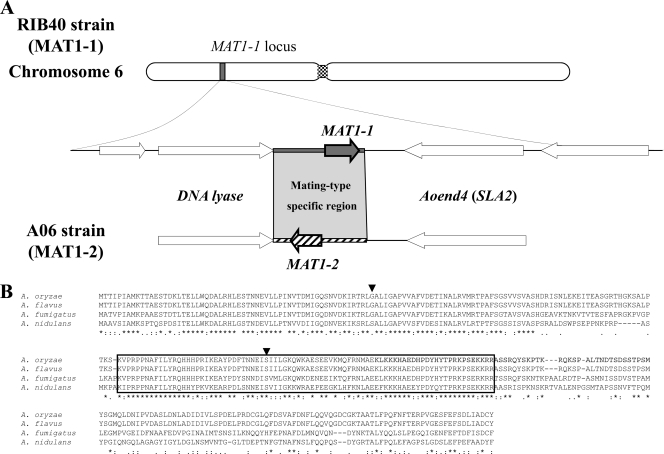
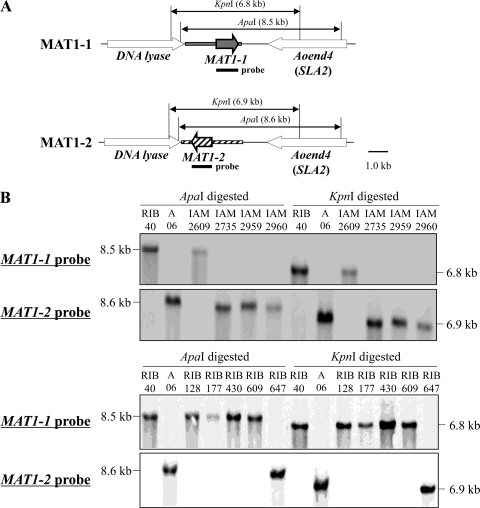
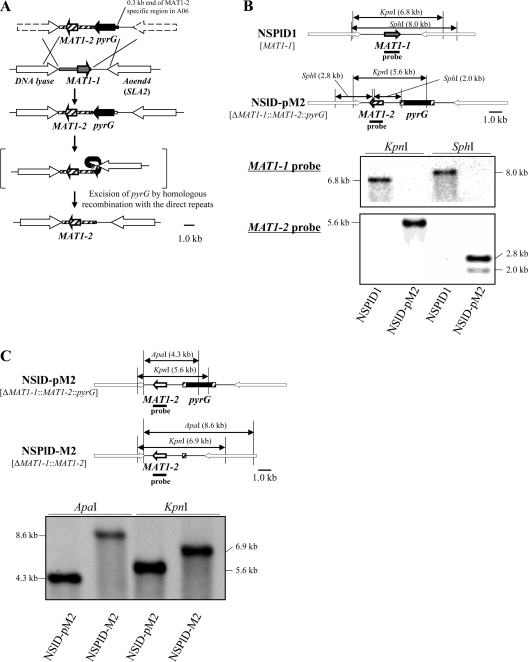
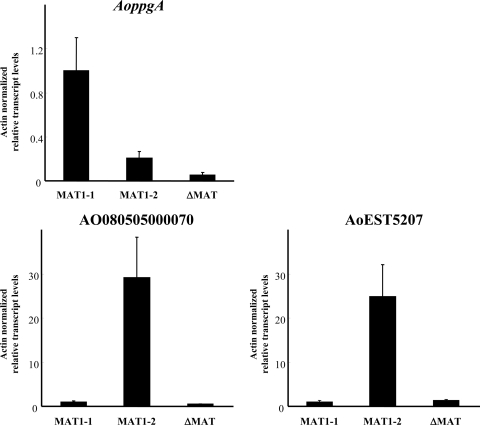
The potential for sexual reproduction in Aspergillus oryzae was assessed by investigating the presence and functionality of MAT genes. Previous genome studies had identified a MAT1-1 gene in the reference strain RIB40. We now report the existence of a complementary MAT1-2 gene and the sequencing of an idiomorphic region from A. oryzae strain AO6. This allowed the development of a PCR diagnostic assay, which detected isolates of the MAT1-1 and MAT1-2 genotypes among 180 strains assayed, including industrial tane-koji isolates. Strains used for sake and miso production showed a near-1:1 ratio of the MAT1-1 and MAT1-2 mating types, whereas strains used for soy sauce production showed a significant bias toward the MAT1-2 mating type. MAT1-1 and MAT1-2 isogenic strains were then created by genetic manipulation of the resident idiomorph, and gene expression was compared by DNA microarray and quantitative real-time PCR (qRT-PCR) methodologies under conditions in which MAT genes were expressed. Thirty-three genes were found to be upregulated more than 10-fold in either the MAT1-1 host strain or the MAT1-2 gene replacement strain relative to each other, showing that both the MAT1-1 and MAT1-2 genes functionally regulate gene expression in A. oryzae in a mating type-dependent manner, the first such report for a supposedly asexual fungus. MAT1-1 expression specifically upregulated an α-pheromone precursor gene, but the functions of most of the genes affected were unknown. The results are consistent with a heterothallic breeding system in A. oryzae, and prospects for the discovery of a sexual cycle are discussed.
Figures
References
-
- Berbee ML, Payne BP, Zhang G, Roberts RG, Turgeon BG. 2003. Shared ITS DNA substitutions in isolates of opposite mating type reveal a recombining history for three presumed asexual species in the filamentous ascomycete genus Alternaria. Mycol. Res. 107:169–182 - PubMed
-
- Bobrowicz P, Pawlak R, Correa A, Bell-Pedersen D, Ebbole DJ. 2002. The Neurospora crassa pheromone precursor genes are regulated by the mating type locus and the circadian clock. Mol. Microbiol. 45:795–804 - PubMed
-
- Braumann I, Van Den Berg M, Kempken F. 2008. Repeat induced point mutation in two asexual fungi, Aspergillus niger and Penicillium chrysogenum. Curr. Genet. 53:287–297 - PubMed
Publication types
MeSH terms
Substances
Associated data
- Actions
Grants and funding
LinkOut - more resources
Full Text Sources
Other Literature Sources
Molecular Biology Databases
Research Materials
