


Biohydrogen production from arabinose and glucose using extreme thermophilic anaerobic mixed cultures
- PMID: 22330180
- PMCID: PMC3298801
- DOI: 10.1186/1754-6834-5-6
Biohydrogen production from arabinose and glucose using extreme thermophilic anaerobic mixed cultures
Abstract
Background: Second generation hydrogen fermentation technologies using organic agricultural and forestry wastes are emerging. The efficient microbial fermentation of hexoses and pentoses resulting from the pretreatment of lingocellulosic materials is essential for the success of these processes.
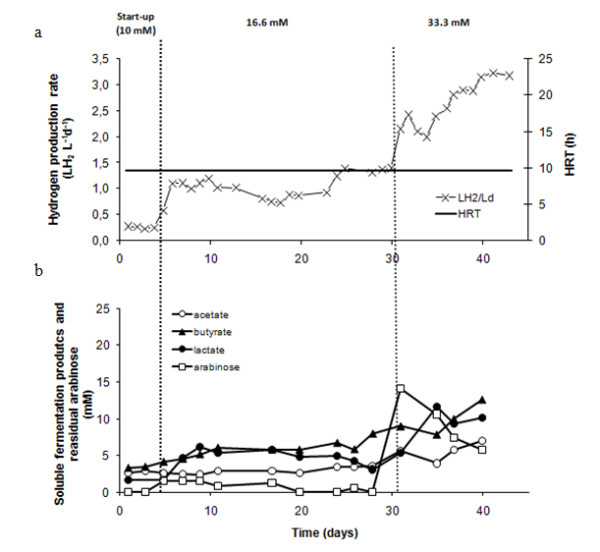
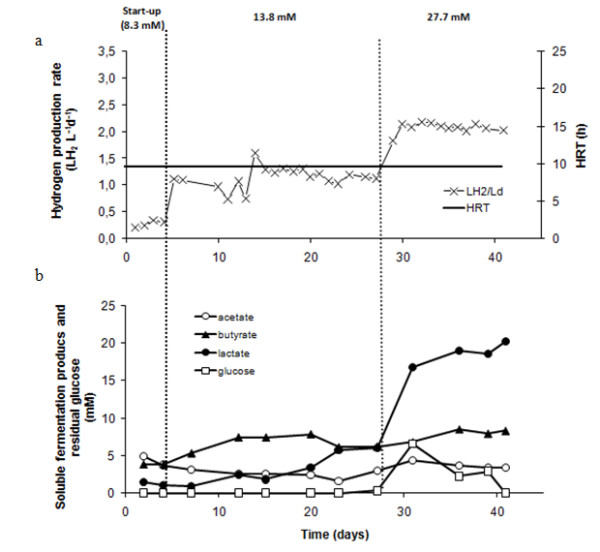
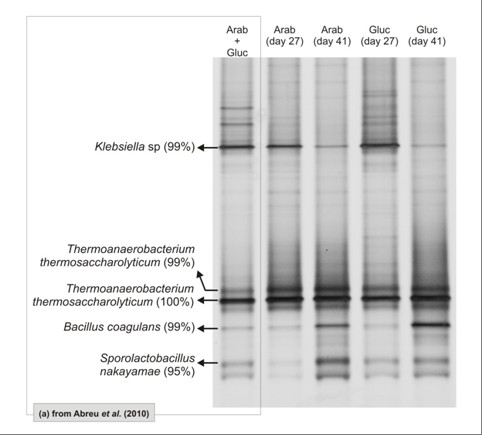
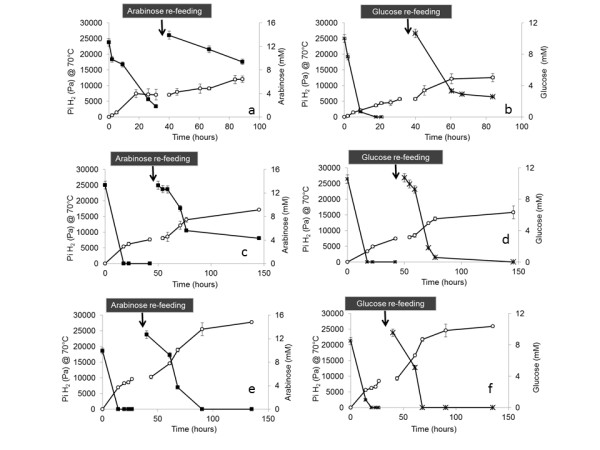
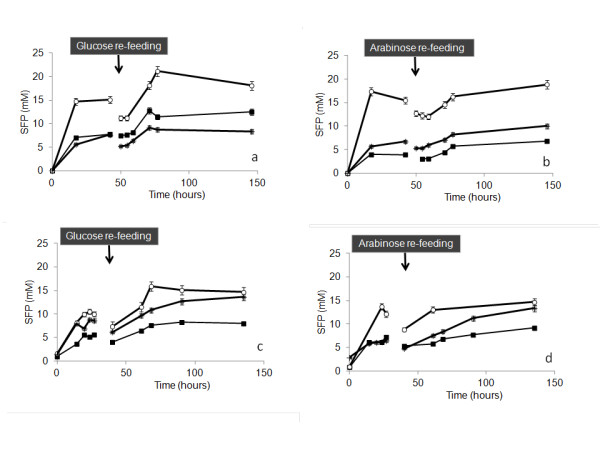
Results: Conversion of arabinose and glucose to hydrogen, by extreme thermophilic, anaerobic, mixed cultures was studied in continuous (70°C, pH 5.5) and batch (70°C, pH 5.5 and pH 7) assays. Two expanded granular sludge bed (EGSB) reactors, Rarab and Rgluc, were continuously fed with arabinose and glucose, respectively. No significant differences in reactor performance were observed for arabinose and glucose organic loading rates (OLR) ranging from 4.3 to 7.1 kgCOD m-3 d-1. However, for an OLR of 14.2 kgCOD m-3 d-1, hydrogen production rate and hydrogen yield were higher in Rarab than in Rgluc (average hydrogen production rate of 3.2 and 2.0 LH2 L-1 d-1 and hydrogen yield of 1.10 and 0.75 molH2 mol-1substrate for Rarab and Rgluc, respectively). Lower hydrogen production in Rgluc was associated with higher lactate production. Denaturing gradient gel electrophoresis (DGGE) results revealed no significant difference on the bacterial community composition between operational periods and between the reactors. Increased hydrogen production was observed in batch experiments when hydrogen partial pressure was kept low, both with arabinose and glucose as substrate. Sugars were completely consumed and hydrogen production stimulated (62% higher) when pH 7 was used instead of pH 5.5.
Conclusions: Continuous hydrogen production rate from arabinose was significantly higher than from glucose, when higher organic loading rate was used. The effect of hydrogen partial pressure on hydrogen production from glucose in batch mode was related to the extent of sugar utilization and not to the efficiency of substrate conversion to hydrogen. Furthermore, at pH 7.0, sugars uptake, hydrogen production and yield were higher than at pH 5.5, with both arabinose and glucose as substrates.
Figures
References
-
- Wang JL, Wan W. Factors influencing fermentative hydrogen production: A review. Int J Hydrogen Energy. 2009;34:799–811. doi: 10.1016/j.ijhydene.2008.11.015. - DOI
LinkOut - more resources
Full Text Sources
