


High-voltage electrical stimulation for the management of stage III and IV pressure ulcers among adults with spinal cord injury: demonstration of its utility for recalcitrant wounds below the level of injury
- PMID: 22330192
- PMCID: PMC3240918
- DOI: 10.1179/2045772311Y.0000000044
High-voltage electrical stimulation for the management of stage III and IV pressure ulcers among adults with spinal cord injury: demonstration of its utility for recalcitrant wounds below the level of injury
Abstract
Context: patients with spinal cord injury (SCI) have many factors that are associated with pressure ulcer formation, including paralysis, loss of sensation, poor nutrition, anemia, and skin maceration related to incontinence. Treatment of these ulcers involves relieving pressure, improving nutrition and skin hygiene, treating infections, removing necrotic tissues, and applying the appropriate dressings. However, some cases are not responsive to the above treatment. Electrical stimulation (ES) is thought to enhance soft tissue healing through promotion of protein synthesis, inhibition of bacterial growth, facilitation of epithelial tissue migration, improvement of blood flow, and tensile strength. This data is mainly based on evidence from animal studies and very few rigorously controlled studies conducted in humans.
Objective: To demonstrate the effectiveness of ES in the treatment of recalcitrant pressure ulcers.
Methods: Retrospective case series describing the care of adults with SCI and recalcitrant pressure ulcers. ES was applied directly into the wound bed: 60 minutes per session, 3-5 times per week; with an intensity of 100 milliamperes and a frequency of 100 pulses per second. Polarity was negative initially and was switched weekly. The amplitude and wave form were maintained throughout.
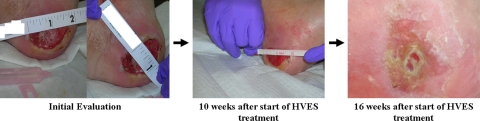
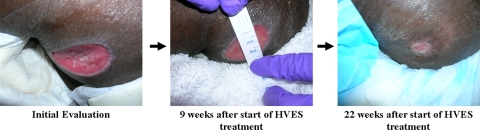
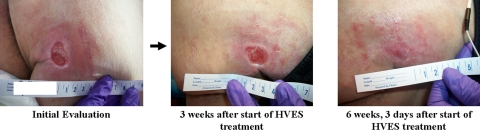
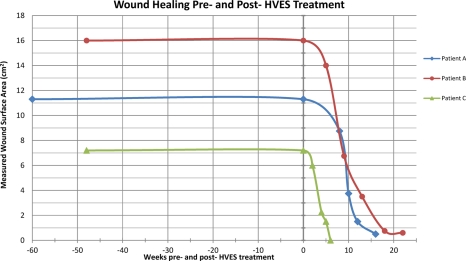
Results: The long-standing (11-14 months) pressure ulcers were completely healed after 7 to 22 weeks of treatment with high-voltage ES.
Conclusion/clinical relevance: This case series demonstrates the effectiveness of ES for enhanced healing of Stage III-IV ulcers otherwise unresponsive to standard wound care. Further study is needed to identify the most effective protocol for ES therapy in the treatment of recalcitrant pressure ulcers.
Figures
References
-
- Liverman CT, Joy JE, Altevogt BM. (eds.). Spinal cord injury: progress, promise, and priorities. Washington, DC: National Academies Press; 2005. p. 13–106
-
- Cardenas DD, Hoffman JM, Kirshblum S, McKinley W. Etiology and incidence of rehospitalization after traumatic spinal cord injury: a multicenter analysis. Arch Phys Med Rehabil 2004;85(11):1757–63 - PubMed
-
- Kirshblum S, Gonzalez P, Cuccurullo S. Spinal cord injuries. In: Cuccurullo S. (ed.) Physical medicine and rehabilitation board review. New York: Demos Medical Publishing; 2004. p. 545–48
-
- Gardner SE, Frantz RA, Schmidt FL. Effect of electrical stimulation on chronic wound healing: a meta-analysis. Wound Repair Regen 1999;7(6):495–503 - PubMed
-
- Ek AC, Unosson M, Larsson J, Von Schenck H, Bjurulf P. The development and healing of pressure sores related to the nutritional state. Clin Nutr 1991;10(5):245–50 - PubMed
Publication types
MeSH terms
LinkOut - more resources
Full Text Sources
Medical
