


Describing the interplay between anxiety and cognition: from impaired performance under low cognitive load to reduced anxiety under high load
- PMID: 22332819
- PMCID: PMC3345059
- DOI: 10.1111/j.1469-8986.2012.01358.x
Describing the interplay between anxiety and cognition: from impaired performance under low cognitive load to reduced anxiety under high load
Abstract
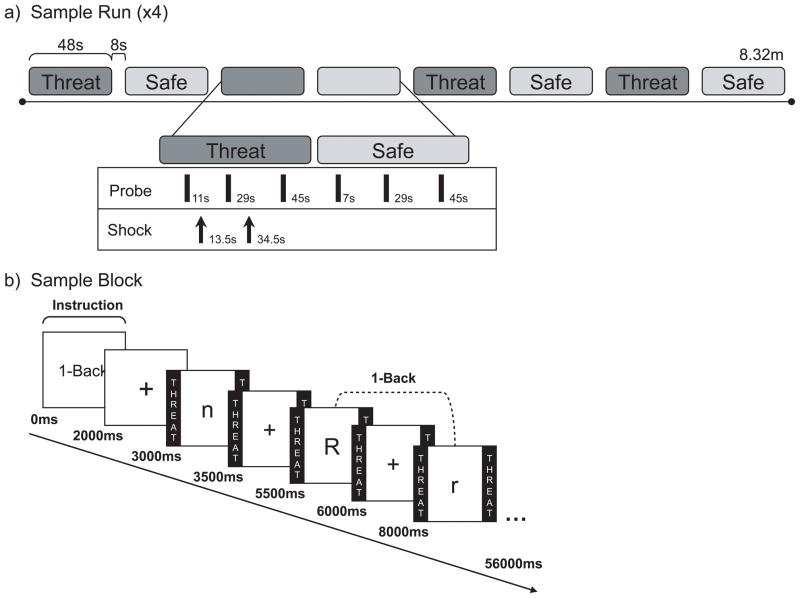
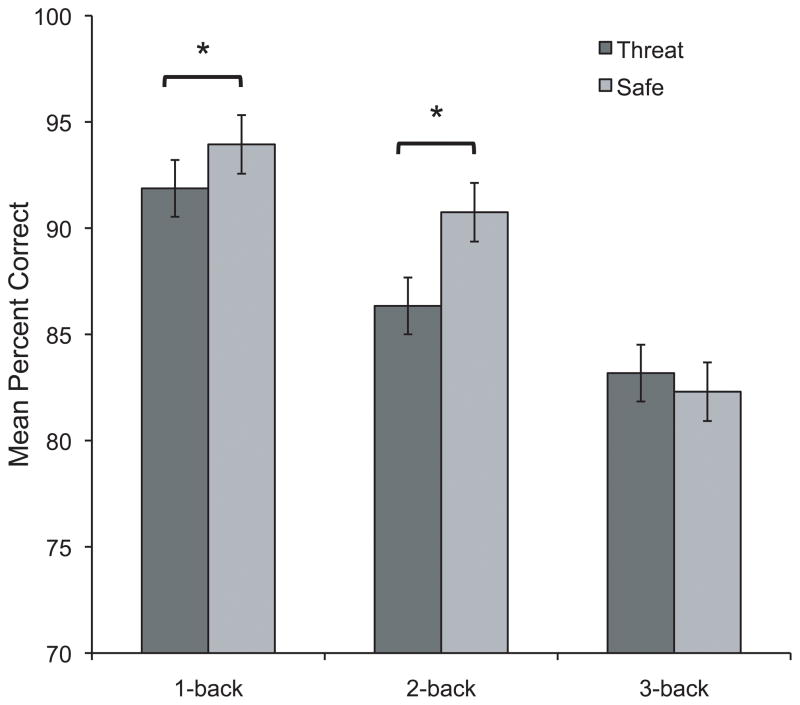
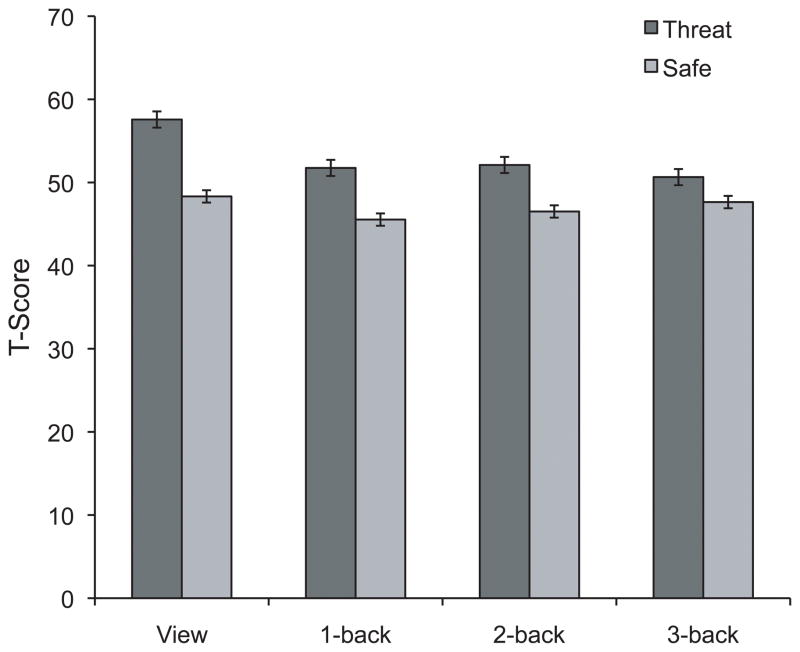
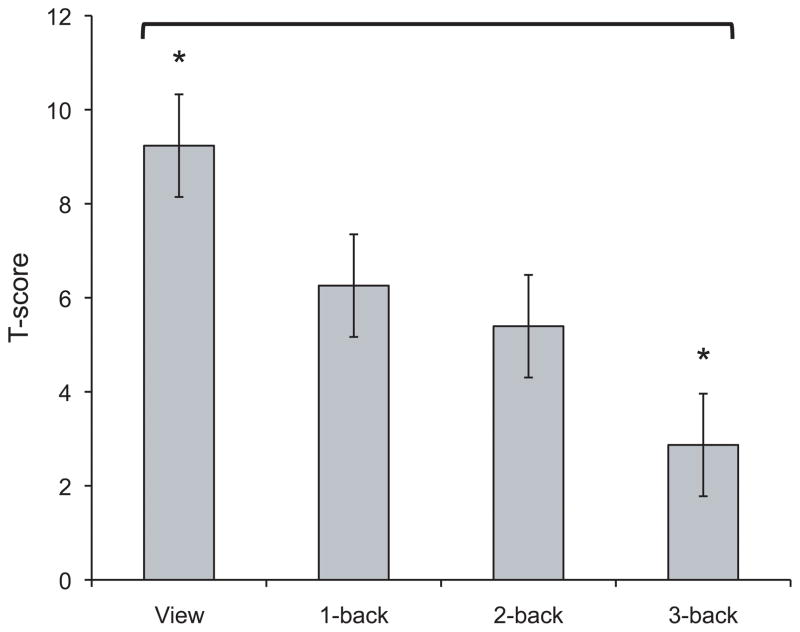
Anxiety impairs the ability to think and concentrate, suggesting that the interaction between emotion and cognition may elucidate the debilitating nature of pathological anxiety. Using a verbal n-back task that parametrically modulated cognitive load, we explored the effect of experimentally induced anxiety on task performance and the startle reflex. Findings suggest there is a crucial inflection point between moderate and high cognitive load, where resources shift from anxious apprehension to focus on task demands. Specifically, we demonstrate that anxiety impairs performance under low load, but is reduced when subjects engage in a difficult task that occupies executive resources. We propose a two-component model of anxiety that describes a cognitive mechanism behind performance impairment and an automatic response that supports sustained anxiety-potentiated startle. Implications for therapeutic interventions and emotional pathology are discussed.
Copyright © 2012 Society for Psychophysiological Research.
Conflict of interest statement
The author(s) declare that, except for income received from the primary employer, no financial support or compensation has been received from any individual or corporate entity over the past 3 years for research or professional service and there are no personal financial holdings that could be perceived as constituting a potential conflict of interest.
Figures
References
-
- Barlow DH. Disorders of emotion. Psychological Inquiry. 1991;2:58–71. doi: 10.1207/s15327965pli0201_15.. - DOI
Publication types
MeSH terms
Grants and funding
LinkOut - more resources
Full Text Sources
Medical
