


Genome skimming identifies polymorphism in tern populations and species
- PMID: 22333071
- PMCID: PMC3292991
- DOI: 10.1186/1756-0500-5-94
Genome skimming identifies polymorphism in tern populations and species
Abstract
Background: Terns (Charadriiformes: Sterninae) are a lineage of cosmopolitan shorebirds with a disputed evolutionary history that comprises several species of conservation concern. As a non-model system in genetics, previous study has left most of the nuclear genome unexplored, and population-level studies are limited to only 15% of the world's species of terns and noddies. Screening of polymorphic nuclear sequence markers is needed to enhance genetic resolution because of supposed low mitochondrial mutation rate, documentation of nuclear insertion of hypervariable mitochondrial regions, and limited success of microsatellite enrichment in terns. Here, we investigated the phylogenetic and population genetic utility for terns and relatives of a variety of nuclear markers previously developed for other birds and spanning the nuclear genome. Markers displaying a variety of mutation rates from both the nuclear and mitochondrial genome were tested and prioritized according to optimal cross-species amplification and extent of genetic polymorphism between (1) the main tern clades and (2) individual Royal Terns (Thalasseus maxima) breeding on the US East Coast.
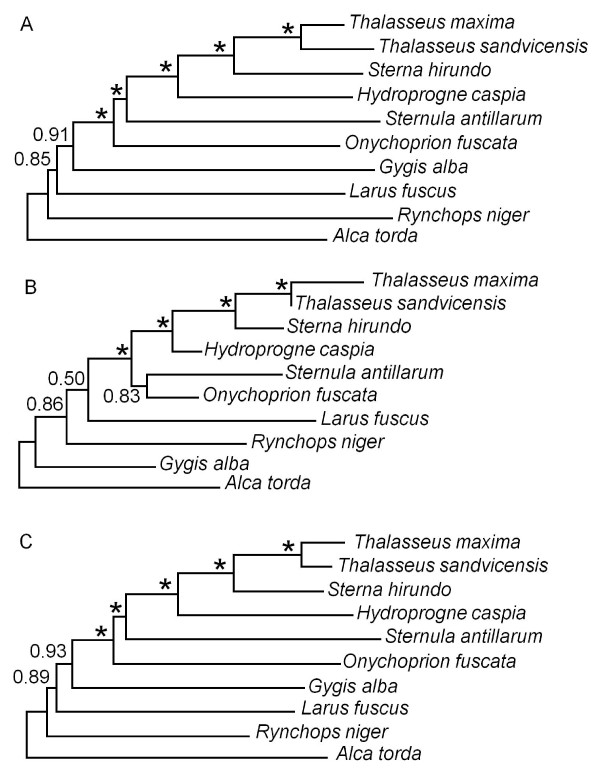
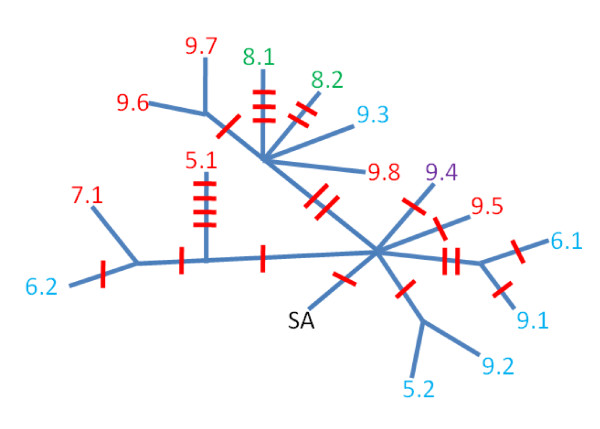
Results: Results from this genome skimming effort yielded four new nuclear sequence-based markers for tern phylogenetics and 11 intra-specific polymorphic markers. Further, comparison between the two genomes indicated a phylogenetic conflict at the base of terns, involving the inclusion (mitochondrial) or exclusion (nuclear) of the Angel Tern (Gygis alba). Although limited mitochondrial variation was confirmed, both nuclear markers and a short tandem repeat in the mitochondrial control region indicated the presence of considerable genetic variation in Royal Terns at a regional scale.
Conclusions: These data document the value of intronic markers to the study of terns and allies. We expect that these and additional markers attained through next-generation sequencing methods will accurately map the genetic origin and species history of this group of birds.
Figures
References
-
- Brito P, Edwards SV. Multilocus phylogeography and phylogenetics using sequence-based markers. Genetica. 2008;135:439–455. - PubMed
-
- Backström N, Fagerberg S, Ellegren H. Genomics of natural bird populations: a gene-based set of reference markers evenly spread across the avian genome. Mol Ecol. 2008;17:964–980. - PubMed
LinkOut - more resources
Full Text Sources
Research Materials
Miscellaneous
