


Multiple roles of dihomo-γ-linolenic acid against proliferation diseases
- PMID: 22333072
- PMCID: PMC3295719
- DOI: 10.1186/1476-511X-11-25
Multiple roles of dihomo-γ-linolenic acid against proliferation diseases
Abstract
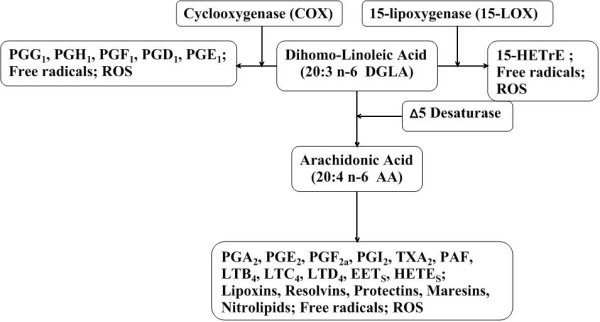
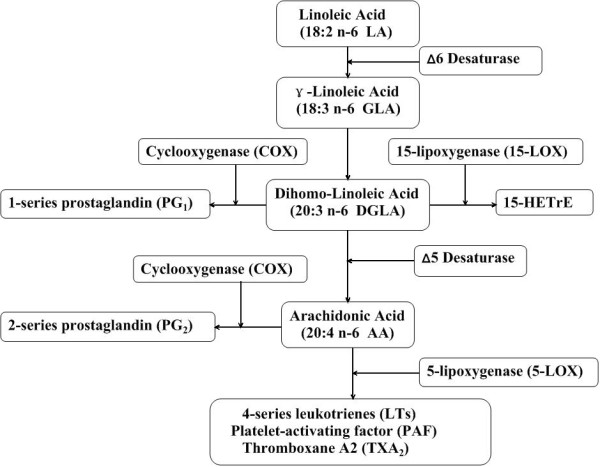
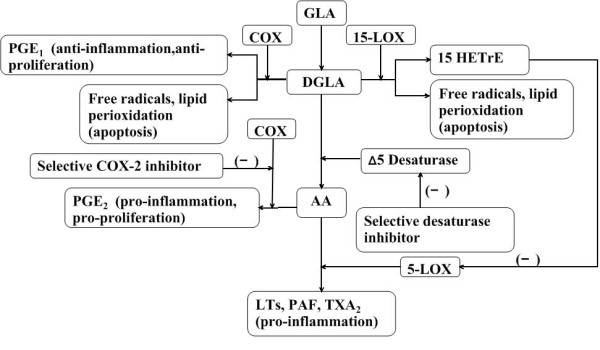
Considerable arguments remain regarding the diverse biological activities of polyunsaturated fatty acids (PUFA). One of the most interesting but controversial dietary approaches focused on the diverse function of dihomo-dietary γ-linolenic acid (DGLA) in anti-inflammation and anti-proliferation diseases, especially for cancers. This strategy is based on the ability of DGLA to interfere in cellular lipid metabolism and eicosanoid (cyclooxygenase and lipoxygenase) biosynthesis. Subsequently, DGLA can be further converted by inflammatory cells to 15-(S)-hydroxy-8,11,13-eicosatrienoic acid and prostaglandin E1 (PGE1). This is noteworthy because these compounds possess both anti-inflammatory and anti-proliferative properties. PGE1 could also induce growth inhibition and differentiation of cancer cells. Although the mechanism of DGLA has not yet been elucidated, it is significant to anticipate the antitumor potential benefits from DGLA.
Figures
References
-
- Zhang B, Wang P, Zhou Q, Chen C, Zhuo S, Ye Y, He Q, Chen Y, Su Y. The relationships between erythrocyte membrane n-6 to n-3 polyunsaturated fatty acids ratio and blood lipids and C-reactive protein in Chinese adults: an observational study. Biomed Environ Sci. 2011;24:234–242. - PubMed
-
- Zietemann V, Kröger J, Enzenbach C, Jansen E, Fritsche A, Weikert C, Boeing H, Schulze MB. Genetic variation of the FADS1 FADS2 gene cluster and n-6 PUFA composition in erythrocyte membranes in the European Prospective Investigation into Cancer and Nutrition-Potsdam study. Br J Nutr. 2010;104:1748–1759. doi: 10.1017/S0007114510002916. - DOI - PubMed
Publication types
MeSH terms
Substances
LinkOut - more resources
Full Text Sources
Other Literature Sources
Medical
