


Dietary omega-3 fatty acids and susceptibility to ventricular fibrillation: lack of protection and a proarrhythmic effect
- PMID: 22333345
- PMCID: PMC3380163
- DOI: 10.1161/CIRCEP.111.966739
Dietary omega-3 fatty acids and susceptibility to ventricular fibrillation: lack of protection and a proarrhythmic effect
Erratum in
- Circ Arrhythm Electrophysiol. 2012 Aug 1;5(4):e89
Abstract
Background: Recent clinical studies that evaluated the effects of supplemental omega-3 polyunsaturated fatty acids (n-3 PUFAs) on sudden cardiac death have yielded conflicting results. Our aim was to clarify this issue using an established and clinical relevant canine model of sudden cardiac death.
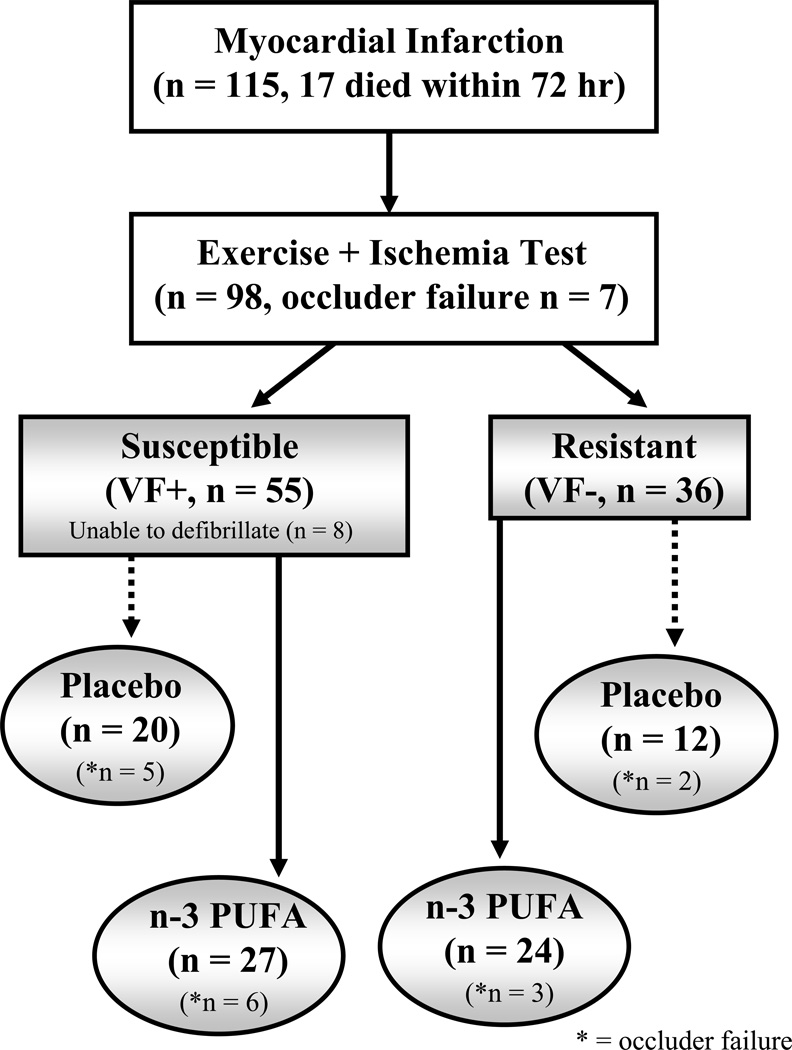
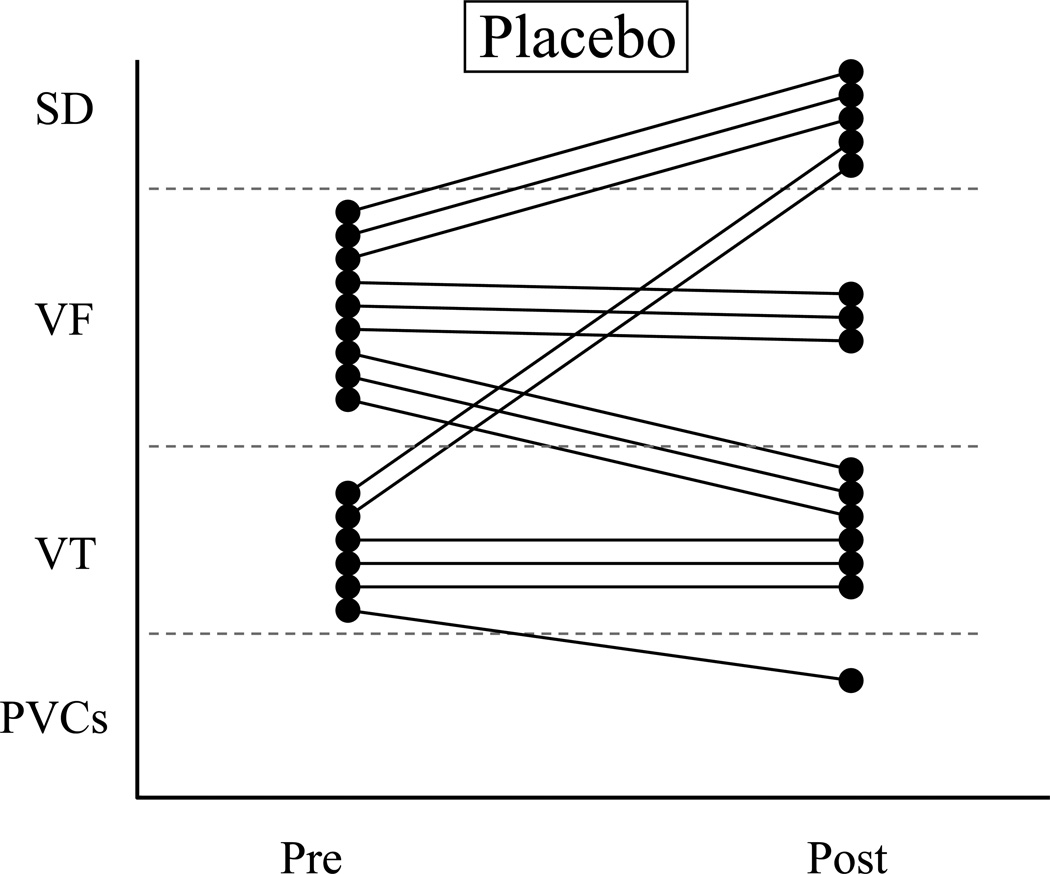
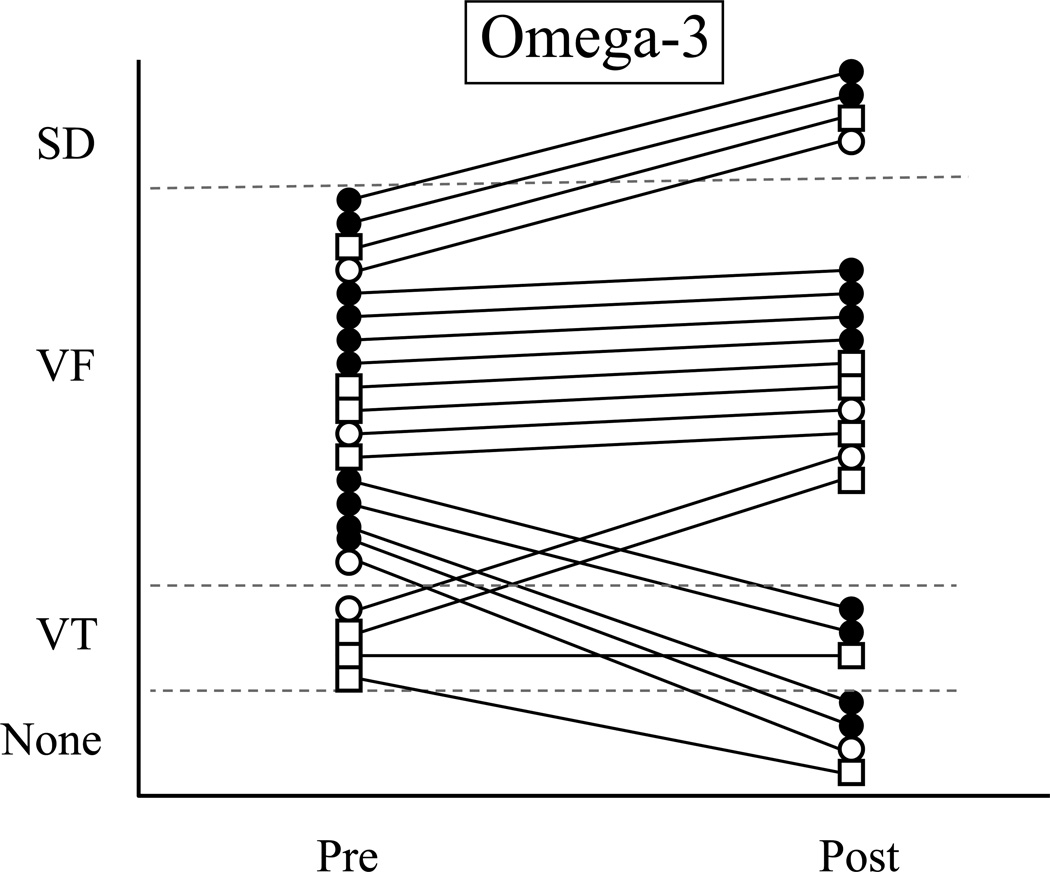
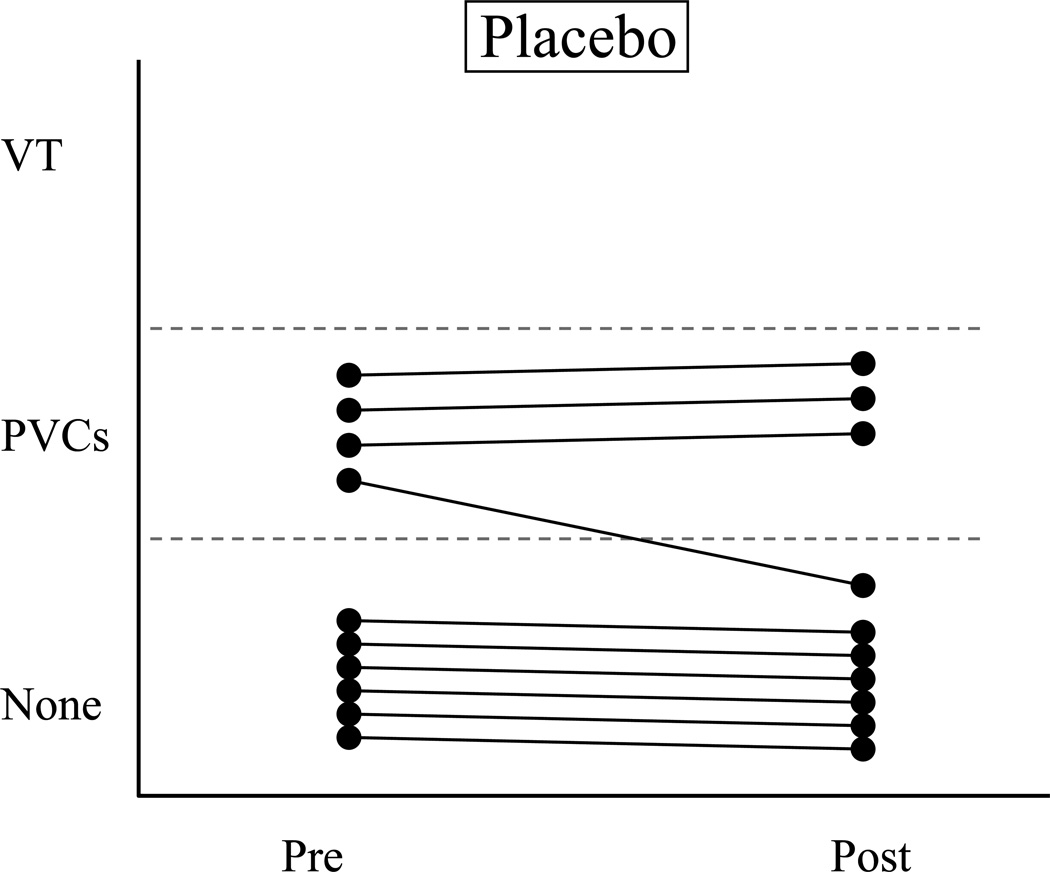
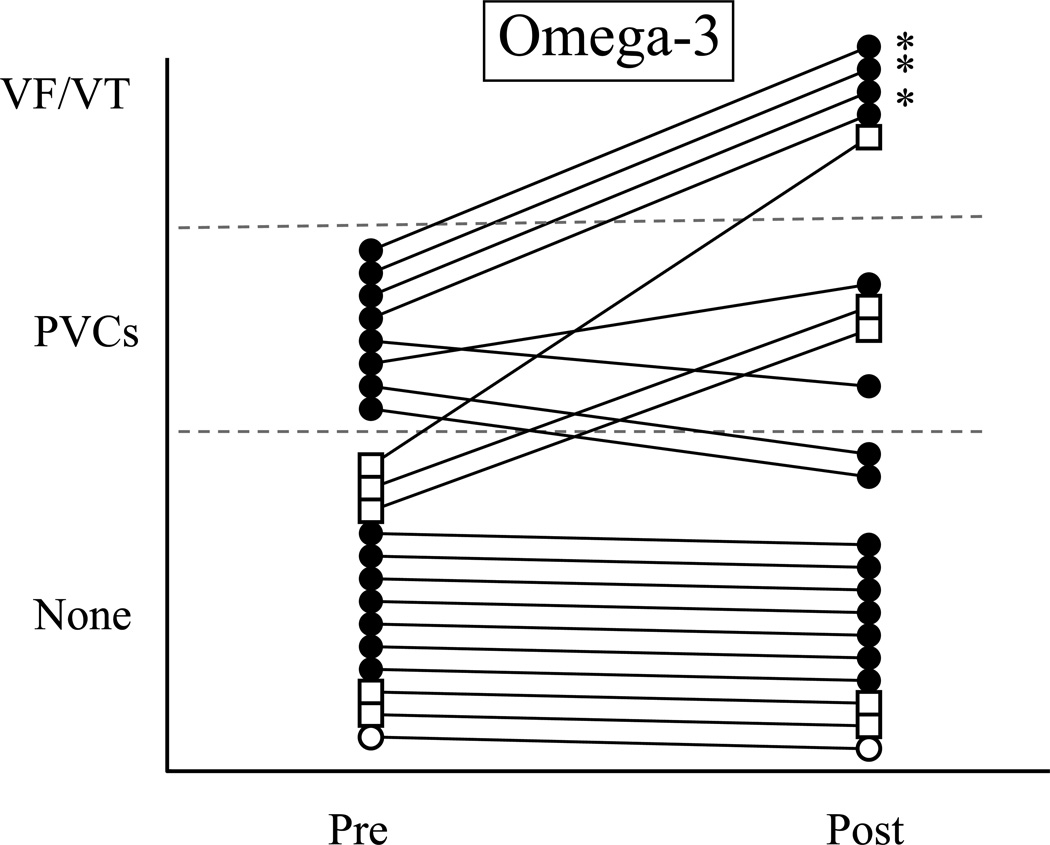
Methods and results: Susceptibility to ventricular fibrillation (VF) was evaluated using a 2-minute left circumflex artery occlusion during the last minute of an exercise test in 76 dogs (from 2 independent studies) with healed myocardial infarctions (MI); 44 developed VF (susceptible, VF+), whereas 32 did not (resistant, VF-). These dogs were then randomly assigned to either placebo (1 g/d, corn oil; 15 VF+, 11 VF-) or n-3 PUFA (1-4 g/d, docosahexaenoic acid+eicosapentaenoic acid ethyl esters, 29 VF+, 21 VF-) groups. Seven sham (no-MI) dogs were also treated with n-3 PUFA (4 g/d). After treatment (3 months), the exercise+ischemia test was repeated. Dietary n-3 PUFAs produced significant (P<0.01) increases in red blood cell and left ventricular n-3 PUFA levels. Nine post-MI (5 placebo versus 4 n-3 PUFA) and 2 sham dogs died suddenly during the 3-month treatment period. The n-3 PUFA treatment failed to prevent arrhythmias in VF+ dogs (decreased in 27% placebo versus 24% n-3 PUFA, P=0.5646) but induced VT/VF in VF- animals (n-3 PUFA 33% versus placebo 0%, P=0.0442).
Conclusions: Despite large increases in cardiac tissue n-3 PUFA content, dietary n-3 PUFAs did not prevent ischemia-induced VF and actually increased arrhythmia susceptibility in both noninfarcted and low-risk post-MI dogs.
Conflict of interest statement
Figures
Comment in
-
Omega-3 fatty acids, ventricular arrhythmias, and sudden cardiac death: antiarrhythmic, proarrhythmic, or neither.Circ Arrhythm Electrophysiol. 2012 Jun 1;5(3):456-9. doi: 10.1161/CIRCEP.112.971416. Circ Arrhythm Electrophysiol. 2012. PMID: 22715236 Free PMC article. No abstract available.
References
-
- Dyerberg J, Bang HO, Stoffersen E, Moncada S, Vane JR. Eicosapentaenoic acid and prevention of thrombosis and atherosclerosis? Lancet. 1978;2:117–119. - PubMed
-
- Kromhout D, Bosschieter EB, de Lezenne CC. The inverse relation between fish consumption and 20-year mortality from coronary heart disease. N Engl J Med. 1985;312:1205–1209. - PubMed
-
- Burr ML, Gilbert JF, Holliday RM, Elwood PC, Fehily AM, Rogers S, Sweetnam PM, Deadman NM. Effects of changes in fat, fish, and fibre intakes on death and myocardial reinfarction: diet and reinfarction trial (DART) Lancet. 1989;2:757–761. - PubMed
-
- Nilsen DWT, Albrektsen G, Landmark K, Moen S, Aarsland T, Woie Effects of a high-dose concentrate on n-3 fatty acids or corn oil introduced early after acute myocardial infarction on serum triacylglyerol and HDL cholesterol. Am J Clin Nutr. 2001;74:50–56. - PubMed
-
- Marchioli R, Barzi F, Bomba E, Chieffo C, Di Gregorio D, Di Mascio R, Franzosi MG, Geraci E, Levantesi G, Maggioni AP, Mantini L, Marfisi RM, Mastrogiuseppi G, Mininni N, Nicolisi GL, Santini M, Schweiger C, Tavazzi L, Tognoni G, Tucci C, Valagussa F. Early protection against sudden death by n-3 polyunsaturated fatty acids after myocardial infarction: time-course analysis of the results of the Gruppo Italiano per lo Studio della Sopravvivenza nell'Infarto Miocardico (GISSI)-Prevenzione. Circulation. 2002;105:1897–1903. - PubMed
Publication types
MeSH terms
Substances
Grants and funding
LinkOut - more resources
Full Text Sources
