


Uterine gene expression in the live-bearing lizard, Chalcides ocellatus, reveals convergence of squamate reptile and mammalian pregnancy mechanisms
- PMID: 22333490
- PMCID: PMC3318437
- DOI: 10.1093/gbe/evs013
Uterine gene expression in the live-bearing lizard, Chalcides ocellatus, reveals convergence of squamate reptile and mammalian pregnancy mechanisms
Abstract
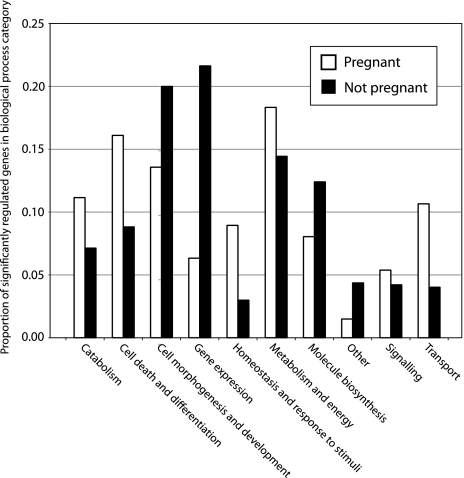
Although the morphological and physiological changes involved in pregnancy in live-bearing reptiles are well studied, the genetic mechanisms that underlie these changes are not known. We used the viviparous African Ocellated Skink, Chalcides ocellatus, as a model to identify a near complete gene expression profile associated with pregnancy using RNA-Seq analyses of uterine transcriptomes. Pregnancy in C. ocellatus is associated with upregulation of uterine genes involved with metabolism, cell proliferation and death, and cellular transport. Moreover, there are clear parallels between the genetic processes associated with pregnancy in mammals and Chalcides in expression of genes related to tissue remodeling, angiogenesis, immune system regulation, and nutrient provisioning to the embryo. In particular, the pregnant uterine transcriptome is dominated by expression of proteolytic enzymes that we speculate are involved both with remodeling the chorioallantoic placenta and histotrophy in the omphaloplacenta. Elements of the maternal innate immune system are downregulated in the pregnant uterus, indicating a potential mechanism to avoid rejection of the embryo. We found a downregulation of major histocompatability complex loci and estrogen and progesterone receptors in the pregnant uterus. This pattern is similar to mammals but cannot be explained by the mammalian model. The latter finding provides evidence that pregnancy is controlled by different endocrinological mechanisms in mammals and reptiles. Finally, 88% of the identified genes are expressed in both the pregnant and the nonpregnant uterus, and thus, morphological and physiological changes associated with C. ocellatus pregnancy are likely a result of regulation of genes continually expressed in the uterus rather than the initiation of expression of unique genes.
Figures
Comment in
-
Highlight: our reptilian brethren: mammals and live-bearing lizards show similar pregnancy mechanisms.Genome Biol Evol. 2012;4(3):372-3. doi: 10.1093/gbe/evs019. Genome Biol Evol. 2012. PMID: 22467917 Free PMC article. No abstract available.
References
-
- Adams SM, Biazik JM, Thompson MB, Murphy CR. Cytoepitheliochorial placenta of the viviparous lizard Pseudemoia entrecasteauxii: a new placental morphotype. J Morphol. 2005;264:264–276. - PubMed
-
- Afonso S, Romagnano L, Babiarz B. The expression and function of cystatin C and cathepsin B and cathepsin L during mouse embryo implantation and placentation. Development. 1997;124:3415–3425. - PubMed
-
- Bazer FW, Burghardt RC, Johnson GA, Spencer TE, Wu G. Interferons and progesterone for establishment and maintenance of pregnancy: interactions among novel cell signaling pathways. Reprod Biol. 2008;8:179–211. - PubMed
-
- Biazik JM, Thompson MB, Murphy CR. The tight junctional protein occludin is found in the uterine epithelium of squamate reptiles. J Comp Physiol B Biochem Syst Environ Physiol. 2007;177:935–943. - PubMed
-
- Biazik JM, Thompson MB, Murphy CR. Claudin-5 is restricted to the tight junction region of uterine epithelial cells in the uterus of pregnant/gravid squamate reptiles. Anat Rec. 2008;291:547–556. - PubMed
Publication types
MeSH terms
LinkOut - more resources
Full Text Sources
Other Literature Sources
