


Dietary linoleic acid elevates endogenous 2-AG and anandamide and induces obesity
- PMID: 22334255
- PMCID: PMC3458187
- DOI: 10.1038/oby.2012.38
Dietary linoleic acid elevates endogenous 2-AG and anandamide and induces obesity
Abstract
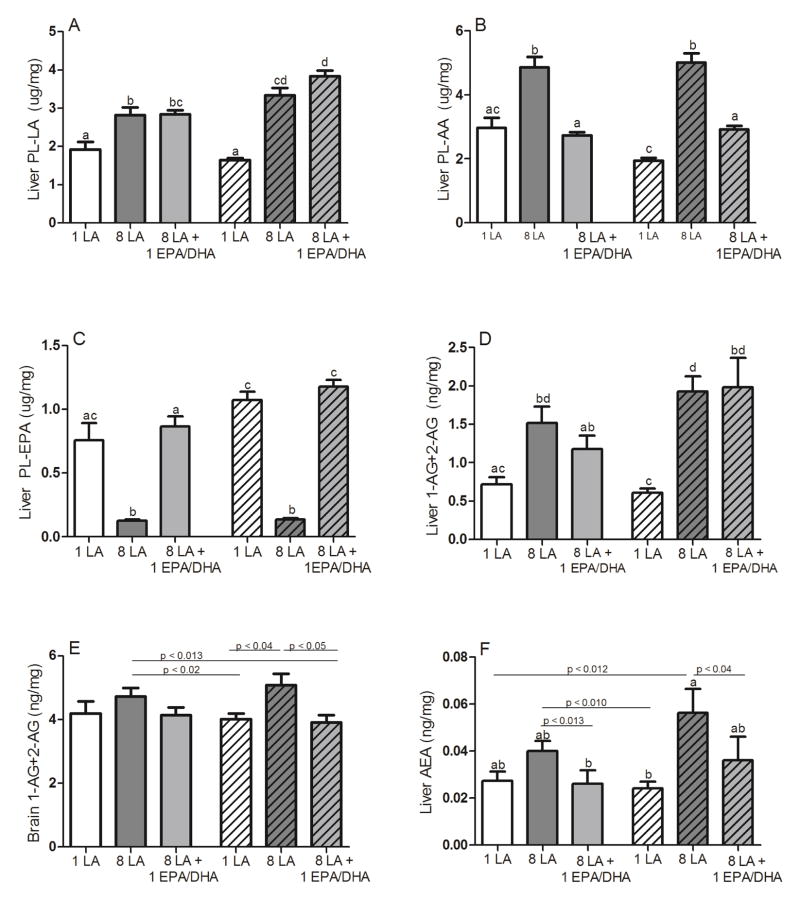
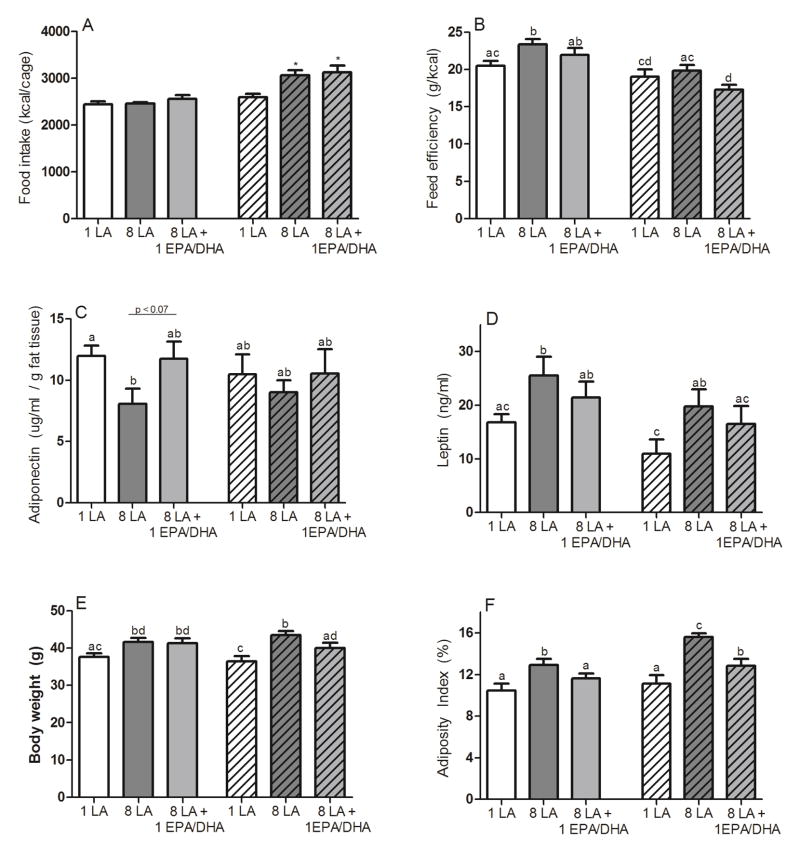
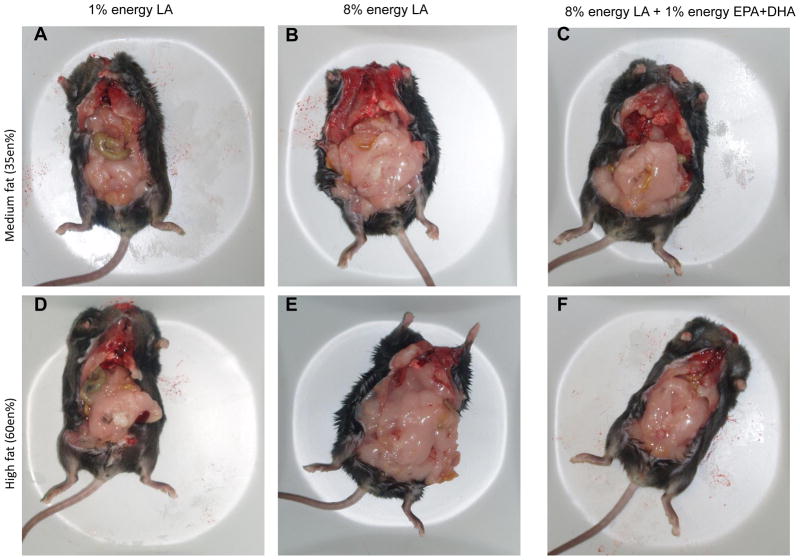
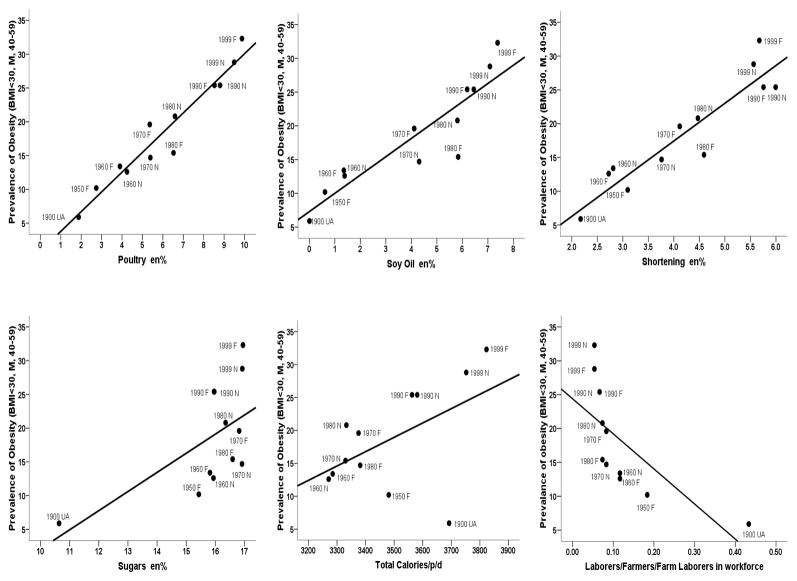
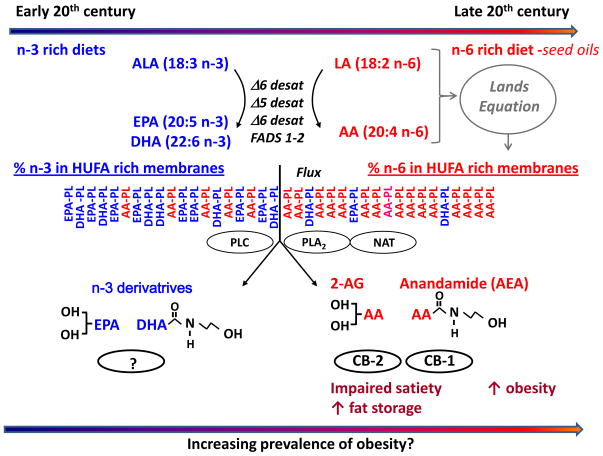
Suppressing hyperactive endocannabinoid tone is a critical target for reducing obesity. The backbone of both endocannabinoids 2-arachidonoylglycerol (2-AG) and anandamide (AEA) is the ω-6 fatty acid arachidonic acid (AA). Here we posited that excessive dietary intake of linoleic acid (LA), the precursor of AA, would induce endocannabinoid hyperactivity and promote obesity. LA was isolated as an independent variable to reflect the dietary increase in LA from 1 percent of energy (en%) to 8 en% occurring in the United States during the 20th century. Mice were fed diets containing 1 en% LA, 8 en% LA, and 8 en% LA + 1 en% eicosapentaenoic acid (EPA) + docosahexaenoic acid (DHA) in medium-fat diets (35 en% fat) and high-fat diets (60 en%) for 14 weeks from weaning. Increasing LA from 1 en% to 8 en% elevated AA-phospholipids (PL) in liver and erythrocytes, tripled 2-AG + 1-AG and AEA associated with increased food intake, feed efficiency, and adiposity in mice. Reducing AA-PL by adding 1 en% long-chain ω-3 fats to 8 en% LA diets resulted in metabolic patterns resembling 1 en% LA diets. Selectively reducing LA to 1 en% reversed the obesogenic properties of a 60 en% fat diet. These animal diets modeled 20th century increases of human LA consumption, changes that closely correlate with increasing prevalence rates of obesity. In summary, dietary LA increased tissue AA, and subsequently elevated 2-AG + 1-AG and AEA resulting in the development of diet-induced obesity. The adipogenic effect of LA can be prevented by consuming sufficient EPA and DHA to reduce the AA-PL pool and normalize endocannabinoid tone.
Conflict of interest statement
Figures
References
-
- Di Marzo V, Goparaju SK, Wang L, et al. Leptin-regulated endocannabinoids are involved in maintaining food intake. Nature. 2001;410:822–5. - PubMed
-
- Pagotto U, Marsicano G, Cota D, Lutz B, Pasquali R. The emerging role of the endocannabinoid system in endocrine regulation and energy balance. Endocr Rev. 2006;27:73–100. - PubMed
-
- Christensen R, Kristensen PK, Bartels EM, Bliddal H, Astrup A. Efficacy and safety of the weight-loss drug rimonabant: a meta-analysis of randomised trials. Lancet. 2007;370:1706–13. - PubMed
-
- Lands WE, Libelt B, Morris A, et al. Maintenance of lower proportions of (n - 6) eicosanoid precursors in phospholipids of human plasma in response to added dietary (n - 3) fatty acids. Biochim Biophys Acta. 1992;1180:147–62. - PubMed
Publication types
MeSH terms
Substances
Grants and funding
LinkOut - more resources
Full Text Sources
Other Literature Sources
Medical
Research Materials
