


Reconstruction of cytosolic fumaric acid biosynthetic pathways in Saccharomyces cerevisiae
- PMID: 22335940
- PMCID: PMC3340314
- DOI: 10.1186/1475-2859-11-24
Reconstruction of cytosolic fumaric acid biosynthetic pathways in Saccharomyces cerevisiae
Abstract
Background: Fumaric acid is a commercially important component of foodstuffs, pharmaceuticals and industrial materials, yet the current methods of production are unsustainable and ecologically destructive.
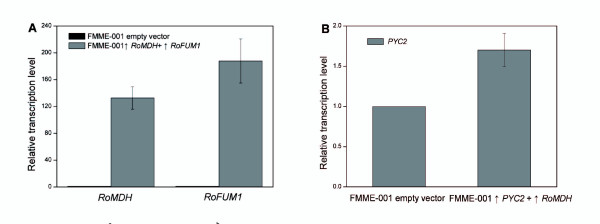
Results: In this study, the fumarate biosynthetic pathway involving reductive reactions of the tricarboxylic acid cycle was exogenously introduced in S. cerevisiae by a series of simple genetic modifications. First, the Rhizopus oryzae genes for malate dehydrogenase (RoMDH) and fumarase (RoFUM1) were heterologously expressed. Then, expression of the endogenous pyruvate carboxylase (PYC2) was up-regulated. The resultant yeast strain, FMME-001 ↑PYC2 + ↑RoMDH, was capable of producing significantly higher yields of fumarate in the glucose medium (3.18 ± 0.15 g liter-1) than the control strain FMME-001 empty vector.
Conclusions: The results presented here provide a novel strategy for fumarate biosynthesis, which represents an important advancement in producing high yields of fumarate in a sustainable and ecologically-friendly manner.
Figures


References
-
- Werpy T, Petersen G. Top value added chemicals from biomass, vol.I. Results of screening for potential candidates from sugars and synthesis gas. US Department of Energy, Washington, DC. 2004. http://dx.doi.org/10.2172/15008859 - DOI
-
- Ichikawa S, Iino T, Sato S, Nakahara T, Mukataka S. Improvement of production rate and yield of fumaric acid from maleic acid by heat treatment of Pseudomonas alcaligene strain XD-1. Biochem Eng J. 2003;13:7–13. doi: 10.1016/S1369-703X(02)00080-3. - DOI
Publication types
MeSH terms
Substances
LinkOut - more resources
Full Text Sources
Other Literature Sources
Molecular Biology Databases
