


Sumatriptan (subcutaneous route of administration) for acute migraine attacks in adults
- PMID: 22336869
- PMCID: PMC4164380
- DOI: 10.1002/14651858.CD009665
Sumatriptan (subcutaneous route of administration) for acute migraine attacks in adults
Abstract
Background: Migraine is a highly disabling condition for the individual and also has wide-reaching implications for society, healthcare services, and the economy. Sumatriptan is an abortive medication for migraine attacks, belonging to the triptan family. Subcutaneous administration may be preferable to oral for individuals experiencing nausea and/or vomiting
Objectives: To determine the efficacy and tolerability of subcutaneous sumatriptan compared to placebo and other active interventions in the treatment of acute migraine attacks in adults.
Search methods: We searched Cochrane Central Register of Controlled Trials (CENTRAL), MEDLINE, EMBASE, online databases, and reference lists for studies through 13 October 2011.
Selection criteria: We included randomised, double-blind, placebo- and/or active-controlled studies using subcutaneous sumatriptan to treat a migraine headache episode, with at least 10 participants per treatment arm.
Data collection and analysis: Two review authors independently assessed trial quality and extracted data. We used numbers of participants achieving each outcome to calculate relative risk (or 'risk ratio') and numbers needed to treat to benefit (NNT) or harm (NNH) compared to placebo or a different active treatment.
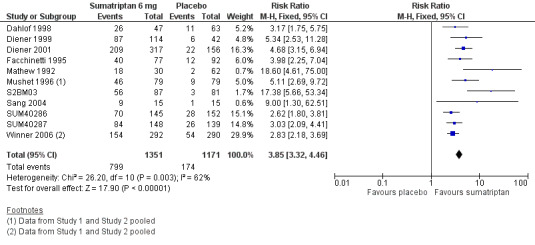
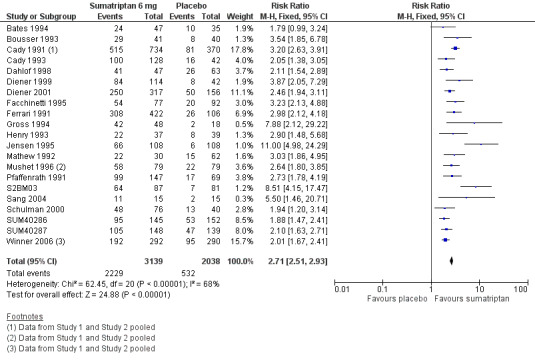
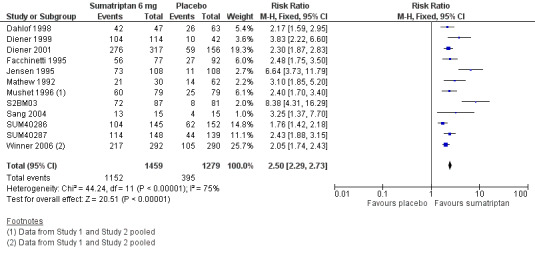
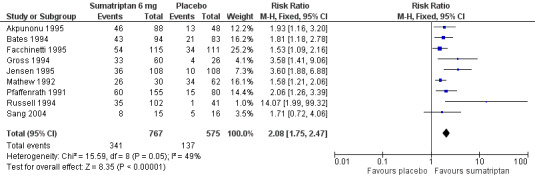
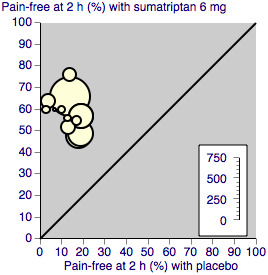
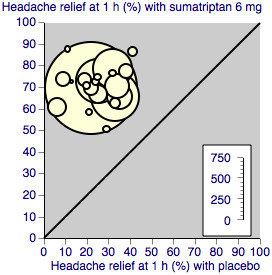
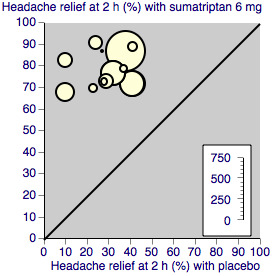
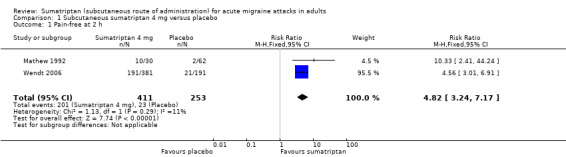
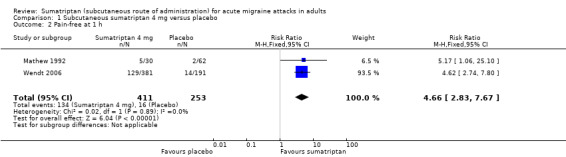
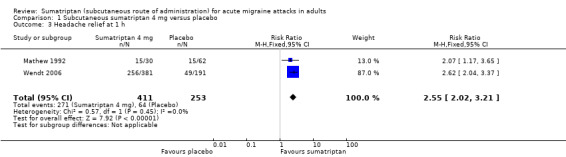
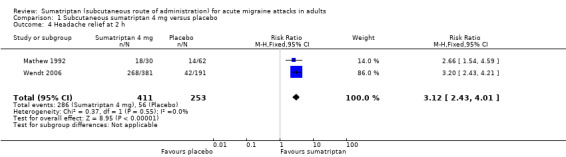
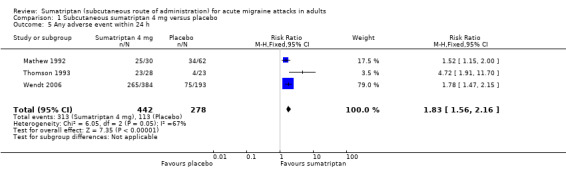
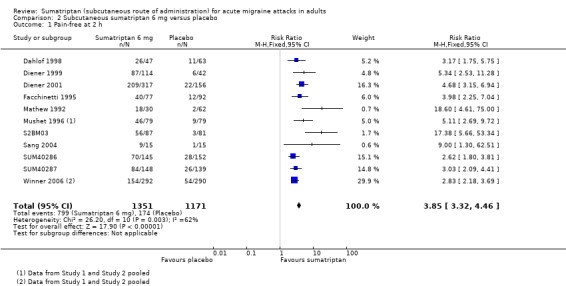
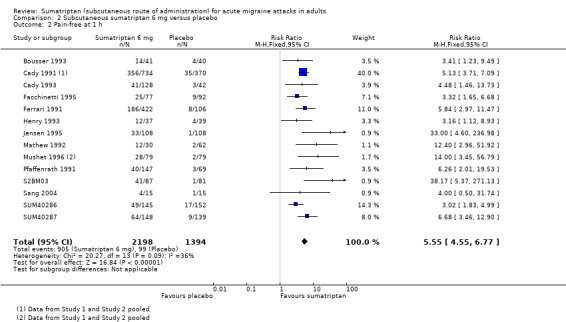
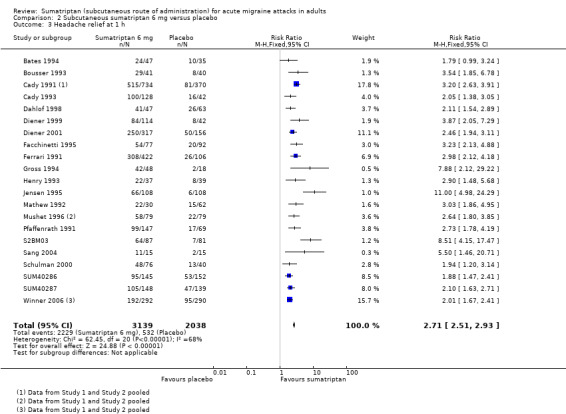
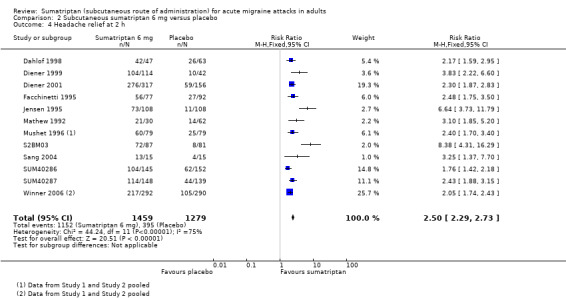
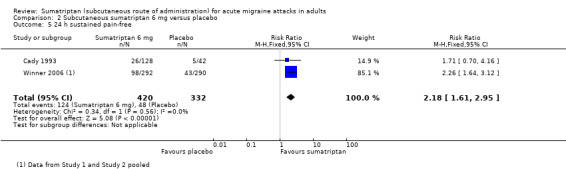
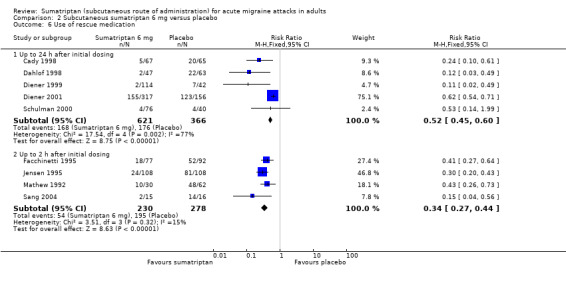
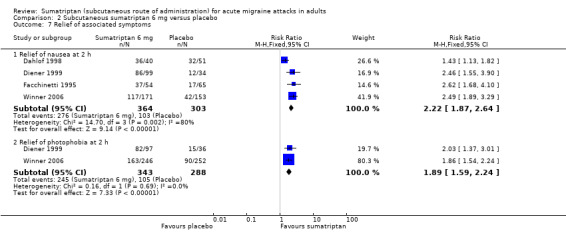
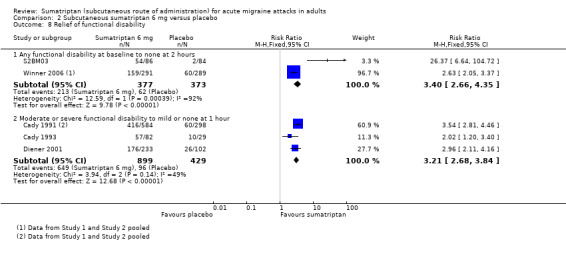
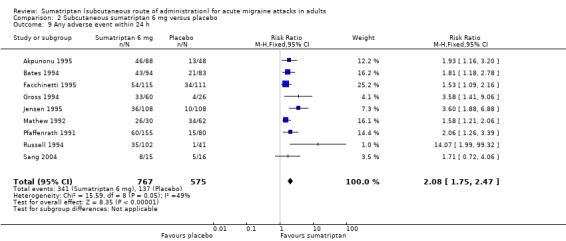
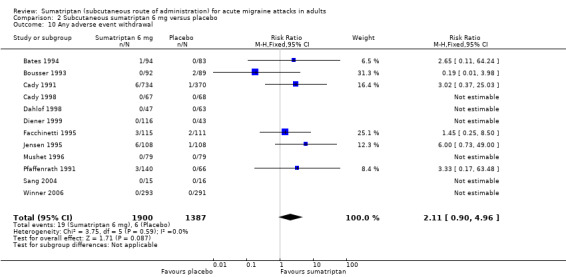
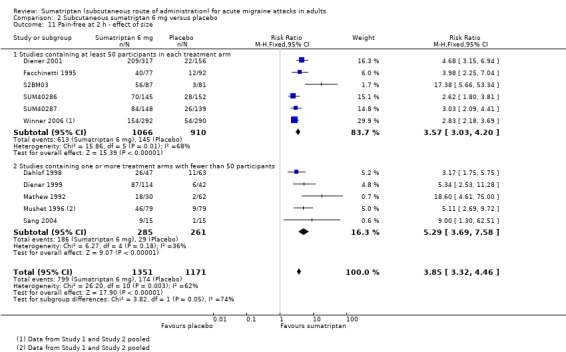
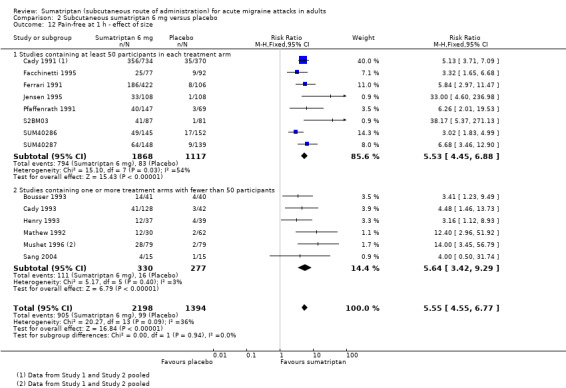
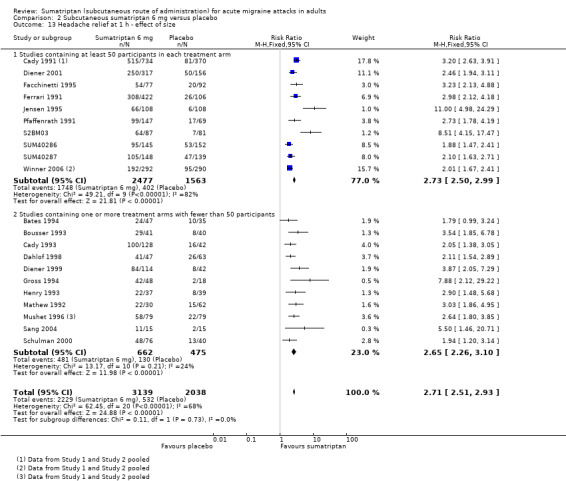
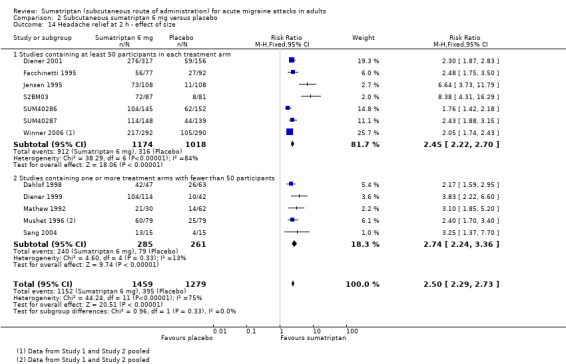
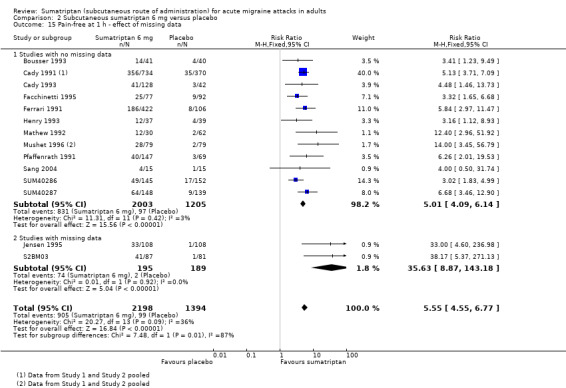
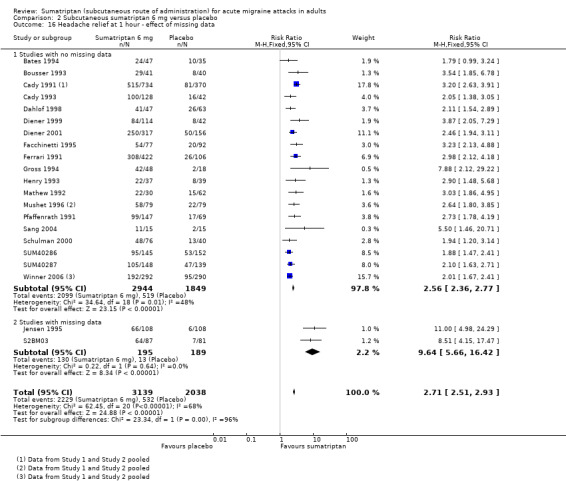
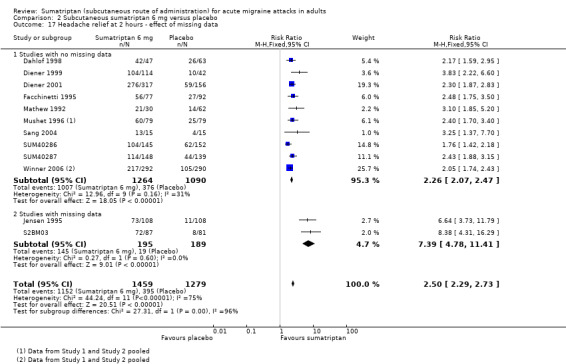
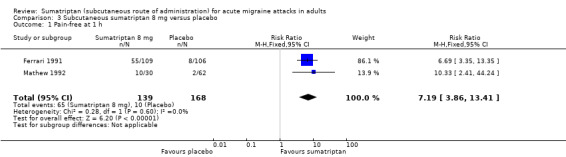
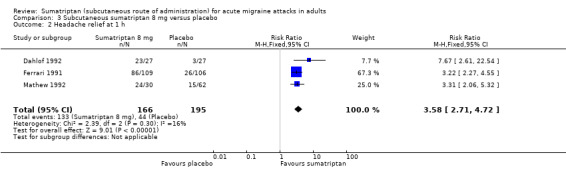
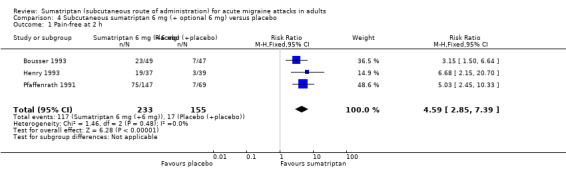
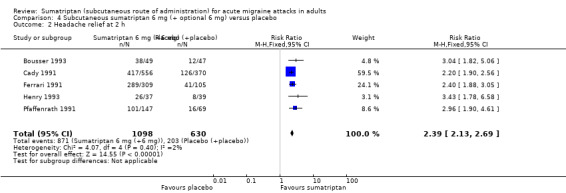
Main results: Thirty-five studies (9365 participants) compared subcutaneous sumatriptan with placebo or an active comparator. Most of the data were for the 6 mg dose. Sumatriptan surpassed placebo for all efficacy outcomes. For sumatriptan 6 mg versus placebo the NNTs were 2.9, 2.3, 2.2, and 2.1 for pain-free at one and two hours, and headache relief at one and two hours, respectively, and 6.1 for sustained pain-free at 24 hours. Results for the 4 mg and 8 mg doses were similar to the 6 mg dose, with 6 mg significantly better than 4 mg only for pain-free at one hour, and 8 mg significantly better than 6 mg only for headache relief at one hour. There was no evidence of increased migraine relief if a second dose of sumatriptan 6 mg was given after an inadequate response to the first.Relief of headache-associated symptoms, including nausea, photophobia, and phonophobia, was greater with sumatriptan than with placebo, and use of rescue medication was lower with sumatriptan than placebo. For the most part, adverse events were transient and mild and were more common with sumatriptan than placebo.Sumatriptan was compared directly with a number of active treatments, including other triptans, acetylsalicylic acid plus metoclopramide, and dihydroergotamine, but there were insufficient data for any pooled analyses.
Authors' conclusions: Subcutaneous sumatriptan is effective as an abortive treatment for acute migraine attacks, quickly relieving pain, nausea, photophobia, phonophobia, and functional disability, but is associated with increased adverse events.
Conflict of interest statement
RAM and SD have received research support from charities, government, and industry sources at various times. RAM has consulted for various pharmaceutical companies, including GlaxoSmithKline, the manufacturers of sumatriptan. RAM has received lecture fees from pharmaceutical companies related to analgesics and other healthcare interventions. CD has no interests to declare. GlaxoSmithKline were not in any way involved in carrying out this review.
Figures
References
References to studies included in this review
Akpunonu 1995 {published data only}
-
- Akpunonu BE, Mutgi AB, Federman DJ, Volinsky FG, Brickman K, Davis RL, et al. Subcutaneous sumatriptan for treatment of acute migraine in patients admitted to the emergency department: a multicenter study. Annals of Emergency Medicine 1995;25(4):464‐9. - PubMed
Bates 1994 {published data only}
-
- Bates D, Ashford E, Dawson R, Ensink FB, Gilhus NE, Olesen J, et al. Sumatriptan Aura Study Group. Subcutaneous sumatriptan during the migraine aura. Neurology 1994;44(9):1587‐92. - PubMed
Bousser 1993 {published data only}
-
- Bousser MG, D'Allens H, Richard A. Efficacy of subcutaneous sumatriptan in the acute treatment of early‐morning migraine: a placebo‐controlled trial. Journal of Internal Medicine 1993;234(2):211‐6. - PubMed
Cady 1991 {published data only}
-
- Cady RK, Wendt JK, Kirchner JR, Sargent JD, Rothrock JF, Skaggs H Jr. Treatment of acute migraine with subcutaneous sumatriptan. JAMA 1991;265(21):2831‐5. - PubMed
Cady 1993 {published data only}
-
- Repeat‐dose efficacy and laboratory safety trial of subcutaneous GR43175C in migraine patients. http://www.gsk‐clinicalstudyregister.com/.
-
- Cady RK, Dexter J, Sargent JD, Markley H, Osterhaus JT, Webster CJ. Efficacy of subcutaneous sumatriptan in repeated episodes of migraine. Neurology 1993;43(7):1363‐8. - PubMed
Cady 1998 {published data only}
-
- Cady RC, Ryan R, Jhingran P, O'Quinn S, Pait DG. Sumatriptan injection reduces productivity loss during a migraine attack: results of a double‐blind, placebo‐controlled trial. Archives of Internal Medicine 1998;158(9):1013‐8. - PubMed
Dahlof 1992 {published data only}
-
- Dahlof C, Edwards C, Toth A. Sumatriptan injection is superior to placebo in the acute treatment of migraine‐‐with regard to both efficacy and general well‐being. Cephalalgia 1992;12(4):214‐20. - PubMed
Dahlof 1998 {published data only}
Diener 1999 {published data only}
-
- Diener HC. Efficacy and safety of intravenous acetylsalicylic acid lysinate compared to subcutaneous sumatriptan and parenteral placebo in the acute treatment of migraine. A double‐blind, double‐dummy, randomized, multicenter, parallel group study. Cephalalgia 1999;19(6):581‐8. - PubMed
Diener 2001 {published data only}
-
- Diener HC, Tfelt‐Hansen P, Beukelaar F, Ferrari MD, Olesen J, Dahlof C, et al. The efficacy and safety of sc alniditan vs. sc sumatriptan in the acute treatment of migraine: a randomized, double‐blind, placebo‐controlled trial. Cephalalgia 2001;21(6):672‐9. [DOI: ] - PubMed
Facchinetti 1995 {published data only}
-
- Facchinetti F, Bonellie G, Kangasniemi P, Pascual J, Shuaib A, The Sumatriptan Menstrual Migraine Study Group. The efficacy and safety of subcutaneous sumatriptan in the acute treatment of menstrual migraine. Journal of Obstetrics and Gynecology 1995;86(6):911‐6. [PUBMED: 7501338] - PubMed
Ferrari 1991 {published data only}
-
- The Subcutaneous Sumatriptan International Study Group. Treatment of migraine attacks with sumatriptan. New England Journal of Medicine 1991;325(5):316‐21. - PubMed
Gross 1994 {published data only}
-
- Gross ML, Kay J, Turner AM, Hallett K, Cleal AL, Hassani H, United Kingdom Study Group. Sumatriptan in acute migraine using a novel cartridge system self‐injector. Headache 1994;34(10):559‐63. [PUBMED: 9843948] - PubMed
Henry 1993 {published data only}
-
- Henry P, d'Allens H, French Migraine Network Bordeaux‐Lyon‐Grenoble. Subcutaneous sumatriptan in the acute treatment of migraine in patients using dihydroergotamine as prophylaxis. Headache 1993;33(8):432‐5. - PubMed
Jensen 1995 {published data only}
-
- Jensen K, Tfelt‐Hansen P, Hansen EW, Krøis EH, Pedersen OS. Introduction of a novel self‐injector for sumatriptan. A controlled clinical trial in general practice. Cephalalgia 1995;15(5):423‐9. - PubMed
Mathew 1992 {published data only}
-
- Mathew NT, Dexter J, Couch J, Flamenbaum W, Goldstein J, Rapoport A, et al. US Sumatriptan Research Group. Dose ranging efficacy and safety of subcutaneous sumatriptan in the acute treatment of migraine. Archives of Neurology 1992;49(12):1271‐6. - PubMed
Mushet 1996 {published data only}
-
- Mushet GR, Cady RK, Baker CC, Clements B, Gutterman DL, Davis R. Efficacy and tolerability of subcutaneous sumatriptan administered using the IMITREX STATdose System. Clinical Therapeutics 1996;18(4):687‐99. - PubMed
Pfaffenrath 1991 {published data only}
-
- The Sumatriptan Auto‐Injector Study Group. Self‐treatment of acute migraine with subcutaneous sumatriptan using an auto‐injector device. European Neurology 1991;31(5):323‐31. - PubMed
Russell 1994 {published data only}
-
- Russell MB, Holm‐Thomsen OE, Rishøj Nielsen M, Cleal A, Pilgrim AJ, Olesen J. A randomized double‐blind placebo‐controlled crossover study of subcutaneous sumatriptan in general practice. Cephalalgia 1994;14(4):291‐6. - PubMed
S2BL99 {unpublished data only}
-
- A randomised, multicentre, double‐blind, double‐dummy, parallel‐group study to compare the efficacy and safety of subcutaneous sumatriptan with oral aspirin plus oral metoclopramide in the acute treatment of migraine. http://www.gsk‐clinicalstudyregister.com/.
S2BM03 {unpublished data only}
-
- A double‐blind, randomised, placebo controlled, crossover study to assess return of headache in patients treated with 6 mg subcutaneous sumatriptan early or late in a migraine attack; with optional open‐label doses to assess pattern of use of sumatriptan over the subsequent 72 hour period. http://www.gsk‐clinicalstudyregister.com/.
S2BS78 {unpublished data only}
-
- A double‐blind, placebo‐controlled, parallel group study of 6 mg subcutaneous sumatriptan + optional 6 mg subcutaneous sumatriptan administered using a novel cartridge system self‐injector in slow developing migraine. http://www.gsk‐clinicalstudyregister.com/.
Sang 2004 {published data only}
-
- Sang CN, Ramadan NM, Wallihan RG, Chappell AS, Freitag FG, Smith TR, et al. LY293558, a novel AMPA/GluR5 antagonist, is efficacious and well‐tolerated in acute migraine. Cephalalgia 2004;24(7):596‐602. - PubMed
Schulman 2000 {published data only}
-
- Schulman EA, Cady RK, Henry D, Batenhorst AS, Putnam DG, Watson CB, et al. Effectiveness of sumatriptan in reducing productivity loss due to migraine: results of a randomized, double‐blind, placebo‐controlled clinical trial. Mayo Clinic Proceedings 2000;75(8):782‐9. - PubMed
SUM40286 {published and unpublished data}
-
- A randomized, double‐blind, placebo‐controlled, parallel‐group, single‐attack study of sumatriptan 6 mg injection in the treatment of moderate‐to‐severe migraine present upon awakening. http://www.gsk‐clinicalstudyregister.com/.
-
- Winner P, Adelman J, Aurora S, Ames M, Lener M. Pain‐free results of sumatriptan 6 mg SC in the treatment or morning migraine: results from two prospective, randomized, double‐blind, placebo‐controlled studies. Headache 2003;43(5):535.
SUM40287 {published and unpublished data}
-
- A randomized, double‐blind, placebo‐controlled, parallel‐group, single‐attack study of sumatriptan 6 mg injection in the treatment of moderate‐to‐severe migraine present upon awakening. http://www.gsk‐clinicalstudyregister.com/.
-
- Winner P, Adelman J, Aurora S, Ames M, Lener M. Pain‐free results of sumatriptan 6 mg SC in the treatment or morning migraine: results from two prospective, randomized, double‐blind, placebo‐controlled studies. Headache 2003;43(5):535.
Thomson 1993 {published data only}
-
- Thomson AN, Arthur GP, Bergin PS, Pollock M, Parkin PJ, Flanagan M, et al. Subcutaneous sumatriptan in acute treatment of migraine: a multicentre New Zealand trial. New Zealand Medical Journal 1993;106(955):171‐3. - PubMed
Touchon 1996 {published data only}
-
- Touchon J, Bertin L, Pilgrim AJ, Ashford E, Bès A. A comparison of subcutaneous sumatriptan and dihydroergotamine nasal spray in the acute treatment of migraine. Neurology 1996;47(2):361‐5. - PubMed
Visser 1992 {published data only}
-
- Visser WH, Ferrari MD, Bayliss EM, Ludlow S, Pilgrim AJ, The Subcutaneous Sumatriptan International Study Group. Treatment of migraine attacks with subcutaneous sumatriptan: first placebo‐controlled study. Cephalalgia 1992;12(5):308‐13. - PubMed
Wendt 2006 {published data only}
-
- Wendt J, Cady R, Singer R, Peters K, Webster C, Kori S, et al. A randomized, double‐blind, placebo‐controlled trial of the efficacy and tolerability of a 4‐mg dose of subcutaneous sumatriptan for the treatment of acute migraine attacks in adults. Clinical Therapeutics 2006;28(4):517‐26. [DOI: 10.1016/j.clinthera.2006.03.013] - DOI - PubMed
Winner 1996 {published data only}
Winner 2006 {published data only}
-
- Winner P, Adelman J, Aurora S, Lener ME, Ames M. Efficacy and tolerability of sumatriptan injection for the treatment of morning migraine: two multicenter, prospective, randomized, double‐blind, controlled studies in adults. Clinical Therapeutics 2006;28(10):1582‐91. - PubMed
References to studies excluded from this review
Burke‐Ramirez 2001 {published data only}
Cady 1994 {published data only}
-
- Cady RK, Rubino J, Crummett D, Littlejohn TW 3rd. Oral sumatriptan in the treatment of recurrent headache. Archives of Family Medicine 1994;3(9):766‐72. - PubMed
Cull 2001 {published data only}
Ensink 1991 {published data only}
-
- Ensink FB. Subcutaneous sumatriptan in the acute treatment of migraine. Sumatriptan International Study Group. Journal of Neurology 1991;238 Suppl 1:S66‐9. - PubMed
Friedman 2005 {published data only}
-
- Friedman BW, Corbo J, Lipton RB, Bijur PE, Esses D, Solorzano C, et al. A trial of metoclopramide vs sumatriptan for the emergency department treatment of migraines. Neurology 2005;64(3):463‐8. - PubMed
Friedman 2006 {published data only}
Gonzalez‐Espinosa 1997 {published data only}
-
- González‐Espinosa LE, Gómez‐Viera N, Olivera‐Leal I, Reyes‐Lorente R. Treatment of acute attack of migraine with sumatriptan [Spanish]. Revista de Neurologia 1997;147:1672‐5. - PubMed
Melchart 2003 {published data only}
Pradel 2006 {published data only}
-
- Pradel FG, Subedi P, Varghese AA, Mullins CD, Weis KA. Does earlier headache response equate to earlier return to functioning in patients suffering from migraine?. Cephalalgia 2006;26(4):428‐35. - PubMed
Russell 1995 {published data only}
-
- Russell MB, Holm‐Thomsen OE, Nielsen MR, Cleal A, Pilgrim AJ, Olesen J. Sumatriptan treatment of migraine in general practice. A randomized, double‐blind, placebo‐controlled cross‐over study [Sumatriptan ved migraene i almen praksis. En randomiseret, dobbeltblind, placebokontrolleret overkrydsningsundersogelse]. Ugeskrift for Laeger 1995;157(16):2320‐3. - PubMed
S2BM04 {unpublished data only}
-
- A double‐blind, placebo‐controlled, parallel group study to evaluate the efficacy, safety and tolerability of a 6 mg SC dose of sumatriptan in patients who have not responded to acute treatment of a migraine attack with 100 mg oral dose of sumatriptan. http://www.gsk‐clinicalstudyregister.com/.
Solbach 1993 {published data only}
-
- Solbach MP, Waymer RS. Treatment of menstruation‐associated migraine headache with subcutaneous sumatriptan. Journal of Obstetrics and Gynecology 1993;82(5):769‐72. - PubMed
Additional references
Bigal 2008
Clarke 1996
-
- Clarke CE, MacMillan L, Sondhi S, Wells NEJ. Economic and social impact of migraine. Quarterly Journal of Medicine 1996;89(1):77‐84. - PubMed
Cook 1995
Derry (forthcoming)
Derry 2012a
Derry 2012b
Derry 2012c
Derry 2012d
Diamond 2007
-
- Diamond S, Bigal ME, Silberstein S, Loder E, Reed M, Lipton RB. Patterns of diagnosis and acute and preventive treatment for migraine in the United States: results from the American Migraine Prevalence and Prevention study. Headache 2007;47(3):355‐63. [DOI: 10.1111/j.1526-4610.2006.00631.x] - DOI - PubMed
Edmeads 1993
-
- Edmeads J, Findlay H, Tugwell P, Pryse‐Phillips W, Nelson RF, Murray TJ. Impact of migraine and tension‐type headache on life‐style, consulting behaviour, and medication use: a Canadian population survey. Canadian Journal of Neurological Sciences 1993;20(2):131‐7. - PubMed
Ferrari 1998
-
- Ferrari MD. The economic burden of migraine to society. Pharmacoeconomics 1998;13(6):667‐76. - PubMed
Ferrari 2002
Gawel 2001
-
- Gawel MJ, Worthington I, Maggisano A. A systematic review of the use of triptans in acute migraine. Canadian Journal of Neurological Sciences 2001;28(1):30‐41. - PubMed
Gendolla 2008
-
- Gendolla A. Early treatment in migraine: how strong is the current evidence?. Cephalalgia 2008;28 Suppl 2:28‐35. - PubMed
Goadsby 2007
Hazard 2009
Hu 1999
-
- Hu XH, Markson LE, Lipton RB, Stewart WF, Berger ML. Burden of migraine in the United States: disability and economic costs. Archives of Internal Medicine 1999;159(8):813‐8. - PubMed
IHS 1988
-
- Headache Classification Committee of the International Headache Society. Classification and diagnostic criteria for headache disorders, cranial neuralgias and facial pain. Cephalalgia 1988;8 Suppl 7:1‐96. - PubMed
IHS 2000
-
- International Headache Society Clinical Trials Subcommittee. Guidelines for controlled trials of drugs in migraine: second edition. Cephalalgia 2000;20(9):765‐86. - PubMed
IHS 2004
-
- Headache Classification Subcommittee of the International Headache Society. The International Classification of Headache Disorders: 2nd edition. Cephalalgia 2004;24 Suppl 1:1‐160. - PubMed
Jadad 1996a
-
- Jadad AR, Carroll D, Moore A, McQuay H. Developing a database of published reports of randomised clinical trials in pain research. 1996 1996;66(2‐3):239‐46. - PubMed
Jadad 1996b
-
- Jadad AR, Moore RA, Carroll D, Jenkinson C, Reynolds DJM, Gavaghan DJ, et al. Assessing the quality of reports of randomized clinical trials: is blinding necessary?. Controlled Clinical Trials 1996;17(1):1‐12. - PubMed
Jhingran 1996
-
- Jhingran P, Cady RK, Rubino J, Miller D, Grice RB, Gutterman DL. Improvements in health‐related quality of life with sumatriptan treatment for migraine. Journal of Family Practice 1996;42(1):36‐42. - PubMed
L'Abbé 1987
-
- L'Abbé KA, Detsky AS, O'Rourke K. Meta‐analysis in clinical research. Annals of Internal Medicine 1987;107(2):224‐33. - PubMed
Lipton 1999
-
- Lipton RB, Stewart WF. Acute migraine therapy: do doctors understand what patients with migraine want from therapy?. Headache 1999;39 Suppl 2:S20‐S26.
Lipton 2007
-
- Lipton RB, Bigal ME, Diamond M, Freitag F, Reed ML, AMPP Advisory Group, et al. Migraine prevalence, disease burden, and the need for preventive therapy. Neurology 2007;68(5):343‐9. - PubMed
Lofland 1999
-
- Lofland JH, Johnson NE, Batenhorst AS, Nash DB. Changes in resource use and outcomes for patients with migraine treated with sumatriptan: a managed care perspective. Archives of Internal Medicine 1999;159(8):857‐63. - PubMed
Lucas 2006
McCrory 2003
Moore 1998
-
- Moore RA, Gavaghan D, Tramèr MR, Collins SL, McQuay HJ. Size is everything ‐ large amounts of information are needed to overcome random effects in estimating direction and magnitude of treatment effects. Pain 1998;78(3):209‐16. - PubMed
Moore 2008
-
- Moore RA, Barden J, Derry S, McQuay HJ. Managing potential publication bias. In: McQuay HJ, Kalso E, Moore RA editor(s). Systematic Reviews in Pain Research: Methodology Refined. Seattle: IASP Press, 2008:15‐24.
Moore 2010
-
- Moore RA, Eccleston C, Derry S, Wiffen P, Bell RF, Straube S, et al. ‘‘Evidence” in chronic pain – establishing best practice in the reporting of systematic reviews. Pain 2010;150(3):386–9. - PubMed
Morris 1995
Oldman 2002
-
- Oldman AD, Smith LA, McQuay HJ, Moore RA. Pharmacological treatments for acute migraine: quantitative systematic review. Pain 2002;97(3):247‐57. - PubMed
Osterhaus 1994
-
- Osterhaus JT, Townsend RJ, Gandek B, Ware JE Jr. Measuring the functional status and well‐being of patients with migraine headache. Headache 1994;34(6):337‐43. - PubMed
Pascual 2002
PCA 2011
-
- Anonymous. Prescription cost analysis, England 2010. The NHS Information Centre, Prescribing Support Unit 2011. [ISBN: 978‐1‐84636‐542‐3]
Radtke 2009
RevMan 2011 [Computer program]
-
- The Nordic Cochrane Centre, The Cochrane Collaboration. Review Manager (RevMan). Version 5.1. Copenhagen: The Nordic Cochrane Centre, The Cochrane Collaboration, 2011.
Solomon 1997
-
- Solomon GD, Price KL. Burden of migraine. A review of its socioeconomic impact. Pharmacoeconomics 1997;11 Suppl 1:1‐10. - PubMed
Stovner 2010
Tfelt‐Hansen 1998
-
- Tfelt‐Hansen P. Efficacy and adverse events of subcutaneous, oral, and intranasal sumatriptan used for migraine treatment: a systematic review based on number needed to treat. Cephalalgia 1998;18(8):532‐8. - PubMed
Tramer 1997
Publication types
MeSH terms
Substances
LinkOut - more resources
Full Text Sources
Medical
