


The epidemiology and etiology of influenza-like illness in Chinese children from 2008 to 2010
- PMID: 22337308
- PMCID: PMC7166694
- DOI: 10.1002/jmv.22247
The epidemiology and etiology of influenza-like illness in Chinese children from 2008 to 2010
Abstract
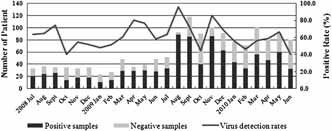
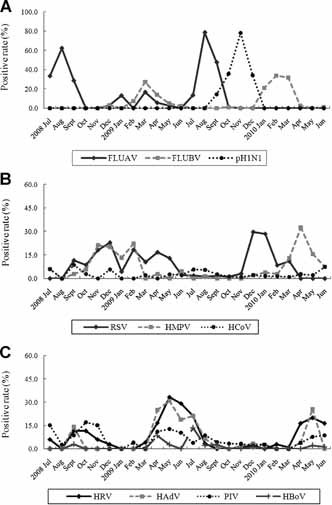
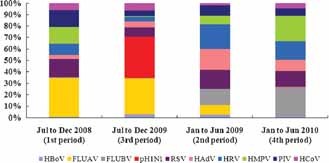
Influenza-like illness can be caused by a wide range of respiratory viruses. In order to investigate the epidemiology of viral pathogens related to influenza-like illness in children of Wuhan, the largest city in central China, throat swab samples were collected from 1,472 young patients, from July 2008 to June 2010, before and after the occurrence of the 2009 pandemic influenza A (H1N1) virus (pH1N1). It was found that 923 patients (62.7%) were positive for at least 1 virus and 90 patients (9.8%) were detected for multiple (≥2) respiratory viruses by real-time PCR detection of 16 viruses. Seasonal influenza A virus was the predominant pathogen among all the 16 viruses with a positive rate of 13.3% (196/1,472), which was followed by pH1N1 (159/1,472). It was also noted that the viral distribution pattern in Wuhan changed upon the introduction of the pH1N1 virus.
Copyright © 2012 Wiley Periodicals, Inc.
Figures
References
-
- Anderson RM, May RM. 1991. Infectious diseases of humans: Dynamic and control. New York: Oxford University Press.
-
- Anestad G, Nordbo S. 2009. Interference between outbreaks of respiratory viruses. Euro Surveill 14: pii:19367. - PubMed
-
- Belshe RB. 2004. Current status of live attenuated influenza virus vaccine in the US. Virus Res 103: 177– 185. - PubMed
Publication types
MeSH terms
LinkOut - more resources
Full Text Sources
Medical
