


Case Reports
doi: 10.1128/JCM.06681-11.
Epub 2012 Feb 15.
Cutaneous infection caused by Gordonia amicalis after a traumatic injury
Affiliations
- PMID: 22337976
- PMCID: PMC3347127
- DOI: 10.1128/JCM.06681-11
Item in Clipboard
Case Reports
Cutaneous infection caused by Gordonia amicalis after a traumatic injury
J Clin Microbiol.
2012 May.
Abstract
Gordonia amicalis infection has never been reported in humans. We report here the first case of G. amicalis-related cutaneous infection after a traumatic injury. The isolate was confirmed by 16S rRNA sequencing analysis, and the patient responded well to repeated debridement and antibiotic treatment.
Figures
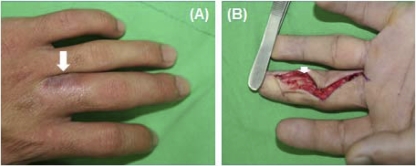
(A) A 1-cm by 1-cm ulcer with discharge on the dorsal side of the proximal phalanx of the middle finger of the left hand. (B) Yellowish discharge on the volar side of the middle phalanx beneath the neurovascular bundle.
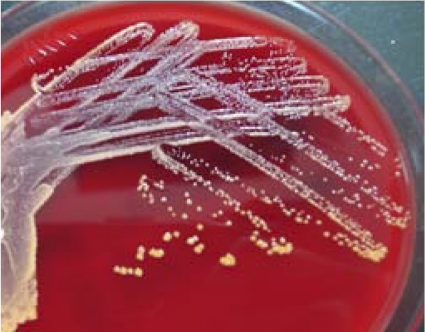
Orange, opaque, dry, and nonhemolytic colonies grew on Trypticase soy agar supplemented with 5% sheep blood after incubation for 72 h.
References
-
- Bakker XR, Spauwen PH, Volmans WM. 2004. Mycetoma of the hand caused by Gordonia terrae: a case report. J. Hand. Surg. Br. 29:188–190 - PubMed
-
- Blaschke AJ, et al. 2007. Gordonia species: emerging pathogens in pediatric patients that are identified by 16S ribosomal RNA gene sequencing. Clin. Infect. Dis. 45:483–486 - PubMed
-
- Clinical and Laboratory Standards Institute 2008. Interpretive criteria for identification of bacteria and fungi by DNA target sequencing; approved guideline. CLSI document MM18-A. Clinical and Laboratory Standards Institute, Wayne, Pa
-
- Drancourt M, et al. 1994. Brain abscess due to Gordonia terrae in an immunocompromised child: case report and review of infections caused by G. terrae. Clin. Infect. Dis. 19:258–262 - PubMed
Publication types
MeSH terms
Substances
LinkOut - more resources
Full Text Sources
Medical
