


Frequent ice cream consumption is associated with reduced striatal response to receipt of an ice cream-based milkshake
- PMID: 22338036
- PMCID: PMC3302359
- DOI: 10.3945/ajcn.111.027003
Frequent ice cream consumption is associated with reduced striatal response to receipt of an ice cream-based milkshake
Abstract
Background: Weight gain leads to reduced reward-region responsivity to energy-dense food receipt, and consumption of an energy-dense diet compared with an isocaloric, low-energy-density diet leads to reduced dopamine receptors. Furthermore, phasic dopamine signaling to palatable food receipt decreases after repeated intake of that food, which collectively suggests that frequent intake of an energy-dense food may reduce striatal response to receipt of that food.
Objective: We tested the hypothesis that frequent ice cream consumption would be associated with reduced activation in reward-related brain regions (eg, striatum) in response to receipt of an ice cream-based milkshake and examined the influence of adipose tissue and the specificity of this relation.
Design: Healthy-weight adolescents (n = 151) underwent fMRI during receipt of a milkshake and during receipt of a tasteless solution. Percentage body fat, reported food intake, and food craving and liking were assessed.
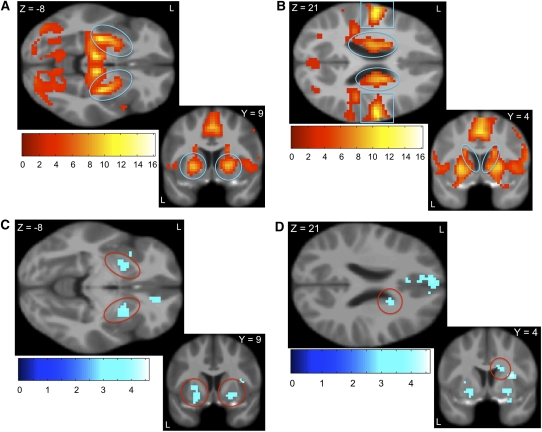
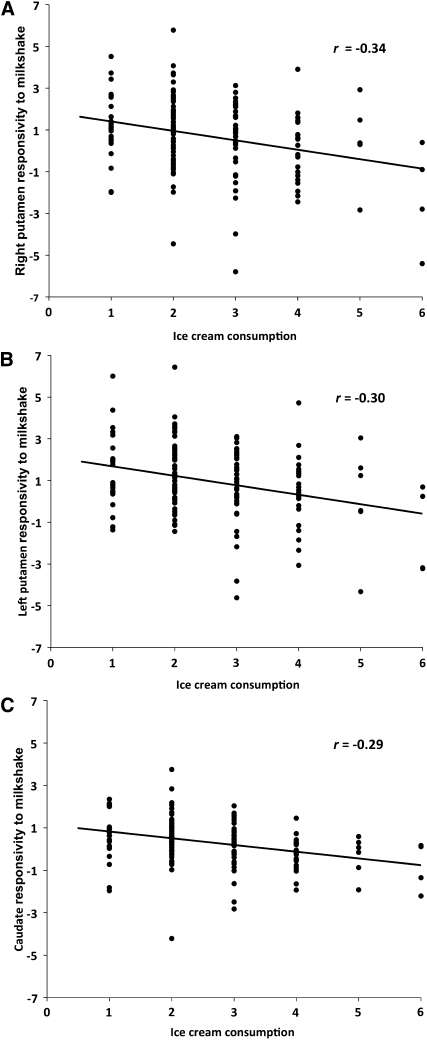
Results: Milkshake receipt robustly activated the striatal regions, yet frequent ice cream consumption was associated with a reduced response to milkshake receipt in these reward-related brain regions. Percentage body fat, total energy intake, percentage of energy from fat and sugar, and intake of other energy-dense foods were not related to the neural response to milkshake receipt.
Conclusions: Our results provide novel evidence that frequent consumption of ice cream, independent of body fat, is related to a reduction in reward-region responsivity in humans, paralleling the tolerance observed in drug addiction. Data also imply that intake of a particular energy-dense food results in attenuated reward-region responsivity specifically to that food, which suggests that sensory aspects of eating and reward learning may drive the specificity.
Figures
References
-
- Fetissov SO, Meguid MM, Sato T, Zhang LH. Expression of dopaminergic receptors in the hypothalamus of lean and obese Zucker rats and food intake. Am J Phys Regul Integr Comp Physiol 2002;283:R905–10 - PubMed
-
- Orosco M, Rouch C, Nicolaidis S. Rostromedial hypothalamic monoamine changes in response to intravenous infusions of insulin and glucose in freely feeding obese Zucker rats: a microdialysis study. Appetite 1996;26:1–20 - PubMed
-
- Wang GJ, Volkow ND, Logan J, Pappas NR, Wong CT, Zhu W, Netusil N, Fowler JS. Brain dopamine and obesity. Lancet 2001;357:354–7 - PubMed
Publication types
MeSH terms
Substances
Grants and funding
LinkOut - more resources
Full Text Sources
Medical
