


Cognitive dysfunction is worse among pediatric patients with bipolar disorder Type I than Type II
- PMID: 22339488
- PMCID: PMC3415381
- DOI: 10.1111/j.1469-7610.2011.02519.x
Cognitive dysfunction is worse among pediatric patients with bipolar disorder Type I than Type II
Abstract
Background: Impaired profiles of neurocognitive function have been consistently demonstrated among pediatric patients with bipolar disorder (BD), and may aid in the identification of endophenotypes across subtypes of the disorder. This study aims to determine phenotypic cognitive profiles of patients with BD Type I and II.
Methods: Subjects (N = 79) consisted of BD I (n = 27) and BD II (n = 19) patients and demographic and intellectually matched healthy controls (HC; n = 33) that completed a battery of neurocognitive tasks.
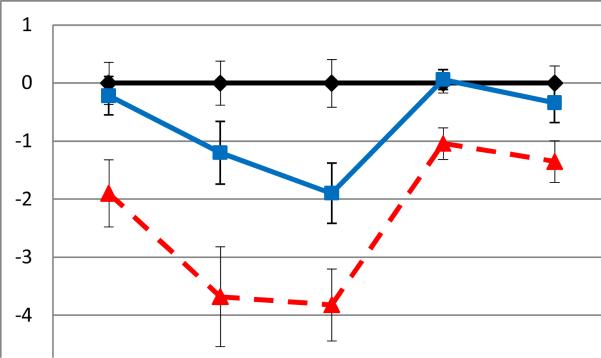
Results: Bipolar disorder Type I patients performed significantly more poorly compared to HC on all domains of cognitive function including attention, executive function, working memory, visual memory, and verbal learning and memory. BD I patients also performed more poorly compared to BD II patients on all domains of cognitive functioning with the exception of working memory, whereas BD II patients did poorly relative to HC only on verbal learning and memory.
Conclusions: Findings from the current study indicate that BD I patients are characterized by more severe cognitive impairment relative to BD II patients who show an intermediate pattern of performance between BD I patients and HC. Verbal learning and memory may effectively differentiate pediatric BD patients and controls, regardless of the subtype of BD, and may serve as a cognitive endophenotype for the disorder. Additionally, these findings move us closer to developing effective cognitive interventions tailored to specific subtypes of pediatric BD patients.
© 2012 The Authors. Journal of Child Psychology and Psychiatry © 2012 Association for Child and Adolescent Mental Health.
Figures
References
-
- American Psychiatric Association . Diagnostic and Statistical Manual of Mental Disorders. 4th ed. American Psychiatric Association; Washington, DC: 1994.
-
- Arts B, Jabben N, Krabbendam L, van Os J. Meta-analyses of cognitive functioning in euthymic bipolar patients and their first degree relatives. Psychological Medicine. 2008;38:771–785. - PubMed
-
- Balanzá-Martínez V, Rubio C, Selva-Vera G, Martinez-Aran A, Sánchez-Moreno J, Salazar-Fraile J, Vieta E, Tabarés-Seisdedos R. Neurocognitive endophenotypes (endophenocognitypes) from studies of relatives of bipolar disorder subjects: A systematic review. Neuroscience and Biobehavioral Reviews. 2008;32:1426–1438. - PubMed
-
- Bearden CE, Glahn DC, Caetano S, Olvera RL, Fonseca M, Najt P, Hunter K, Pliszka SR, Soares JC. Evidence for disruption on prefrontal cortical functions in juvenile bipolar disorder. Bipolar Disorders. 2007;9:145–159. - PubMed
-
- Blumberg MD, Kaufman J, Andrés M, Whiteman R, Hongyuan Zhang J, Gore JC, Charney DC, Krystal JH, Peterson BS. Amygdala and hippocampal volumes in adolescents and adults with bipolar disorder. Archives of General Psychiatry. 2003;60:1201–1208. - PubMed
