


Metabolic pathways in T cell fate and function
- PMID: 22342741
- PMCID: PMC3319512
- DOI: 10.1016/j.it.2012.01.010
Metabolic pathways in T cell fate and function
Abstract
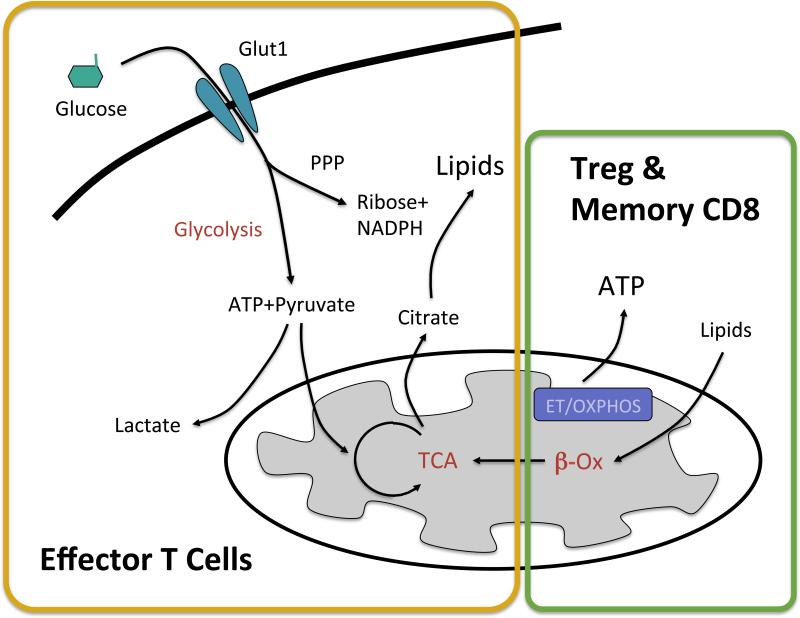
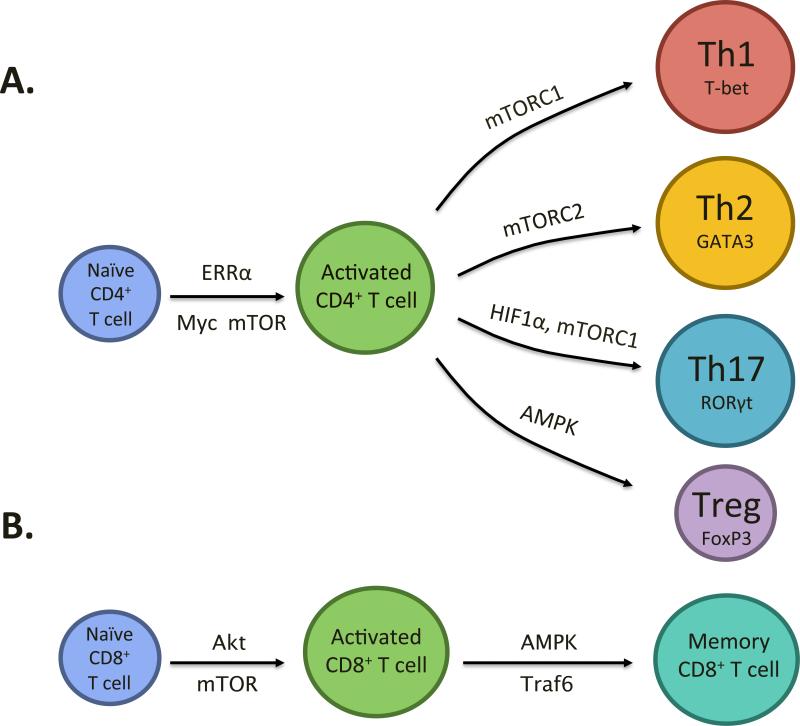
T cell growth and function must be tightly regulated to provide protection against foreign pathogens, while avoiding autoimmunity and immunodeficiency. It is now apparent that T cell metabolism is highly dynamic and has a tremendous impact on the ability of T cells to grow, activate and differentiate. Specific metabolic pathways provide energy and biosynthetic precursors that must support specific cell functions, as effector, regulatory, memory, and alloreactive T cells have distinct metabolic needs in immunity and inflammation. Here, we review the signaling pathways that control metabolism and how the metabolic phenotypes of T cell subtypes integrate with T cell function. Ultimately, these metabolic differences may provide new opportunities to modulate the immune response and treat inflammatory and autoimmune diseases.
Copyright © 2012 Elsevier Ltd. All rights reserved.
Figures
References
-
- Warburg O. On the origin of cancer cells. Science. 1956;123:309–314. - PubMed
-
- Koppenol WH, et al. Otto Warburg's contributions to current concepts of cancer metabolism. Nature reviews. Cancer. 2011;11:325–337. - PubMed
-
- Vander Heiden MG. Targeting cancer metabolism: a therapeutic window opens. Nature reviews. Drug discovery. 2011;10:671–684. - PubMed
-
- Fox CJ, et al. Fuel feeds function: energy metabolism and the T-cell response. Nature reviews. Immunology. 2005;5:844–852. - PubMed
Publication types
MeSH terms
Substances
Grants and funding
LinkOut - more resources
Full Text Sources
Other Literature Sources
