


A study on the management of hidradenitis suppurativa with retinoids and surgical excision
- PMID: 22345763
- PMCID: PMC3276889
- DOI: 10.4103/0019-5154.91821
A study on the management of hidradenitis suppurativa with retinoids and surgical excision
Abstract
Background: Hidradenitis suppurativa is a chronic skin condition involving the apocrine glandular zones. Affected patients may present with acute abscesses, but the condition often progresses to a chronic state with persistent pain, sepsis, sinus tract, fistula formation, purulent discharge, and dermal scarring. The treatment of patients with severe disease can be difficult and may require complex surgical intervention.
Materials and methods: For this study, we selected 30 patients from the outpatient department. The patients were divided into two groups of 15 patients each. In patients of group I, oral acitretin 0.5 mg/kg body weight was given alone. Oral acitretin was given for a period of 12 weeks, and follow-up of the patients was done every 4 weeks for a period of 6 months. In patients of group II, oral acitretin 0.5 mg/kg was given plus a wide surgical excision was done.
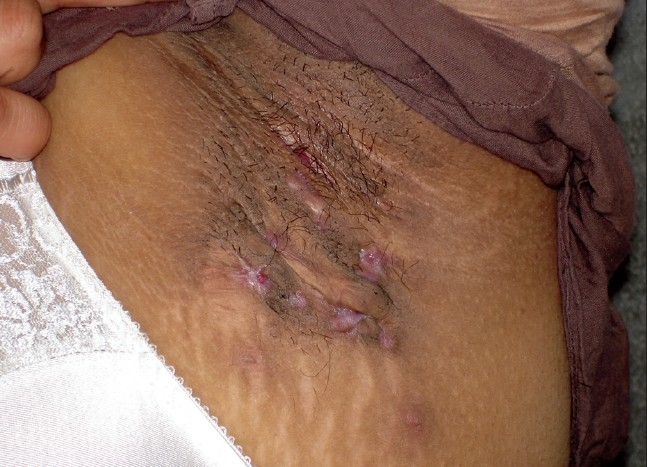
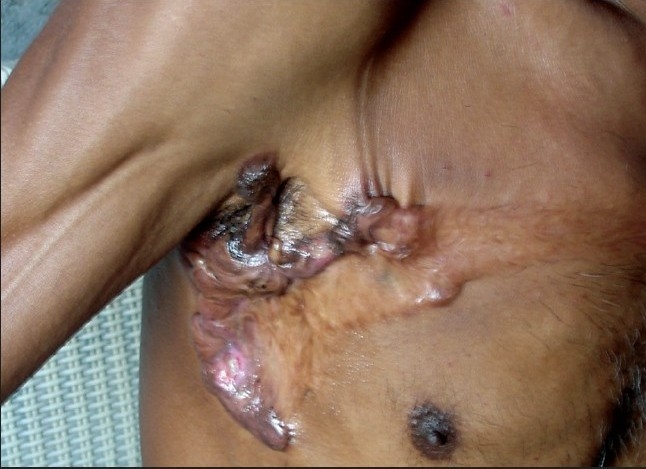
Results and discussion: In our study, the commonest site of involvement of hidradenitis suppurativa was axilla in 83.3% patients, perineum was involved in 13.3% patients, and periumbilical involvement was seen in 3.3% patients. The commonest clinical feature was nodules seen in 90% patients; pain was seen in 60% patients, dermal scarring in 73.3% patients, malodorous discharge in 33.3% patients, abscess in 30% patients, and fistulous tracts were seen in 20% patients. The recurrence rate was low (20%) in group II patients in whom oral acitretin was given plus surgical excision was done as compared with group I (40%) in whom oral acitretin was given alone.
Keywords: Abscess; hidradenitis suppurativa; recurrent; scarring; sinus tract; surgical excision.
Conflict of interest statement
Figures
References
-
- Jemec GB, heidenheim M, Nielsen NH. The prevalence of hidradenitis suppurativa and its potential precursor lesions. J Am Acad Dermatol. 1996;35:191–4. - PubMed
-
- Slade DE, Powell BW, Mortimer PS. Hidradenitis suppurativa: Pathogenesis and management. Br J Plast Surg. 2003;56:451–61. - PubMed
-
- Hogan DJ, Light MJ. Successful treatment of hidradenitis suppurativa with acitretin. J Am Acad Dermatol. 1988;19:355–6. - PubMed
-
- Rhode JM, Burke WM, Cederna PS, Haefner HK. Outcomes of surgical management of stage iii vulvar hidradenitis suppurativa. J Reprod Med. 2008;53:420–8. - PubMed
LinkOut - more resources
Full Text Sources