doi: 10.4103/0972-2327.91951.
Design, data analysis and sampling techniques for clinical research
Affiliations
- PMID: 22346019
- PMCID: PMC3271469
- DOI: 10.4103/0972-2327.91951
Item in Clipboard
Design, data analysis and sampling techniques for clinical research
Ann Indian Acad Neurol.
2011 Oct.
Abstract
Statistical analysis is an essential technique that enables a medical research practitioner to draw meaningful inference from their data analysis. Improper application of study design and data analysis may render insufficient and improper results and conclusion. Converting a medical problem into a statistical hypothesis with appropriate methodological and logical design and then back-translating the statistical results into relevant medical knowledge is a real challenge. This article explains various sampling methods that can be appropriately used in medical research with different scenarios and challenges.
Keywords: Design; sampling; study.
Conflict of interest statement
Figures
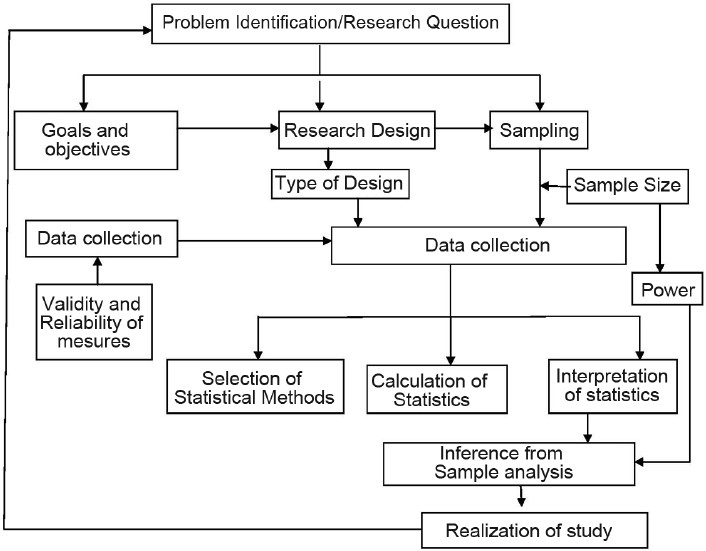
Overall framework of research design
References
-
- De Gans J, de Beek VD. “Dexamethasone in Adults with Bacterial Menningitis”. N Engl J Med. 2002;324:1549–56. - PubMed
-
- Golafshani N. Understanding reliability and validity in qualitative research. Qual Rep. 2003;8:597–607.
-
- Peace KE, Parrillo AV, Hardy JC. “Assessing the validity of statistical inferences in public health research: An Evidence – based ‘Best Practice’ approach”. J Georgia Public Health Assoc. 2008;1:1. Available from: http://faculty.mercer.edu/thomas_bm/documents/jgpha/documents/Archive/Pa... .