Breakfast, midday meals and academic achievement in rural primary schools in Uganda: implications for education and school health policy
- PMID: 22347147
- PMCID: PMC3280795
- DOI: 10.3402/fnr.v56i0.11217
Breakfast, midday meals and academic achievement in rural primary schools in Uganda: implications for education and school health policy
Abstract
Background: Underachievement in schools is a global problem and is especially prevalent in developing countries. Indicators of educational performance show that Uganda has done remarkably well on education access-related targets since the introduction of universal primary education in 1997. However, educational outcomes remain disappointing. The absence of school feeding schemes, one of the leading causes of scholastic underachievement, has not been given attention by the Ugandan authorities. Instead, as a national policy, parents are expected to provide meals even though many, especially in the rural areas, cannot afford to provide even the minimal daily bowl of maize porridge.
Objective: To assess and demonstrate the effect of breakfast and midday meal consumption on academic achievement of schoolchildren.
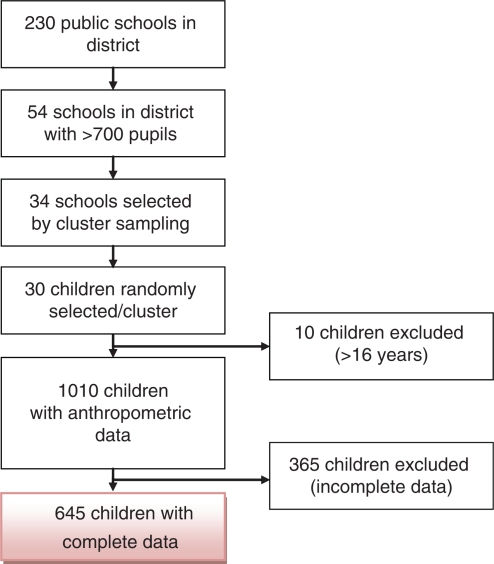
Design, materials and methods: We assessed household characteristics, feeding patterns and academic achievement of 645 schoolchildren (aged 9-15 years) in Kumi district, eastern Uganda, in 2006-2007, using a modified cluster sampling design which involved only grade 1 schools (34 in total) and pupils of grade four. Household questionnaires and school records were used to collect information on socio-demographic factors, feeding patterns and school attendance. Academic achievement was assessed using unstandardized techniques, specifically designed for this study.
Results: Underachievement (the proportion below a score of 120.0 points) was high (68.4%); in addition, significantly higher achievement and better feeding patterns were observed among children from the less poor households (p<0.05). Achievement was significantly associated with consumption of breakfast and a midday meal, particularly for boys (p<0.05), and a greater likelihood of scoring well was observed for better nourished children (all OR values>1.0).
Conclusion: We observed that underachievement was relatively high; inadequate patterns of meal consumption, particularly for the most poor, significantly higher scores among children from 'less poor' households and a significant association between academic achievement and breakfast and midday meal consumption.
Keywords: Uganda; academic achievement; education; primary schools; school health policy.
Figures
References
-
- Simeon DT. School feeding in Jamaica: a review of its evaluation. Am J Clin Nutr. 1998;67:790S–4S. - PubMed
-
- Powell CA, Grantham-McGregor SM. The association between nutritional status, school achievement and school attendance in twelve-year-old children at a Jamaican school. W Indian Med J. 1980;29:247–53. - PubMed
-
- Grantham-McGregor SM, Chang S, Walker SP. Evaluation of school feeding programmes: some Jamaican examples. Am J Clin Nutr. 1998;67:785S–9S. - PubMed
-
- Ahmed AU. Impact of feeding children in school: evidence from Bangladesh. Washington, DC: International Food Policy Research Institute; 2004.
-
- Vermeersch C, Kremer M. World Bank Policy Research working paper No. 3523. Washington, DC: World Bank; 2004. School meals, educational achievement, and school competition: evidence from a randomized evaluation.
LinkOut - more resources
Full Text Sources