


Evidence of the most stretchable egg sac silk stalk, of the European spider of the year Meta menardi
- PMID: 22347380
- PMCID: PMC3275603
- DOI: 10.1371/journal.pone.0030500
Evidence of the most stretchable egg sac silk stalk, of the European spider of the year Meta menardi
Abstract
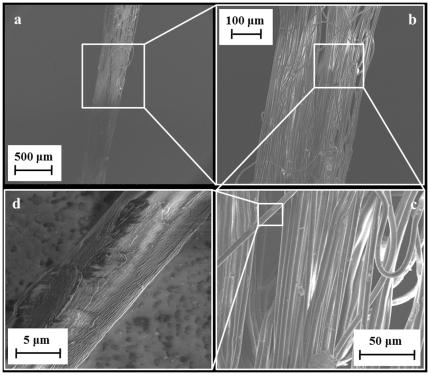
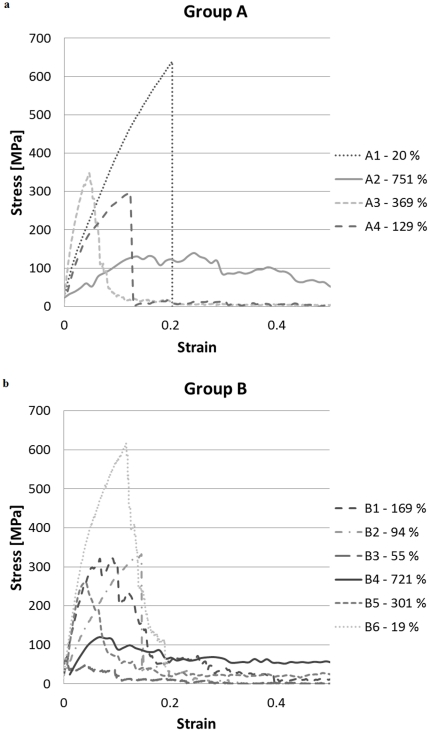
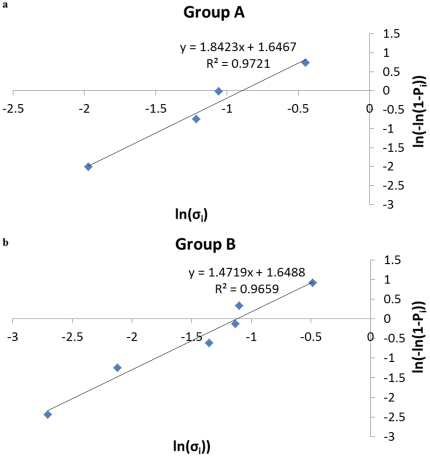
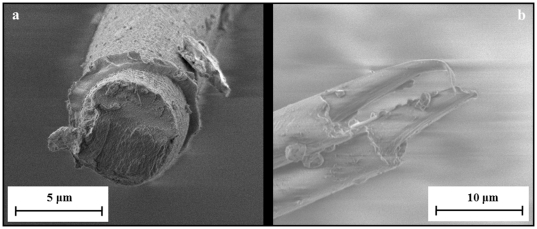
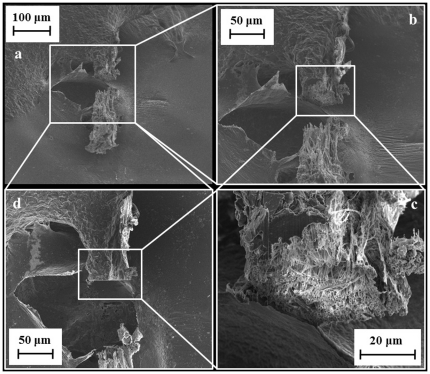
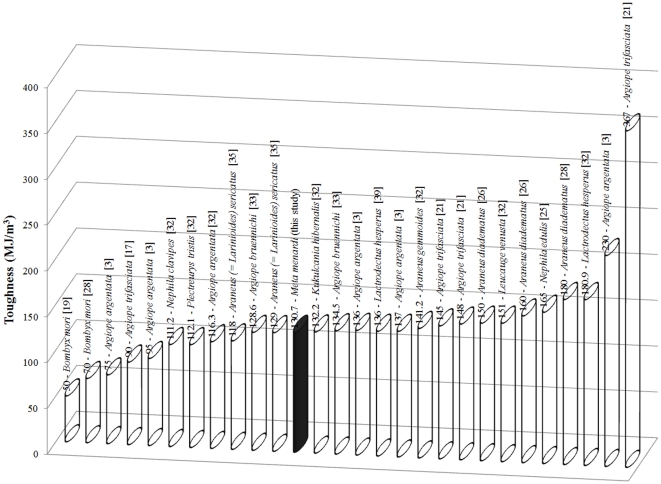
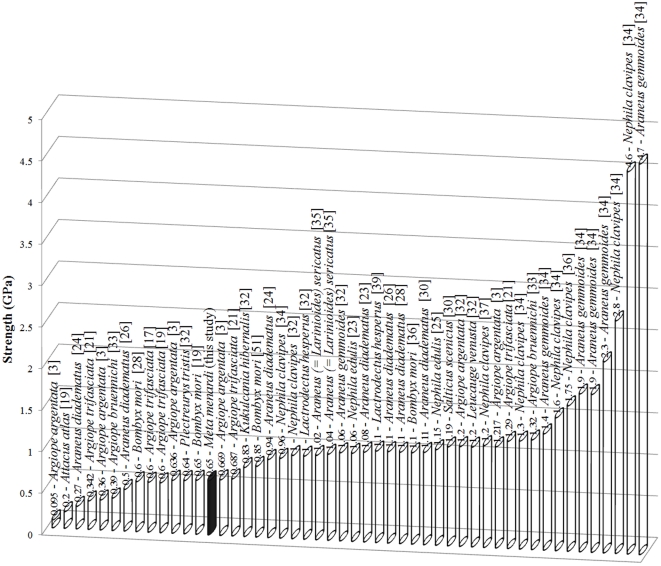
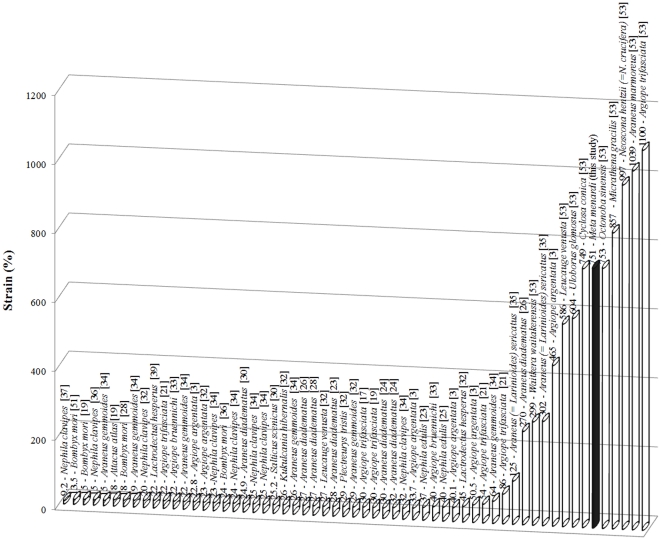
Spider silks display generally strong mechanical properties, even if differences between species and within the same species can be observed. While many different types of silks have been tested, the mechanical properties of stalks of silk taken from the egg sac of the cave spider Meta menardi have not yet been analyzed. Meta menardi has recently been chosen as the "European spider of the year 2012", from the European Society of Arachnology. Here we report a study where silk stalks were collected directly from several caves in the north-west of Italy. Field emission scanning electron microscope (FESEM) images showed that stalks are made up of a large number of threads, each of them with diameter of 6.03 ± 0.58 µm. The stalks were strained at the constant rate of 2 mm/min, using a tensile testing machine. The observed maximum stress, strain and toughness modulus, defined as the area under the stress-strain curve, are 0.64 GPa, 751% and 130.7 MJ/m(3), respectively. To the best of our knowledge, such an observed huge elongation has never been reported for egg sac silk stalks and suggests a huge unrolling microscopic mechanism of the macroscopic stalk that, as a continuation of the protective egg sac, is expected to be composed by fibres very densely and randomly packed. The Weibull statistics was used to analyze the results from mechanical testing, and an average value of Weibull modulus (m) is deduced to be in the range of 1.5-1.8 with a Weibull scale parameter (σ(0)) in the range of 0.33-0.41 GPa, showing a high coefficient of correlation (R(2) = 0.97).
Conflict of interest statement
Figures
References
-
- Brunetta L, Craig CL. Spider Silk, Evolution and 400 Million Years of Spinning, Waiting, Snagging, and Mating. Csiro Publishing 2010
-
- Keten S, Xu Z, Ihle B, Buelher MJ. Nanoconfinement controls stiffness, strength and mechanical toughness of β-sheet crystals in silk. Nature Materials. 2010;9:359–367. - PubMed
-
- Blackledge TA, Hayashi CY. Silken toolkits: biomechanics of silk fibers spun by the orb web spider Argiope argentata (Fabricius 1775). J Exp Biol. 2006;209:2452–2461. - PubMed
-
- Blackledge TA, Kuntner M, Agnarsson I. The Form and Function of Spider Orb Webs: Evolution from Silk to Ecosystems. Burlington: Academic Press. Advances in Insect Physiology. 2011;41:175–262.
-
- Rousseau ME, Lefevre T, Pezolet M. Conformation and orientation of proteins in various types of silk fibers produced by Nephila clavipes Spiders. Biomacromolecules. 2009;10:2945–2953. - PubMed
