


Breast-milk substitutes: a new old-threat for breastfeeding policy in developing countries. A case study in a traditionally high breastfeeding country
- PMID: 22347392
- PMCID: PMC3276495
- DOI: 10.1371/journal.pone.0030634
Breast-milk substitutes: a new old-threat for breastfeeding policy in developing countries. A case study in a traditionally high breastfeeding country
Abstract
Background: Developing countries with traditionally breastfeeding are now experiencing the increasing pressure of formula milk marketing. This may endanger lives and undermine the efforts of national policies in achieving the objectives of the Millennium Development Goals. We examined the use of, and factors for use, of all available breast-milk substitutes (BMS) in a country with a traditionally high rate of breastfeeding.
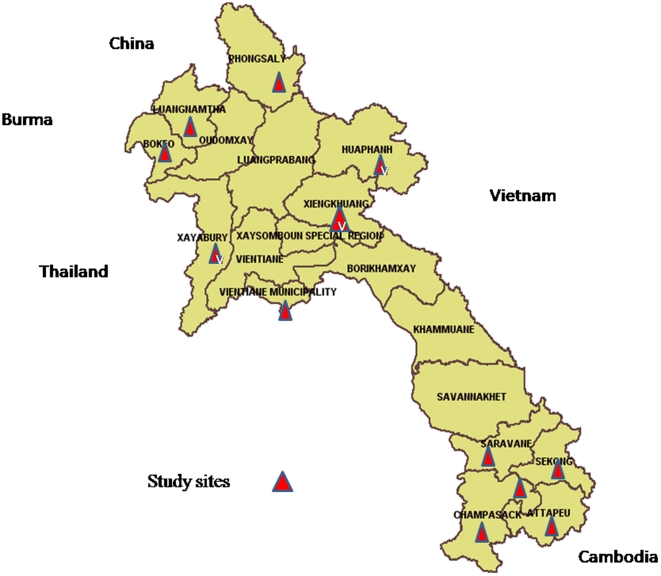
Methods: Randomised multi-stage sampling surveys in 90 villages in 12/17 provinces in Laos.
Participants: 1057 mothers with infants under 24 months of age.
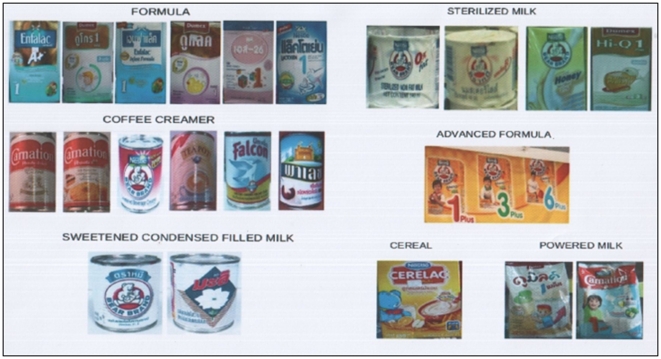
Tools: 50-query questionnaire and a poster of 22 BMS (8 canned or powdered milk; 6 non-dairy; 6 formulas; 2 non-formulas). OUTCOME MEASURES INCLUDED: prevalence of use and age of starting BMS in relation to socio-demographic characteristics and information sources, by univariate and multivariate analyses.
Results: Of 1057 mothers: 72.5% currently breastfed; 25.4% gave BMS (10.6% infant formula); 19.6% gave BMS before 6 months of age (of them: 83% non-dairy or cereals; mean age: 2.9 months; 95% Confidence interval: 2.6-3.2). One formula and one non-formula product accounted for 85% of BMS. BMS were considered as milk by the majority of mothers. Thai TV was the main source of information on BMS for mothers. Lao Loum mothers (the main ethnic group) living in concrete houses with good sanitary conditions, were more likely than others to use BMS before 6 months (OR: 1.79, (1.15-2.78), p<0.009). Mothers who fed their infants colostrum at birth were less likely to use BMS before 6 months of age (OR: 0.63, (0.41-0.99), p = 0.04). Unemployed mothers living in rural areas were less likely to consider BMS better than breast milk.
Conclusion: In Laos, mothers with the highest socio-economic status are showing a tendency to give up breastfeeding. Successful educational strategies and advocacy measures should be urgently developed to promote and sustain breastfeeding in developing countries.
Conflict of interest statement
Figures
References
-
- Bhutta ZA, Ahmed T, Black RE, Cousens S, Dewey K, et al. What works? Interventions for maternal and child undernutrition and survival. Lancet. 2008;371:417–440. - PubMed
-
- WHO. 2002. The Optimal Duration of Exclusive Breastfeeding, Geneva, Available: http://www.who.int/nutrition/publications/optimal_duration_of_exc_bfeedi.... Accessed 2009 Sept 15.
-
- UNICEF. Exclusive breastfeeding. 2006. Available: http://www.unicef.org/progressforchildren/2006n4/index_breastfeeding.html. Accessed 2009 June 15.
-
- Coutsoudis A, Coovadia HM, King J. The breast milk brand: promotion of child survival in the face of formula-milk marketing. Lancet. 2009;374:423–425. - PubMed
-
- Slesak G, Douangdala P, Inthalad S, Onekeo B, Somsavad S, et al. Misuse of coffee creamer as a breast milk substitute: a lethal case revealing high use in an ethnic minority village in Northern Laos. 2008. Available: http://www.bmj.com/content/337/bmj.a1379.full/reply#bmj_el_207174. Accessed 2009 June 15.
