


Review
doi: 10.1007/s11274-011-0854-8.
Why do microorganisms produce rhamnolipids?
Affiliations
- PMID: 22347773
- PMCID: PMC3270259
- DOI: 10.1007/s11274-011-0854-8
Item in Clipboard
Review
Why do microorganisms produce rhamnolipids?
World J Microbiol Biotechnol.
2012 Feb.
Abstract
We review the environmental role of rhamnolipids in terms of microbial life and activity. A large number of previous research supports the idea that these glycolipids mediate the uptake of hydrophobic substrates by bacterial cells. This feature might be of highest priority for bioremediation of spilled hydrocarbons. However, current evidence confirms that rhamnolipids primarily play a role in surface-associated modes of bacterial motility and are involved in biofilm development. This might be an explanation why no direct pattern of hydrocarbon degradation was often observed after rhamnolipids supplementation. This review gives insight into the current state of knowledge on how rhamnolipids operate in the microbial world.
Figures
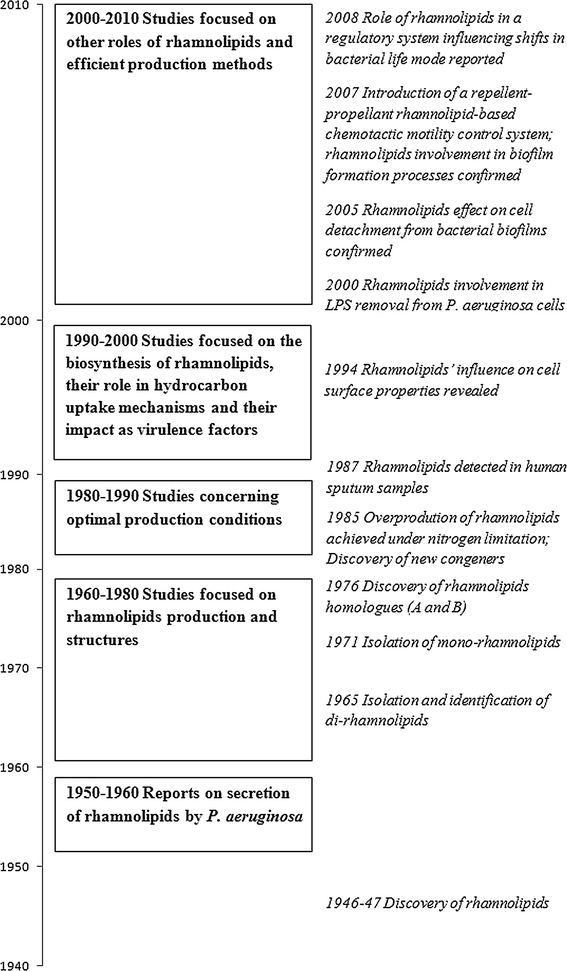
Important events and discoveries in the field of rhamnolipids
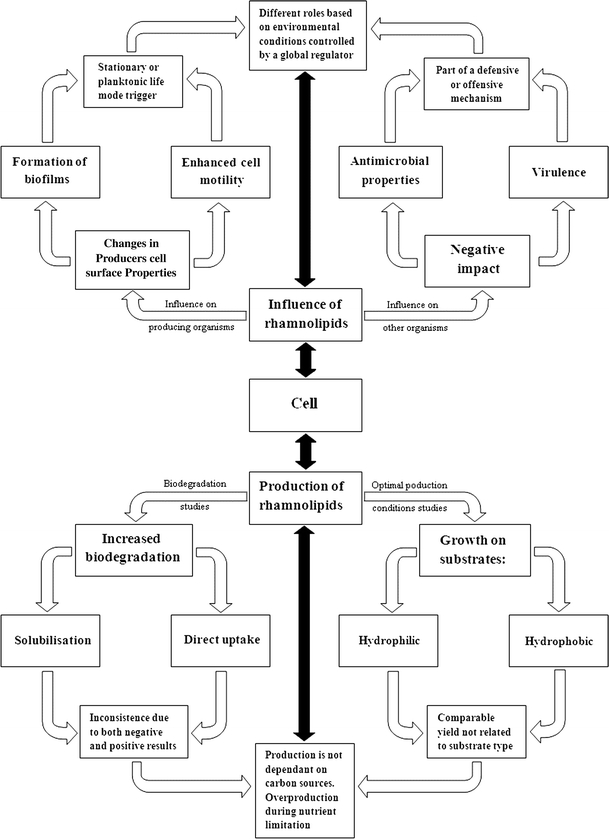
Conceptual pathway covering the studied topics concerning rhamnolipids
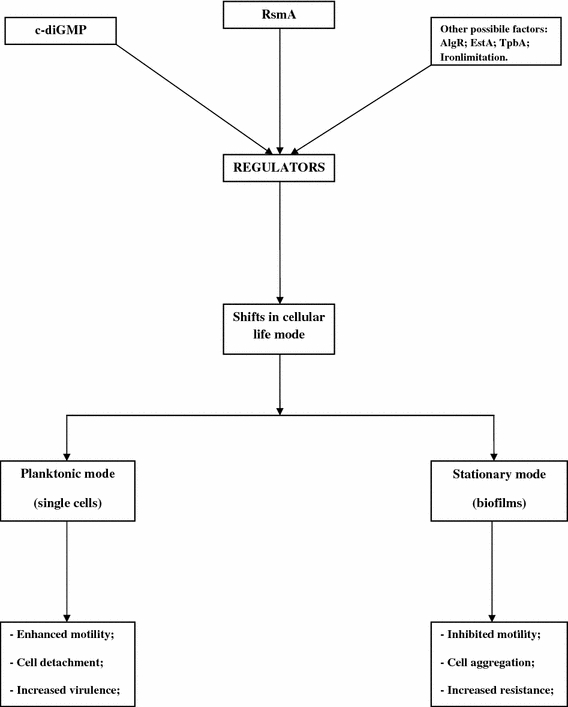
Decision-making system for bacterial life mode
References
-
- Al-Tahhan RA, Sandrin TR, Bodour AA, Maier RM. Rhamnolipid-induced removal of lipopolysaccharide from Pseudomonas aeruginosa: effect on cell surface properties and interaction with hydrophobic substrates. Appl Environ Microbiol. 2000;66:3262–3268. doi: 10.1128/AEM.66.8.3262-3268.2000. - DOI - PMC - PubMed
-
- Arino S, Marchal R, Vandecasteele JP. Identification and production of a rhamnolipidic biosurfactant by a Pseudomonas species. Appl Microbiol Biotechnol. 1996;45:162–168. doi: 10.1007/s002530050665. - DOI
Publication types
MeSH terms
Substances
LinkOut - more resources
Full Text Sources
