


doi: 10.2174/157017911796117179.
Molecular Imaging of Hypoxia: Strategies for Probe Design and Application
Affiliations
- PMID: 22347839
- PMCID: PMC3279754
- DOI: 10.2174/157017911796117179
Item in Clipboard
Molecular Imaging of Hypoxia: Strategies for Probe Design and Application
Curr Org Synth.
2011 Aug.
Abstract
Tumor hypoxia is a negative prognostic factor and its precise imaging is of great relevance to therapy planning. The present review summarizes various strategies of probe design for imaging hypoxia with a variety of techniques such as PET, SPECT and fluorescence imaging. Synthesis of some important probes that are used for preclinical and clinical imaging and their mechanism of binding in hypoxia are also discussed.
Figures
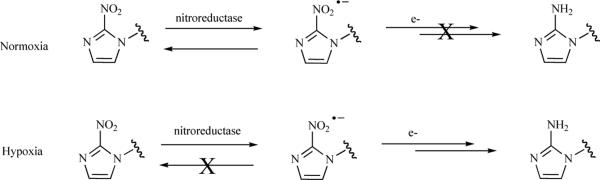
Mechanism of intracellular retention of nitroimidazole-containing molecules.

Nitroimidazole-containing hypoxia probes.

Cu-ATSM, its derivatives and proposed mechanism of action.
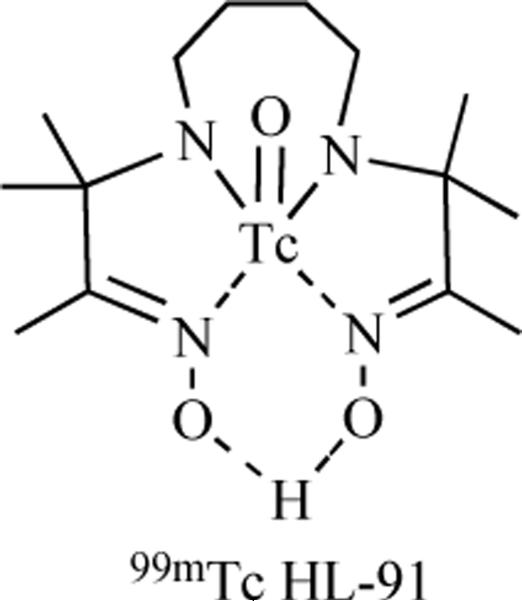
[99mTc]-HL91, a non-nitroimidazole hypoxia SPECT radiotracer.
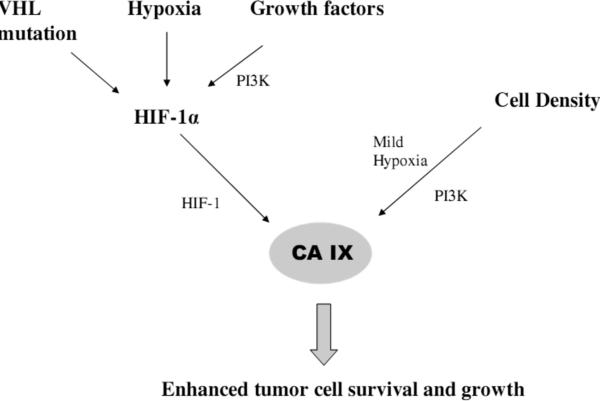
Relation between hypoxia and CA IX.

A fluorescent CA IX probe.

Synthesis of [18F]-FMISO.
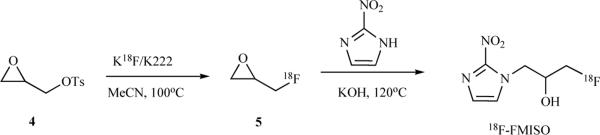
Synthesis of [18F]-FMISO.
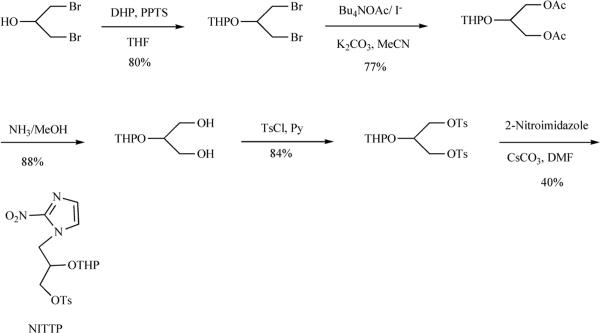
Synthesis of NITTP, a precursor for [18F]-FMISO.

Synthesis of [18F]-FMISO from NITTP.
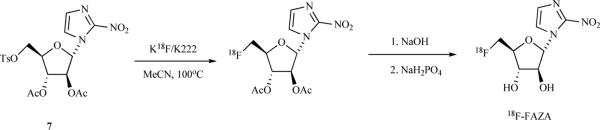
Synthesis of 18F-FAZA.
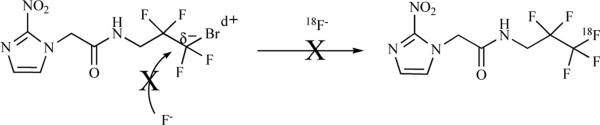
Attempt of synthesis of 18F-EF5 using 18F−.

Synthesis of [18F]-EF5 using 18F2.
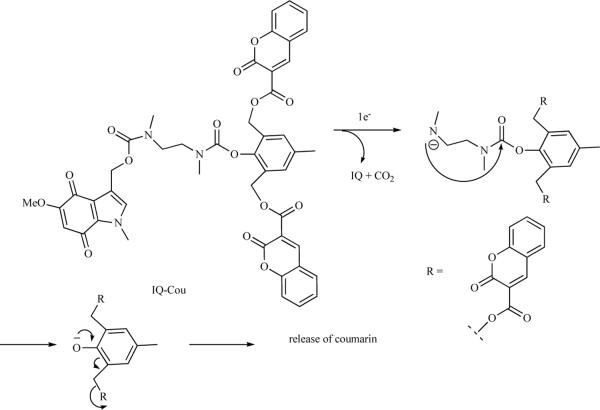
Mechanism of a coumarin based fluorescent hypoxia agent.
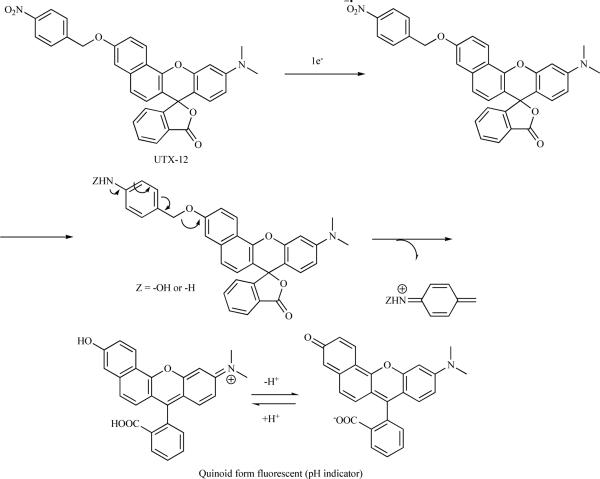
A pH sensitive hypoxia probe.
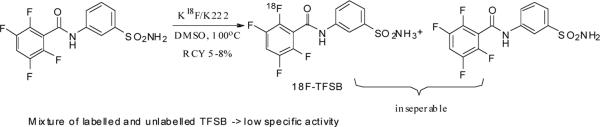
Radiolabelling of [18F]-TFSB.
References
-
- Read J. Mode of action of x-ray doses given with different oxygen concentrations. Br. J. Radiol. 1952;25:651–661. - PubMed
-
- Gray LH, Conger AD, Ebert M, Hornsey S, Scott OCA. The concentration of oxygen dissolved in tissues at the time of irradiation as a factor in radiotherapy. Br. J. Radiol. 1953;26:638–648. - PubMed
-
- Wright EA, Howard-Flanders P. The influence of oxygen on the radiosensitivity of mammalian tissues. Acta Radiol. 1957;48:26–32. - PubMed
-
- Höckel M, Vaupel P. Tumor Hypoxia, Definitions and Current Clinical, Biologic, and Molecular Aspects. J. Natl. Cancer Inst. 2001;93:266–276. - PubMed
Grants and funding
LinkOut - more resources
Full Text Sources